
We are again being stalked by inflation thanks to the war
Just over a month after inflation finally appeared to be under control it is back with a vengeance.
Thanks to the war in the Middle East we are living daily with the rising cost of energy; buying diesel at the pumps means taking a deep breath, while buying heating oil or fertiliser demands a stiff drink before placing the order.
This is the inflation that is here and now, but this is about to spread even further to take another turn for the worse. There is probably more to run in terms of rising fuel prices, but a new chapter is about to open when it comes to food costs.
The pressure from government ministers and retailers against this is intense – but there is no way to absorb what is happening on farms and in the distribution system.
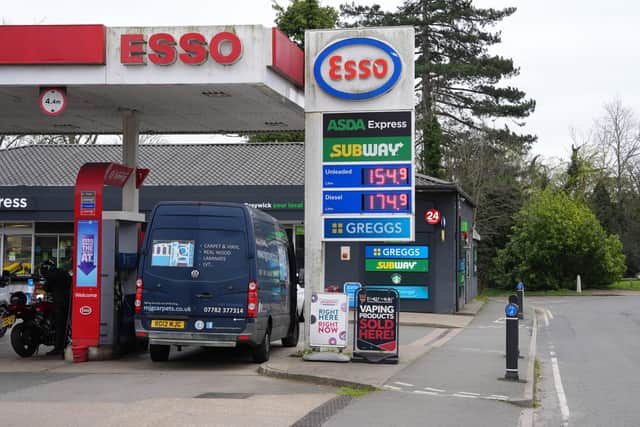

This will not be popular, but it should come as no real surprise to consumers; they can see what is happening to energy costs and so are more than capable of working out that food prices are next in the firing line.
Where that will lead only time will tell, but farmers already know what is waiting in the wings.
The only question now is how much of the rise in farm costs can be successfully passed on to retailers.
That outcome will dictate the margin pressure agriculture will face in the coming months.
That costs driven margin pressure will be all encompassing, in that it will hit farms, regardless of scale, location or enterprise.
The debate will then be around which enterprises are best placed to live with that pressure. In broad terms there are two types of inflation – cost push and demand pull. It is cost push from rising input costs we are living with now; indeed we have been living with this, on and off, for four years, back to when Russia invaded Ukraine.
The other form of inflation is demand pull and this is more healthy in terms of economics.
That happens when there is growth demand because people have money to spend from higher wages.
This creates a spending demand that leads to higher prices.
Businesses are well placed to live with this type of inflation, but by contrast cost push is a treadmill of squeezed margins from which there is no escape.
In the present global chaos the rises are of staples – fuel and food – which hit everyone, regardless of income or affordability.
There is, quite simply, no way of escaping the impact of cost push inflation.
This is especially so when it has been triggered by a shock war few were expecting triggered by a US president with no objectives, no definition of how victory would look and no focus on the global or domestic economic consequences. When the dust settles on what is now happening the world will not be returning to the normality of a few weeks ago.
The Iran war will become one of history’s watersheds, altering geopolitics for a long time to come. The so-called special relationship between the UK and US will not be easily rebuilt.
Trump and the US – not only over Iran – are now seen by many as an unreliable ally playing its own political game with no care for the consequences.
Distrust of Washington, particularly in a Europe more concerned to see a settlement in Ukraine, is palpable.
This is creating a diplomatic sea change in the UK when it comes to where our “special relationship” should be.
History may well eventually deem the Iran war and Donald Trump as the final factors that blocked any hopes of economic delivery from Brexit.
Both have driven the UK back towards Europe as a power bloc to rival the now undependable US; this suits the prime minister, Keir Starmer.
Unpopular as he is over many issues people seem to welcome and admire how he has stood up to criticism from Trump.
There is growing evidence of public support for closer ties with Europe than with the US. This is about trust and Starmer is comfortable with that.
From that it is easy to see how the next election – still a long time away – could come down to a choice between parties like Labour, the Liberal Democrats, Greens and Scottish Nationalists advocating closer ties with the EU, and Reform, once the Brexit party, pressing for a policy that so far has failed to deliver any economic gains.