
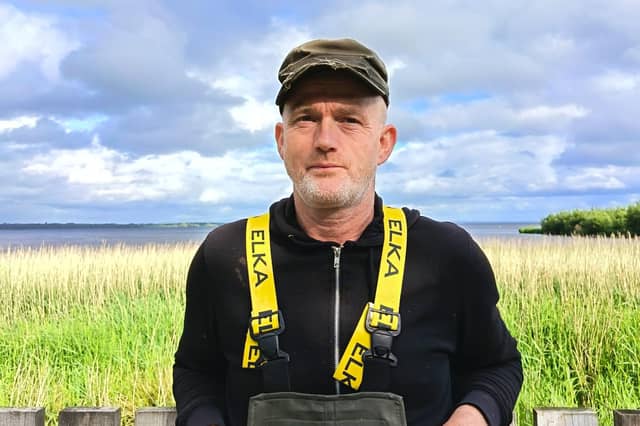

Lough Neagh fishermen, with a combined industry experience of 130 years and who live and breathe life around the lough, have not drunk tap water for the last three years.
Gary McErlain, 53, a seventh-generation, commercial Lough Neagh fisherman and Chair of the Lough Neagh Partnership said "the stats and science” tell us very clearly that “it is slurry, by way of the farmers, and the infrastructure pumping raw sewage into the system” that is having such a devastating affect on the water.
“So that is human sewage and slurry and those are two big things,” he said.
"We shouldn’t live in a world where no-one drinks water out of the tap, but we do.
“It is not rocket science – and I am not pointing a finger at farmers – but farm models are to blame.
"Going back 20 years the average farmer had 20 cows. But now it is farming on an industrial level with 60 cows and it is around the clock intensive farming and our country is just not fit to cope. We don’t have the infrastructure here.
"In 2012 the ‘going for growth’ model was to help smaller farms make more money – it was either scale up or get out.
“Now we have bigger farms doing more harm than other farms, without question, and the lough is paying the price.”
Gary added that “what is happening is beyond criminal”.
"We have environmental laws meant to protect waterways, wildlife and everything else and if they are being flouted and a blind eye turned then we have a major problem,” he added.
Gary further claimed that “NI water have been polluting waterways" because "their facilities cannot cope”.
"They say they don’t have the funding to upgrade their facilities and that is not good enough,” he said.
“Their sewage infrastructure is not built to cope with the numbers using it. It is as simple as that and it is flowing in our waterways.”
Gary said now that eel fishing has been stopped – last year by Lough Neagh Cooperative and for the next three years by DAERA.
"In our view three years is not going to make one bit of difference for eel fishing,” said Gary. “Their reason (DAERA’s) is to follow science and they say the eel is an endangered species, but there is also a European management plan for the eel which we have been following.”
Lough Neagh hit the headlines in 2023 when it was swamped by blue/green algae.
"Nothing is going to change when we stop fishing – it is very clear the 2024 crash of the migratory eel was down to their feed.
“Basically if you are going to run a marathon you make sure your food is top class, but the migratory eel who has to swim 3000 miles across the Atlantic ocean is going to need to be in prime condition.
"This is where we see the eels were not in prime condition.
"Science is lagging behind, because they are not seeing how the pollution is affecting the eel.
"The markets were telling us last year that the oil content and fat content of the eels was not sufficient.
"That all points to its food and that is the reason it crashed last year in our view. Science is not saying that yet.
“A major loss for the eel is the Lough Neagh fly, because as soon as it disappeared the number of eels went way, way down.
“That fly made our eels famous throughout Europe, but now we have lost that high oil content.
“Whatever happened in 2023 when the lough literally turned green, it impacted the food sources in Lough Neagh.
"Fishermen are seeing even beyond the eel, with shore animals behaving out of kilter."
He added that in 2023 local people saw “the natural algae in Lough Neagh” explode from the “overload of nutrient and phospherous from agricultural waste and NI water waste that the whole thing turned into a sludge”.
"I mean if you put slurry on a field the grass explodes and the same thing happened on the lough. The lough generally has its own way of fighting back – and it will, given a chance.”
Gary added that there is “good news” as local people have seen an increase in elvers coming back to the lough.
“Last year there were around 5 million - they haven’t come in those numbers since the 1980s.
"And this year there is close to 6 million, so if those elvers are coming back, what are they coming to?” he said.
Fishermen can still “fish for other species, but the main thing for us was always the eel”, he continued.
"We now need an independent environment agency to do a review of what needs to be done,” he added. "It needs to be done by an agency that stands on it’s own two feet.”
A spokesperson for the Department for Infrastructure said: “NI Water has invested £90.6m in assets around Lough Neagh within the first five years of PC21.
“Wastewater treatment effluent contributes to approximately 24% of phosphorus pressures on water quality in the Lough. NI Water is operating treatment works around the Lough within regulatory requirements."
HAVE YOUR SAY
You can send your comments on this story via a Letter to the Editor. Email: [email protected]
1.
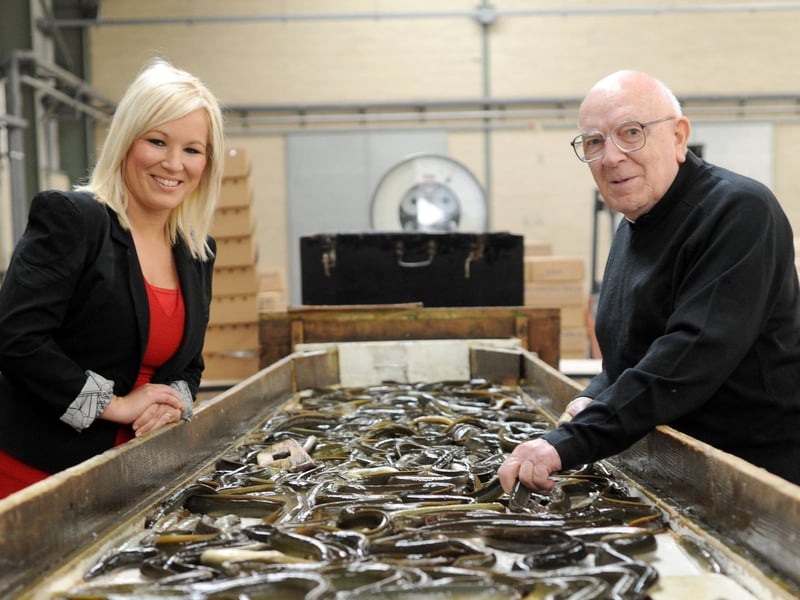
Agriculture Minister Michelle O'Neill watches the eels being sorted at Lough Neagh Eel Fishermen's Co-operative Society with Father Oliver Kennedy, Chairman of the Co-op, during her visit to Toomebridge in 2011 Photo: pacemaker
3.
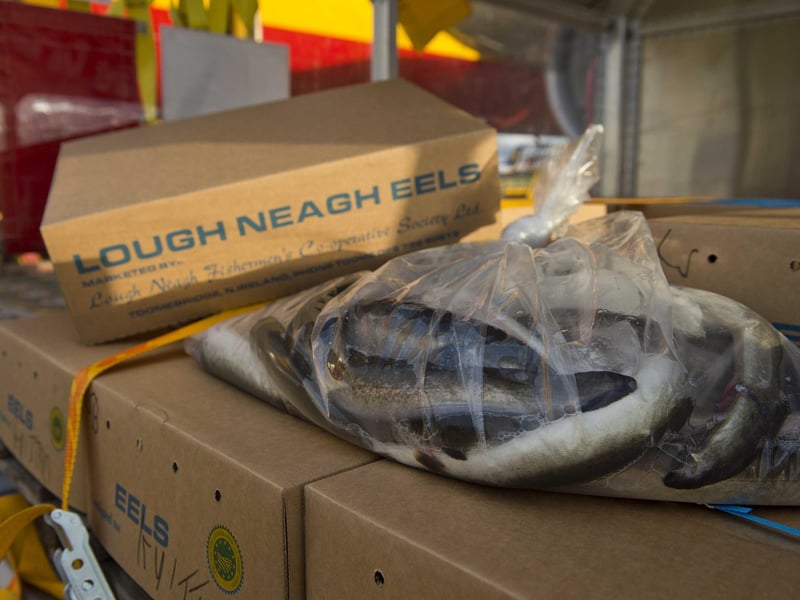
Eels from Lough Neagh are boxed and handled at The Lough Neagh Fishermans CO Operative in Toome Photo: ugc