
Make school meal expansion count for British farmers as well as British children, say food and farming organisations
New research reveals a £600 million boost opportunity for British farming and children’s health – but warns the government risks missing the chance.
With just 12 months to go until all children in households receiving Universal Credit in England become eligible for free school meals – benefitting an estimated 620,000 more children in the first year – NEW analysis shows this policy could transform not only children’s health and education, but also Britain’s food and farming economy.
The landmark report, Follow the Carrot, published by Sustain, Bremner & Co and the Ampney Brook Foundation with support from Impact on Urban Health, calls on the government to expand school meals in a way that also delivers for British farmers, sustainable food systems and children’s futures.
The report reveals that expanding to universal school meals could be a game-changer for both children and British farming, increasing the number of meals served each year from 1 billion to a whopping 1.54 billion – an extra 540 million plates of food!
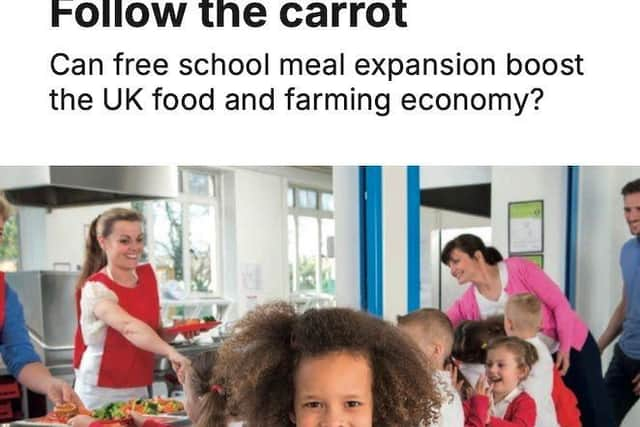

Ahead of the National Farmers Union’s Back British Farmers Day (10 Sept), this surge in demand has the potential to unlock a massive £600 million boost for UK agriculture by sourcing more carrots, broccoli, potatoes and other ingredients from British growers, while helping the government meet its own target of 50% local, sustainable and British produce in public sector food.
Investing in school meals is a win-win for children, farmers, and the economy. With the potential to deliver 1,540 lorry-loads of carrots – boosting annual sales from £11m to £18m, 7.8 million sacks of potatoes, increasing sales from £155m to £250m, and 1.3 billion florets of broccoli to children, worth £68m up from £42m, the research proves that, with the right support and incentives, healthier school meals can boost both sustainability and economic viability of British farming.
Barbara Crowther, Children’s Food Campaign Manager at Sustain, who commissioned the research, explains:
“We’re on the brink of the most important expansion of school meals in a generation. Our report shows we have a really exciting opportunity to use this to deliver a triple whammy of delicious, nutritious meals for children, investment in sustainable British farming and benefits to our wider economy. The government simply cannot afford to miss it.”
However, the report’s authors caution that this golden opportunity will be lost without decisive government action, stressing that real impact depends on proper funding for school meals, investment in local supply chains and procurement infrastructure, and stronger support for catering teams to deliver higher-quality food.
To secure these benefits, the report sets out five key recommendations for government:
1. Unlock growth for UK producers by continuing expansion towards universal school meals.
2. Fund school meals properly to reflect the true cost of quality and invest in supply chain infrastructure.
3. Raise standards and enforce compliance to ensure nutritious, sustainable food in every school.
4. Scale up proven local models that deliver benefits for both children and farmers.
5. Join up strategies across health, farming and the economy to maximise the impact of public food spending.
The report’s co-author Myles Bremner, former Director of the School Food Plan, says:
“The government has set a great ambition of getting more British veg in our schools – a real win-win-win for our farmers and growers, for our kids’ health, and for sustainability. But we need to make sure the school food system is resilient and able to cope with more fresh produce in our kitchens. That means proper kitchens, well-trained staff, and appropriate funding.”
Henry Dimbleby, author of the School Food Plan and the National Food Strategy, welcomed the report:
“If we are to shift the national diet to include more veg and beans, school kitchens are the place to begin. Expand free school meals and buy well; we’ll nourish children, normalise better diets and support British producers.”
British chef, food writer, and broadcaster Hugh Fearnley-Whittingstall says:
“This is a golden opportunity to nourish our children with good, wholesome British food while giving our farmers the boost they desperately need.
“Expanding free school meals isn’t just about filling plates, it’s about filling them with fresh, sustainable, home-grown produce that supports children’s health and strengthens our farming economy.
“With the right investment and leadership, we can turn 540 million extra school meals into a win-win for kids, farmers and the planet.”
Farmers and catering providers are also backing the call.
David Simmons of Riviera Produce, a leading producer of British brassicas says:
“Great British healthy brassicas offer huge potential, with the right encouragement, to supply into schools and support giving children a healthy start to life. There’s such huge growth potential too – we’re currently missing a trick!”.
Furthermore, real-world examples prove it can work. In Blackpool, local authority caterers recently switched from imported frozen mash to Lancashire potatoes.
Derek Wright, Blackpool Catering Lead, adds:
“We’re now using British potatoes in the mash – no more frozen imports. We’ve stripped out additives and palm oil and reinvested the savings into our workforce. It’s healthier for children, better for farmers, and smarter for local economies.”
Jayne Jones, Chair of the Public Sector Catering Alliance, adds:
“It's important that any investment in public food works hard and delivers positive outcomes for our children and young people. This research demonstrates that investing well in our school meals service can deliver multiple food systems benefits for children and young people's health, for our farming communities and for climate action.
“This is the right moment to support our catering staff and infrastructure to ensure that these benefits can be built on as an investment in the future of our young people and our services.”
Geetu Bhan, CEO of the Ampney Brook Foundation, who co-commissioned the report with Sustain, says:
“This report further demonstrates how school food can be utilised to support a fairer, healthier and more sustainable food system. By serving more British-grown veg and beans in schools and switching to less but better British beef, we can nourish our children, support our farmers, and protect the planet at the same time.”