

But Cancer Research UK says targeted lung cancer screening in Northern Ireland would save lives.
With lung cancer remaining Northern Ireland’s biggest cancer killer, the charity is calling for the roll out of a targeted lung cancer screening programme to diagnose the disease earlier and improve survival.
Statistics show that when people in Northern Ireland are diagnosed with lung cancer at stage one, more than half (52%) survive for five years or more.
But this drops to just 2% for those who reach stage four of the disease before it is diagnosed.
Liz Morrison, Cancer Research UK’s public affairs manager in Northern Ireland, said: “Far too many people in Northern Ireland are being diagnosed with lung cancer at a late stage when there are fewer treatment options.
“This is unacceptable. We’re in a golden age for cancer research. We know more about cancer than ever before, including how to better prevent, diagnose and treat it.
"Early diagnosis improves survival and the best tool we currently have for diagnosing lung cancers earlier is screening.
“We need a clear commitment from the next Northern Ireland Executive to fund and deliver a targeted lung cancer screening programme without delay.”
The UK National Screening Committee recommended in 2022 that all UK nations implement screening for those considered to be of higher risk of developing lung cancer- people aged between 55 and 74 who either smoke or used to smoke.
In England, a screening programme to detect lung cancer is already underway.
And the Scottish Government has committed to phase one of a lung screening programme beginning in 2027.
In Wales, a targeted lung cancer screening programme in North Rhondda, led by Cwm Taf Morgannwg University Health Board has led to plans for a wider roll out in 2028. *
But there are no publicly confirmed plans for an equivalent initiative in Northern Ireland.
Cancer Research UK recently published its manifesto ahead of the May 2027 Stormont elections, outlining key recommendations to improve cancer outcomes and make a difference to patients and their families.
It asks the next Northern Ireland Executive to commit to reducing the cancer death rate by 15% by 2040 through implementation of the 2022-2032 Cancer Strategy for Northern Ireland.
This ambition would prevent around 5,900 deaths, between now and 2040 the charity reports.
The introduction of lung cancer screening is a vital part of that mission. Every year around 980 people die of lung cancer in Northern Ireland.
It is estimated that if lung screening was rolled out in full across Northern Ireland and 60% of those eligible took up their screening invitation then 70 lives a year could be saved.
This would also provide wider economic benefits of around £45million a year.
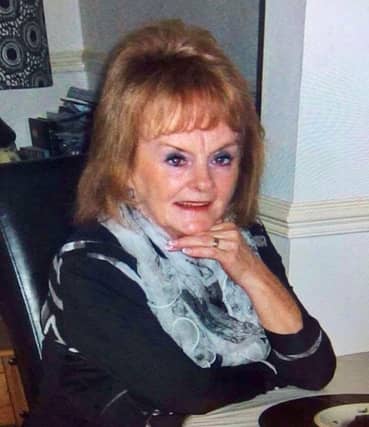
Someone who knows first-hand the devastation of a late lung cancer diagnosis is Sinead McGarry of Downpatrick, Co Down.
She and her sisters, Ciara, Nuala and Emma were heartbroken when their mum Margaret Cusack died aged 64, less than five months after being diagnosed with the disease.
Sinead, 53, said: “I miss mum every single day. There are so many moments our wonderful mum didn’t live to see.
“Babies have been born into our family, we’ve had weddings, special birthdays, all days which mum should have been at the centre of.
"Mum worked hard every single day of her life and it feels unfair that she didn’t get the opportunity to enjoy these moments with us all. Her passing left a huge hole in our lives.
"By the time Mum was diagnosed with lung cancer there actually wasn’t a lot more that could be done.
"If lung screening had been available then and mum had been diagnosed earlier then maybe things would have turned out differently.”
Margaret, who worked as a carer for adults with learning disabilities, developed a persistent cough before Christmas in 2015.
Although she had smoked earlier in her life, it didn’t occur to the family at first that the symptoms could be a sign of cancer.
She was initially thought to have bronchitis and advised to rest. But by the summer of 2016, when symptoms didn’t improve, Margaret was referred to Ulster Hospital for tests.
She was diagnosed with stage three lung cancer on 21 September 2016 and told the cancer had already spread to the lymph nodes in her chest wall.
Margaret died on 6 January 2017. Since then, her family has raised funds for Cancer Research UK in her memory.
Sinead said: “Mum put others first all of her life and even in the months before she died, I think she tried to protect us.
“Lung screening will come too late for my mum but I would like to see it introduced in Northern Ireland to spare other families from going through what we did. This is something that every political party should support as it has the power to make things so much better for people in the future.”
More than 190,000 people in Northern Ireland still smoke.
With the harms of tobacco concentrated in more deprived communities, smoking is the biggest driver of health inequalities.
Cancer Research UK is calling for the Northern Ireland Executive to ensure there is sufficient funding for stop smoking services, so everyone has access to the tools they need to quit for good.
Taking bold action to prevent cancer in the first place is also essential. In February 2025, members at Stormont formally agreed to the UK Tobacco and Vapes Bill through a legislative consent motion, endorsing the extension of the Act’s provisions to Northern Ireland once passed into law.
The world-leading legislation to phase out the legal sale of tobacco will apply to children born on or after 1 January 2009.
If the new law has the impact hoped for, by 2040, up to 275,000 fewer cigarettes will be smoked each day in Northern Ireland.
Cancer Research UK is also calling for the Executive to set a clear target date for Northern Ireland to be smokefree. (less than 5% of the adult population smoking.)
See the first results 2024/25 Northern Ireland Department of Health, 2025.
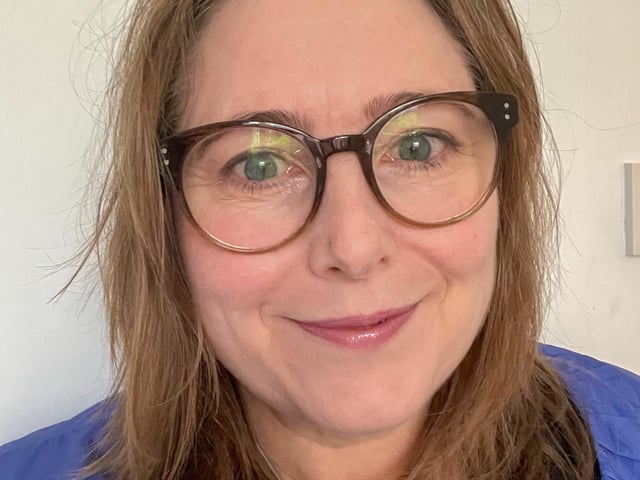
1. Liz Morrison, Cancer Research UK public affairs manager for Northern Ireland.jpg
Liz Morrison, Cancer Research UK public affairs manager for Northern Ireland Photo: UGC
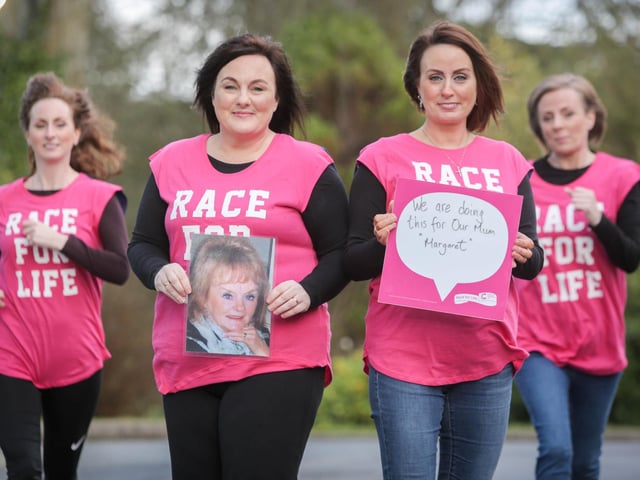
2. Left to right sisters Nuala, Sinead, Ciara and Emma who took part in Race for Life in memory of their mum Margaret Cusack who died from lung cancer.jpg
Left to right sisters Nuala, Sinead, Ciara and Emma who took part in Race for Life in memory of their mum Margaret Cusack who died from lung cancer Photo: Brian Thompson
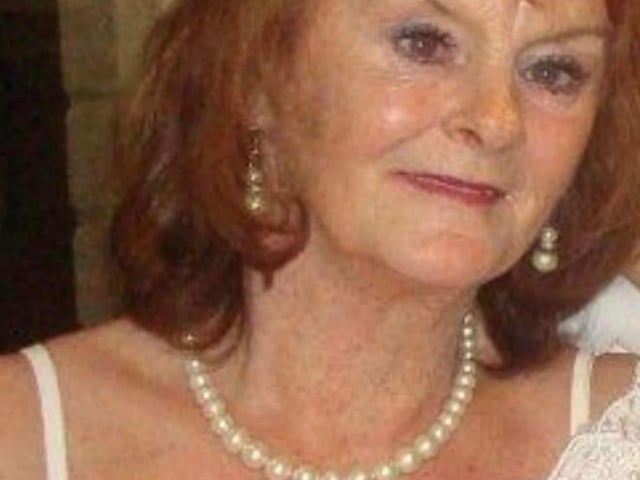
3. Margaret Cusack from Downpatrick who died from lung cancer.jpg
Margaret Cusack from Downpatrick who died from lung cancer Photo: UGC
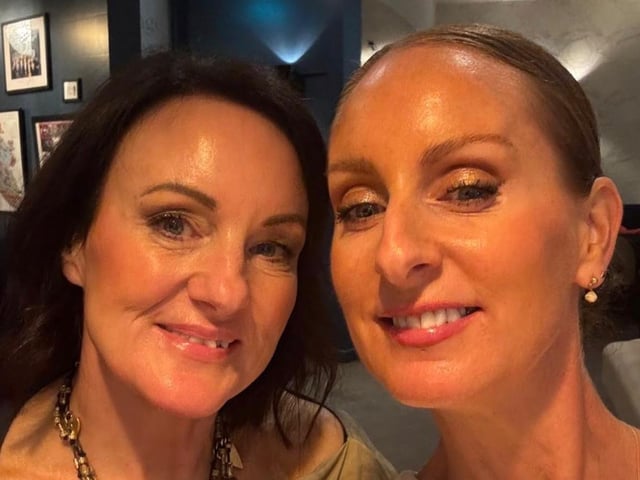
4. Left to right Sinead McGarry with her younger sister Nuala.jpg
Left to right Sinead McGarry with her younger sister Nuala Photo: UGC