
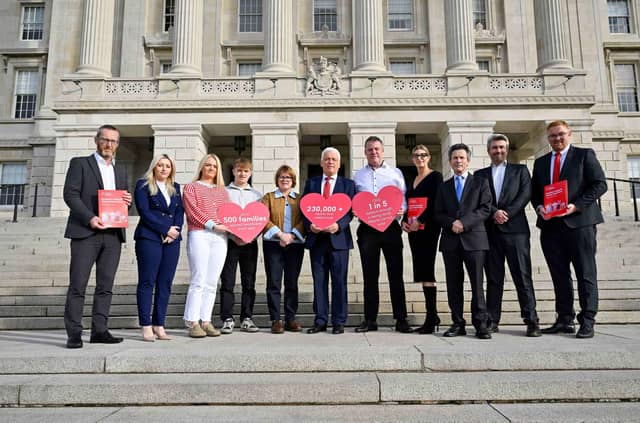

According to the report, ‘Northern Ireland’s Hearts Need More: Making prevention a priority’ warns that cardiovascular
disease remains one of the country’s leading causes of death, killing around 4,400 people a year.
In 2024, 1,330 people died from cardiovascular disease before the age of 75 — the highest annual number of premature cardiovascular deaths in Northern Ireland since 2010.
BHF estimates that up to 2,500 premature cardiovascular deaths could be prevented over the next Assembly mandate through public health interventions.
The charity said many of these deaths are not inevitable.
Major risk factors for cardiovascular disease, including high blood pressure, high cholesterol, smoking, obesity and diabetes, can often
be identified and better managed before they lead to a devastating heart attack or stroke.
BHF Northern Ireland says stronger prevention could help stop up to 500 people dying prematurely from cardiovascular disease each year.
With an Assembly election due in 2027, BHF NI says the next political mandate represents a critical opportunity to change that picture.
It is calling on every political party to commit to reducing premature cardiovascular deaths and back practical measures that prevent disease before people become seriously ill.
It is asking for three clear actions:
Restrict price and location-based promotions of food and drink high in fat, salt and sugar which are contributing to rising obesity levels.
Create a smoke-free Northern Ireland by 2035 through the Tobacco and Vapes Act, more smoke-free spaces and a new tobacco control strategy.
Establish a dedicated Cardiovascular Disease Risk Factor Management programme to identify people with high levels of undiagnosed or poorly managed cholesterol and blood pressure earlier and connect them with the right support and treatment.
More than 230,000 people in Northern Ireland are living with cardiovascular disease — 230,000 hearts that need more — and cardiovascular conditions directly lead to around 28,000 hospital admissions each year.
Around 70% of the cardiovascular burden is associated with modifiable risk factors, which are very often preventable.
An estimated 400,000 people in Northern Ireland have high blood pressure, including as many as 100,000 who may be undiagnosed and unaware of the serious health risks it can pose.
Fearghal McKinney, Head of British Heart Foundation Northern Ireland, said: “Behind these figures are hundreds of families who could be spared the heartbreak of losing someone they love too soon.
"Cardiovascular disease remains one of Northern Ireland’s biggest killers, but too often we are waiting until people become seriously ill instead of finding and managing their risk earlier.
“We know many of the things that put people’s hearts at risk, and we know more can be done to tackle them. With an Assembly election approaching, every political party now has an opportunity to commit to a healthier future by making the prevention of cardiovascular disease a priority.
“Northern Ireland does not lack the evidence to act. What we can’t do is afford is to wait.”
Professor Sir Michael McBride, Chief Medical Officer for Northern Ireland, said: “Cardiovascular disease continues to have a profound impact on people, families and health services across Northern Ireland.
"Greater emphasis on prevention, early identification and effective management of risk factors such as high blood pressure and high cholesterol can help prevent serious illness and save lives.
“This must include reaching communities and population groups that have historically had lower uptake of prevention and care.
"Working across government, health and social care and local communities will be essential if we are to narrow inequalities and support more people to live healthier lives for longer.”
Prof Patrick Donnelly, Consultant Cardiologist and NI cardiac rehabilitation and prevention lead, said: “The great tragedy is that 12 people are dying from cardiovascular disease in Northern Ireland every day.
"During the Covid-19 pandemic, figures like these were rightly treated as a national emergency, yet today there is a danger that the premature lives being lost are being relegated to just more disease statistics.
“Northern Ireland is the only part of the UK without a strategic plan for the detection and management of cardiovascular disease, leaving people facing a postcode lottery in access to the services and expertise that could save their lives.
“We are not systematically identifying people at risk early enough, and the pressure this creates across the health service is palpable. If we are to change the trajectory, we must invest more of our budget in prevention rather than crisis management.”
Prof Donnelly added: “This is not prevention instead of treatment; it is prevention that will protect our capacity to treat patients in the future.
"Cardiovascular disease is not inevitable, and earlier detection and management of risk factors can prevent avoidable illness, hospitalisation and death.”
Terry’s story
Terry Rice, 54, from Newry, is supporting the campaign after his husband, Derek Waters from Londonderry, died suddenly following a heart attack aged 61.
Derek and Terry, affectionately known as Del and Tel, had been together for eight years and married for two and a half.
In February 2026, Terry said goodnight to Derek and told him he loved him.
The next morning, he woke to find that Derek had died in his sleep from a cardiac arrest caused by a heart attack.
A post-mortem examination found blocked coronary arteries and hypertension as the cause.
Terry said: “He was the kindest, loveliest man and always saw the positive in everything. We were kindred spirits, looking forward to many years of happiness, where we could just be ourselves, together, until that was cut short.”
In the months before Derek died, he experienced a persistent cough, toothache and heartburn, but neither he nor Terry had any reason to suspect an underlying heart problem.
“I had worked in pharmaceuticals and diagnostics and considered myself informed about medical conditions and symptoms, but this caught me completely unawares,” Terry said.
“Finding out afterwards that the signs might have been there felt like a dagger to my heart. I kept thinking, ‘What if I had known?’”
Since Derek’s death, Terry has encouraged friends and family to attend health checks, take prescribed medication and seek advice when symptoms persist.
He booked a full health review with his own GP and now hopes that sharing their story will prompt others to act.
“People should know that it is okay to ask about their heart health,” Terry said. “We need to get beyond the feeling that we are bothering doctors or that there is no point trying to get an appointment.
"Better awareness and earlier action, and a system that reaches out to detect and treat could make all the difference.
“I want to do something that might spare another person the pain and the ‘what ifs’ I have had to live with. Would Del still be alive if we had known more? I cannot answer that. But if sharing our story reaches one person and prompts them to act, it will have made an impact.”
The Huffington family’s story
The Huffington family, from Portstewart, lost their beloved father and husband Garry suddenly to a heart attack on 8 September, shortly after he returned from a holiday in Sorrento with his wife, Alison.
Fifteen years earlier, aged 51, Garry had survived a heart attack before recovering and returning to an active life centred on family, football, church and travel.
His first heart attack presented unexpectedly as difficulty eating and severe ear pain rather than chest pain.
An ECG at his local surgery confirmed he was having a heart attack, and he later had a stent fitted at the Royal Victoria Hospital.
Garry rebuilt his confidence through cardiac rehabilitation and went on to live life fully.
He was active in his church and local football, played sport with his children Lucy and David, and shared David’s love of Manchester United.
Alison said: “After his heart attack, he just lived life. He didn’t want to miss out on things.”
On 8 September, after a normal day walking the dog and cleaning the church, Garry became unresponsive while visiting his mother.
Police officers and paramedics attempted to resuscitate him, but he died at Causeway Hospital.
Alison said: “I was numb. I couldn’t believe it was happening to us. It was so sudden.”
The family remember Garry as a gentleman with a dry sense of humour who was at the centre of family life and quietly helped others.
Lucy said: “We didn’t realise how much Dad had done for us until now. He did so much for all of us.”
The family are sharing Garry’s story to encourage people to understand their family history, recognise that heart attacks do not always cause obvious chest pain and seek advice about their cardiovascular risk.
Lucy said: “Daddy had so much more life to experience with us. We feel robbed of so many years of precious memories as a family.”
They hope greater awareness and earlier checks could help prevent another family experiencing the same sudden loss.
Launching the report at the Long Gallery, Parliament Buildings, BHF Northern Ireland said the evidence, public support and workable policy solutions are already available.
With 230,000+ hearts needing more and as many as 500 families a year potentially spared heartbreak, hearts cannot wait.
What hearts need now is action.
For further information and to read the report Northern Ireland’s Hearts Need More: Making prevention a priority, visit www.bhf.org.uk/niheartsneedmore
1.
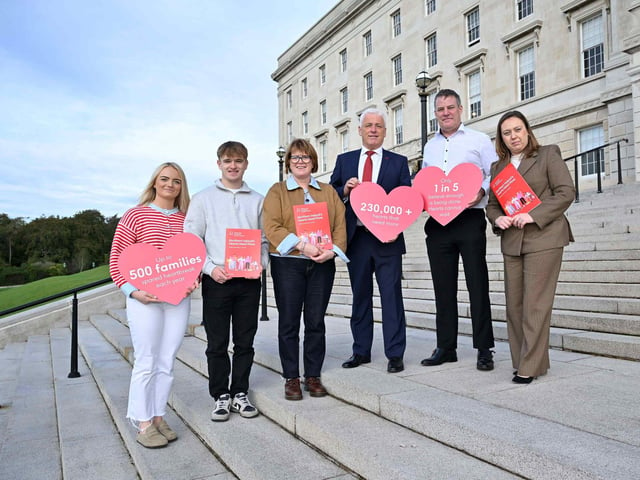
British Heart Foundation NI has launched a new report, ‘Hearts Need More’, highlighting the urgent need to tackle cardiovascular disease (CVD) in Northern Ireland and prevent as many as 500 premature deaths a year. Pictured at the launch at Parliament Buildings are Lucy, David and Alison Huffington from Portstewart, who lost their beloved father and husband Garry suddenly to a heart attack in September with Terry Rice from Newry, who lost his husband Derek to a heart attack in February alongside Fearghal McKinney, Head of BHF NI and event sponsor DUP MLA Deborah Erskine. Photo: UGC
2.
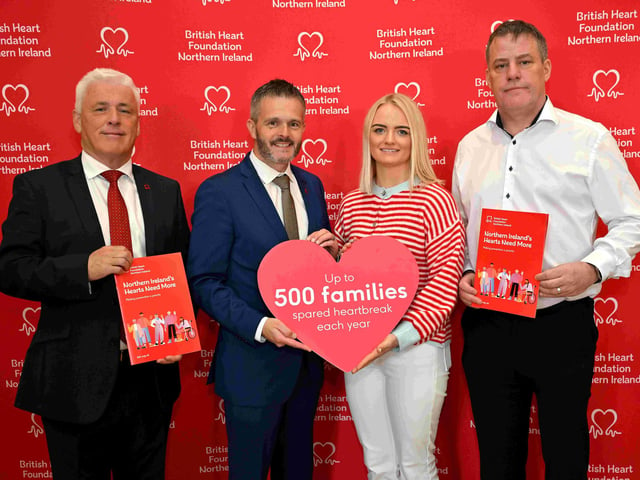
British Heart Foundation NI has launched a new report, ‘Hearts Need More’, highlighting the urgent need to tackle cardiovascular disease (CVD) in Northern Ireland and prevent as many as 500 premature deaths a year. Pictured at the launch at Parliament Buildings with Health Minister Robbie Butler are Head of BHF NI Fearghal McKinney, Lucy Huffington from Portstewart, who lost her father Garry suddenly to a heart attack in September with Terry Rice from Newry, who lost his husband Derek to a heart attack in February. Photo: UGC
3.
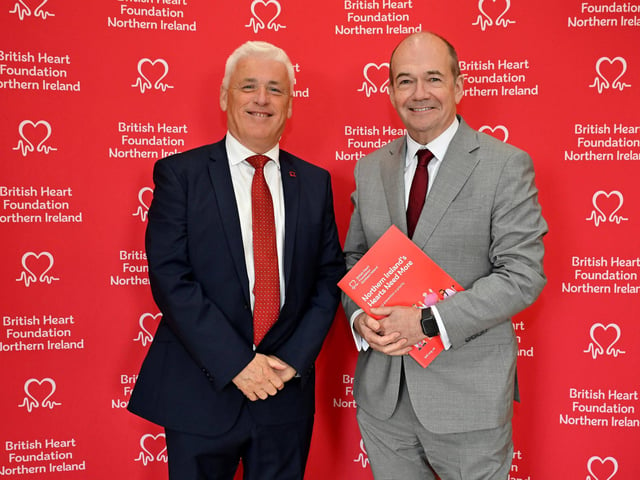
Hearts Need More Michael McBride: British Heart Foundation NI has launched a new report, ‘Hearts Need More’, highlighting the urgent need to tackle cardiovascular disease (CVD) in Northern Ireland and prevent as many as 500 premature deaths a year. Pictured at the launch at Parliament Buildings is Chief Medical Officer Professor Sir Michael McBride with Head of BHF NI Fearghal McKinney. Photo: UGC