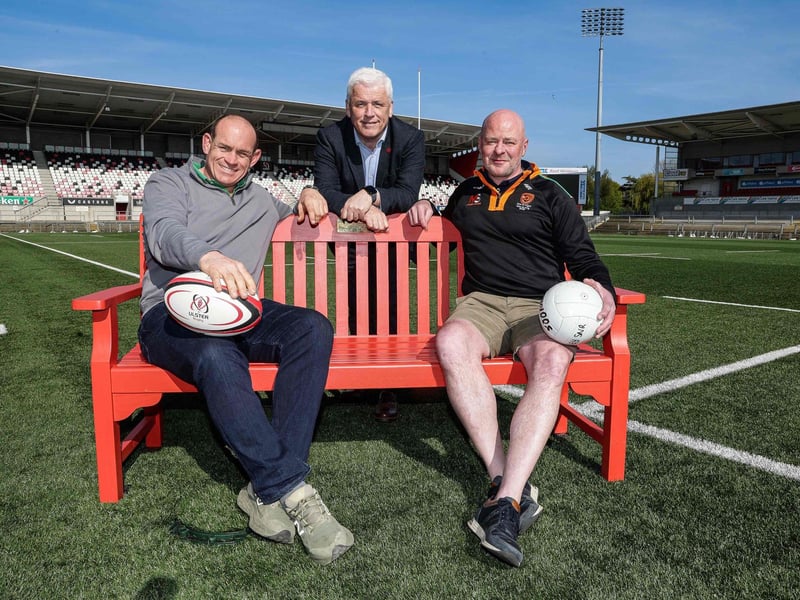
The two Northern Ireland sports stars have shared the impact of living with cardiovascular
disease as part of a British Heart Foundation campaign.
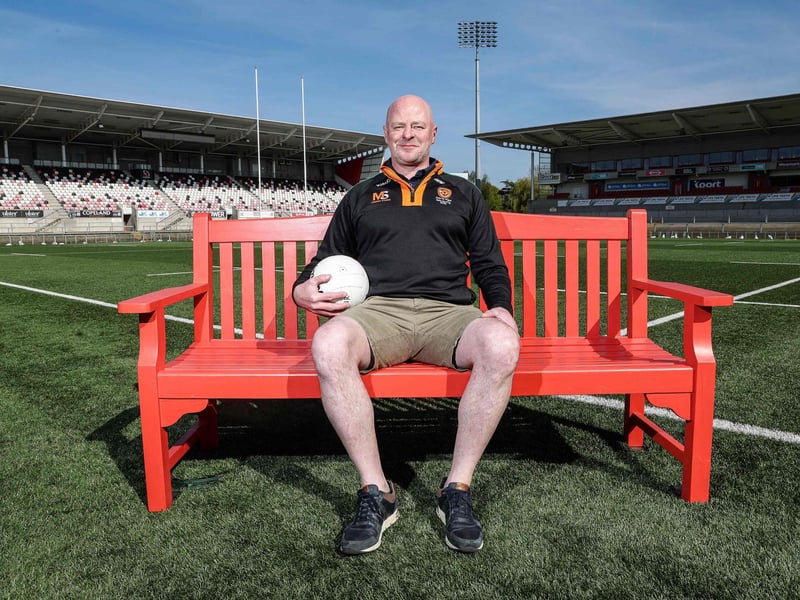
Derry GAA All Star Kevin McCloy suffered eight cardiac arrests after collapsing on the pitch in
2014.
Ulster and Ireland rugby prop Simon Best was struck down at the 2007 World Cup in France when
it was discovered he had an irregular heart rhythm.
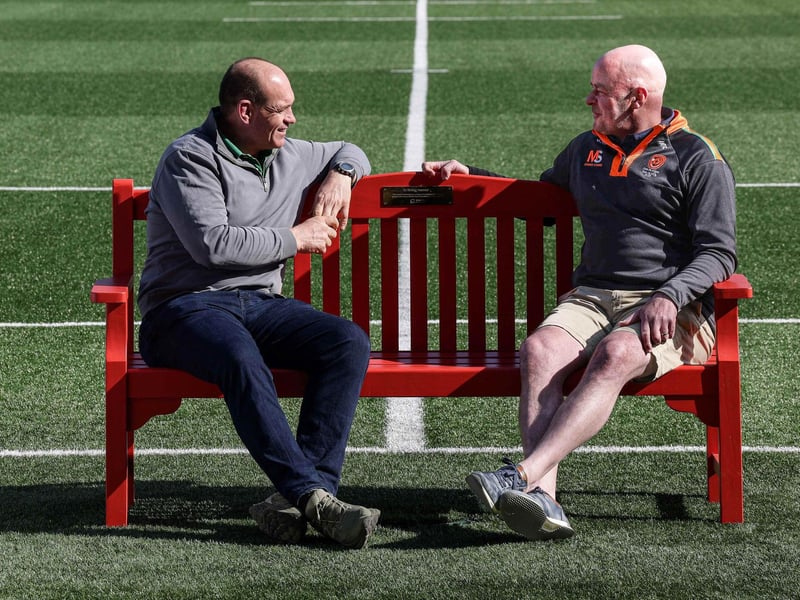
Kevin and Simon have now joined forces to share their stories on living with cardiovascular
disease as part of British Heart Foundation’s ‘Keep Us Beating’ campaign.
Kevin was playing in a county Championship match 12 years ago for his club Lavey against Magherafelt at Owenbeg when he fell to the ground just 10 minutes into the game.
It was at this moment that the 35-year-old suffered his first cardiac arrest.
Kevin had to be put into a medically induced coma for several days but his life was saved thanks to actions of doctors on the scene in Owenbeg and a nearby defibrillator.
While he was in hospital for surgery, Kevin had another cardiac arrest on the operating table and doctors inserted an ICD (implantable cardioverter defibrillator) in Kevin’s chest.
Once he returned home, Kevin’s life changed dramatically and he was forced to retire from his beloved Gaelic football, and was, in fact, advised that he couldn’t continue with any intensive activity.
Twelve months after his first cardiac arrest, Kevin’s health deteriorated again and his heart function dropped to the extent where his cardiologist began discussions around considering him for a heart transplant.
However after further investigations, in 2018, Kevin was diagnosed with cardiac sarcoidosis which is an inflammatory disease affecting the heart muscle.
Kevin will never forget the day his life was turned upside down and indeed his heart actually stopped working for seven minutes.
“I was a Gaelic footballer playing at the highest level, Derry county level for 12 years, and for my club, Lavey for 18 years,” says Kevin.
“It was 2014, I was 35 and playing in a Championship match, a very important game. Ten minutes in without any prior symptoms, I collapsed on the pitch. The next thing I remember is when I woke from an induced coma in Altnagelvin Hospital several days later.
“I left hospital three or four days afterwards and my life changed forever.”
Kevin admits he struggled to come to terms with what had happened to him and how he’d gone from being a fit, elite sportsperson to a dad unsure if he even had the energy to play with his children.
Kevin has now been retired from top level sport for 12 years but still finds it difficult to accept that cardiovascular disease brought an end to his sports career and brought so much change to his home life.
He still retains an immense passion for Gaelic football and Kevin is now able to channel his focus into coaching.
Meanwhile, Simon Best was an Ireland international at the 2007 Rugby World Cup in France. The Ulster Rugby star was 30 years old and felt in great shape, ready to play his part as Ireland prepared to progress through the tournament.
However he suddenly took ill between pool games experiencing a headache, difficulty speaking, and loss of sensation down his right side while walking, which was later diagnosed as a TIA (transient ischaemic attack).
Suddenly, not only was his tournament over, but also his career as when he was diagnosed with a irregular heart rhythm, doctors advised him to quit professional rugby, due to its high intensity.
Simon says: “My first experience was completely out of the blue. I had a medical event at the Rugby World Cup in 2007, it was mid-week between pool games, I was at peak fitness, it was the biggest competition of my career.
“I had a TIA (Transient Ischaemic Attack or ‘mini-stroke’) and was diagnosed with an irregular heartbeat. I was very fortunate I was in Bordeaux surrounded by the Ireland Rugby medical team and cardiologists in the local hospitals.
“But unfortunately it was the end of my rugby career. I had a period of trying to get to the bottom of what happened.
“I had stroke symptoms for nine hours, and after that everything resolved apart from the irregular heartbeat. I had no previous signs or symptoms of any illness or heart problems The symptoms came on fairly quickly, I was confused and felt quite exhausted suddenly and at first I thought I might be having a stoke.
“Fortunately I was in really good hands and the Ireland rugby team doctor reacted really quickly.”
Simon spent six days in a French hospital, and even though his symptoms disappeared after 36 hours, numerous tests were conducted on him. For the next 12 months he was put on different medications before opting to take a different course
of action.
“It was far from an easy decision to make to retire from international rugby because of the
diagnosis, as I was at such a high level of competition. However, I also had to take into account my family history. My grandfather had died early of a heart attack, and my father has had some heart issues. I therefore recognised the impact of
cardiovascular disease.”
Simon added that he found giving up the game he loved very difficult to accept. But now he is encouraging anyone who has any symptoms that are concerning to seek medical advice as soon as possible.
Simon and Kevin, after all they’ve experienced, are proud to share their story for British Heart Foundation’s ‘Keep Us Beating’ campaign.
To mark 65 years since British Heart Foundation began, the charity has unveiled 65 red benches across the UK in tribute to those living with cardiovascular disease, including heart attacks. Behind every bench is a powerful real-life story of someone living with a cardiovascular condition – and thanks to research, they can survive to enjoy life with their loved ones.
Every day, around 12 people in Northern Ireland die from cardiovascular disease, with the
condition affecting more than 230,000 people in Northern Ireland.
British Heart Foundation hopes that the red benches will encourage others to open up about their
experience of living with cardiovascular disease and help raise awareness in Northern Ireland.
The charity is also urging people for donations so they can help fund more groundbreaking
research to keep Northern Ireland’s hearts beating.