
'We had to create WhatsApp group to protect homes, farms, livestock, and families from unwanted hunting activity' - Hunting with Dogs Bill
The damage caused on farms by hunts and stress endured by families was heard today by the AERA committee during evidence in the Hunting with Dogs Bill.
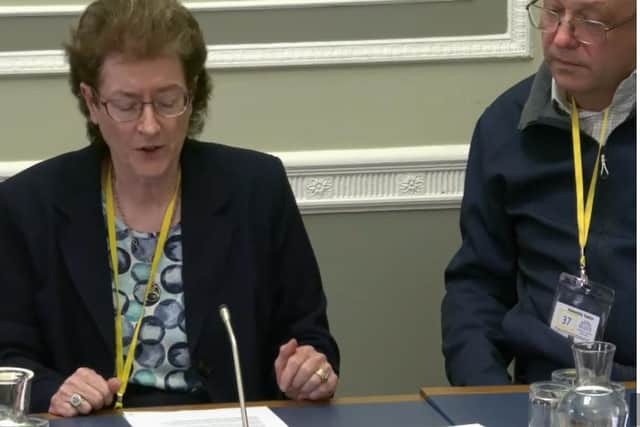
Christine Bailey, from a concerned residents' group in the BT15 area said they were formed ‘in early 2023 in response to continued hunting-related damage in our area’.

"Like others in the group, I'm a landowner, a horsey person, a member of the British Horse Society,” she said.
"Our message is simple: farmers and rural residents have a right to say no to hunting on their land, and they need to be protected in law.
"Their land, livestock, homes, businesses, and families must be and need to be protected from unwanted hunting activity.
"This is not simply a debate about hunting as a pastime, it is about consent, property rights, animal welfare, biosecurity issues, personal safety, civil liberties, and the right to live and work peacefully in the countryside”.
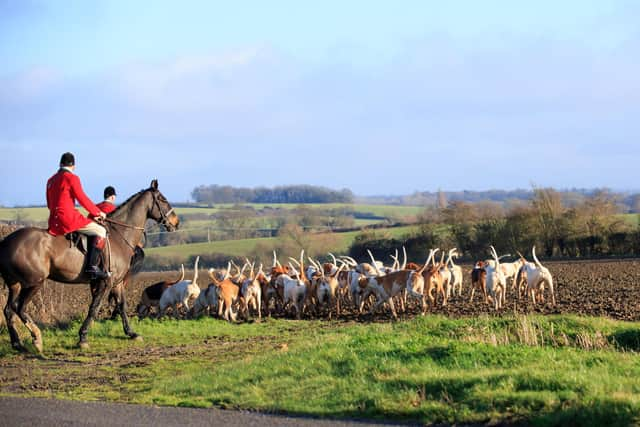
Mrs Bailey said their area “lies at the intersection of four mounted hunts, and we also experience unwanted hunting activity by people on foot with dogs”.
She said she has been involved in many meetings around the hunts – involving with MLAs, councillors, Ulster Farmers Union, PSNI, USPCA, Northern Ireland Master of the Hounds, and the Hunting Association in Northern Ireland, along with local farmers and landowners
"We have dashcam footage, photographs, and CCTV documenting hunt havoc activity available for the committee to examine upon request,” she added.
"We have had to establish a WhatsApp group so that neighbours can warn one another when the hunt is sighted in the area.
"Please think about that for a moment. People living and working in rural Northern Ireland have had to create their own warning system to protect their homes, farms, livestock, and families from unwanting hunting activity.
"This should not be necessary in this day and age. The fundamental issue is one of consent.
"Farmers own, rent, and work their land. Rural residents live in their homes and operate businesses from their properties.
"Our fields are not for public recreation grounds, and our farms are not available for unrestricted use by hunting parties.
"Residents have directly informed hunt participants that they do not have permission to enter their land, yet unwanted entry continues, including incidents where landowners have been present and expressly told participants to leave.
"We are concerned about gates being forced open or damaged, fencing wire being cut, hedges destroyed, crops trampled, and agricultural ground damaged.
"Gates are left open, allowing livestock to escape, sometimes onto public roads and further afield to cause injury and financial loss”.
She added that farmers “rear livestock to produce food, support our families, and contribute to the agricultural economy”.
“Our animals are cared for under strict welfare requirements, and when destined for the food chain, they are slaughtered through regulated processes intended to minimize suffering. In basic terms, they are killed for food and not killed for fun,” she added.
“There is a fundamental difference between producing food and exposing animals to the risk of being chased, injured, or killed for recreational or bloodsport purposes.
"If a farmer allowed dogs to worry livestock or failed to protect animals from foreseeable harm, those actions would rightly be investigated”.
In a bid for assistance she added: “We ask the committee to recognise the distress, the financial losses, and the animal welfare consequences involved, and to consider how legislation can provide more effective protection, such as the proposed no hunting bill, and we extend this request to all MLAs who will vote on this bill.
"We are also concerned about biosecurity issues, with increased transmission of bovine TB across farmland and from one farm to another by the hunt via the target species-the horses, the hounds, and the foot followers-there is also the spread of disease-causing abortion in cattle, with hounds fouling in field".
But the situation is highlighted more “when people attempting to protect their property encounter threatening or intimidating behaviour from the hunts people”.
"We have raised concerns about verbal threats, aggressive gestures, confrontational behaviour, and deliberate obstruction of rural roads by hunting participants and their followers.
"At times, roads have been blocked to the extent that traffic cannot pass.
"Residents have struggled to reach their own homes and land, while people trying to operate businesses have experienced disruption.
"What happens if emergency services such as an ambulance needs to get through?
"Rural residents should not have to negotiate their way through a hostile group to reach their own property, nor should farmers have to risk confrontation simply to protect their livelihoods and their animals.
"I have personally experienced the distress of being unable to access a safe place for our disabled daughter, who has epilepsy and autism.
"This was when we were blocked in, when she had an episode and I had to restrain her physically in the car for her own safety, we have also experienced fist shaking, offensive gestures, and verbal hostility when trying to protect our property from the hunts people.”
She added: “"No family should have to live in a state of anxiety in their own home because they fear what may happen on their doorstep. We ask the committee to consider the following practical priorities:
- please strengthen the protection of landowners' rights to refuse access
- we want to establish effective accountability for those responsible for hunt damage
- we need to address road obstruction by these hunt groups
- we need to recognize the cumulative impact on mental health, family life, and rural livelihoods
- In conclusion, this is not a city versus country argument. We are farmers, landowners, business owners, and rural residents.