
A world of opportunity in a post-Brexit landscape
The Agricultural and Horticultural Development Board (AHDB) is confirming that myriad trade opportunities exist for UK farming and food businesses with EU-27 countries as the dust from Brexit eventually settles, writes Richard Halleron.
Leaving the European Union (EU) meant that the UK was independently able to negotiate Free Trade Agreements (FTAs) with other countries.
Nevertheless, the EU remains the UK’s most important trading partner due to proximity and existing supply chains, markets and relationships.
In value terms, 83% of the UK’s red meat (fresh, frozen and offal) and dairy product exports were exported to the EU annually (2022–2024 average).
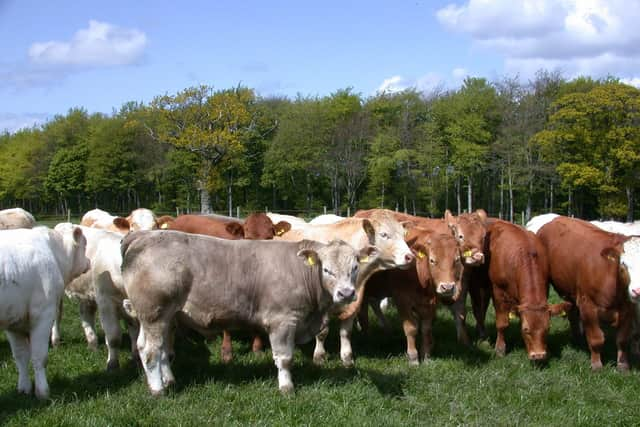

In volume terms, this is around three-quarters of these exports.
This shows just how important Europe and the EU are to UK agri-food exports.
The UK–EU Trade and Cooperation Agreement enables the UK to export these products to the EU on a tariff-free basis (as was the case before EU-exit).
Since the UK left the EU, however, trade friction in the form of additional paperwork and border checks made a previously smooth operation more burdensome, time consuming, expensive and disproportionately disadvantageous to small-scale exporters.
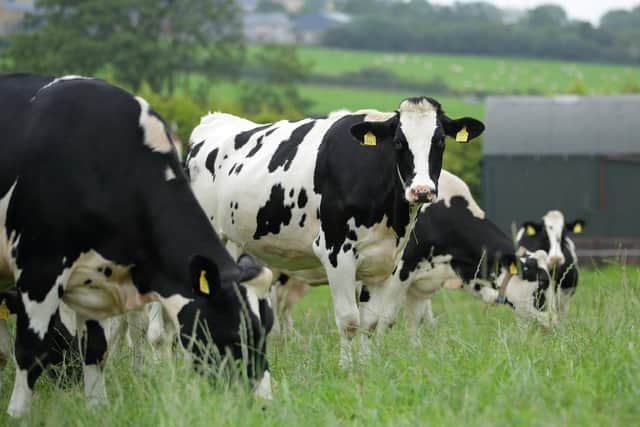
The UK–EU trade summit in May 2025 paved the way to remove or reduce these barriers.
The EU, and Europe as a whole, is a developed and mature market. Little growth is forecast in consumption of red meat over the next decade.
However, there are areas where the UK is well placed to take advantage.
These include: high-value, premium beef in markets such as France and Italy; lamb for growing halal markets in France, Germany and the Netherlands plus niche markets in Northern Europe for premium lamb.
Menawhile, cheese consumption in Europe is forecast to grow out to 2033. UK cheese is well positioned to benefit from strong demand for Cheddar and regionally protected products such as Stilton, as well as in the speciality and added-value markets.
Forecasts and projections are helpful, but they are certainly not the most important elements in developing export strategies. For consumers, factors such as taste, quality and value for money remain critical when making purchase decisions.
Bringing attention to the high production standards, animal welfare credentials and the premium quality of British meat and dairy is essential for UK exporters, as well as addressing affordability concerns.
Despite little change in red meat consumption, the UK can grow its export share in Europe via a more tailored and strategic approach. Maintaining and building long-term, consistent relationships is key.
Emphasising what sets the product aside from those of competitors, telling the story behind the product and enhancing the reputation of the UK for buyers in Europe is also important.
Incorporating these aspects into the UK’s red meat and dairy export strategy has the potential to strengthen the UK’s close relationship with the EU and Europe.
While the UK is expanding its export potential around the globe, the close-to-home EU market is one that needs to remain high on the list of priorities.
Economic overview
According to AHDB, growth in gross domestic product (GDP) in Europe is expected to average 1.8% in 2025 and 2026, according to the International Monetary Fund (IMF).
In the euro area, GDP growth is lower; the European Central Bank expects this to fall further as a result of volatility arising from uncertainties in US trade policy and tariff enforcements.
Inflation peaked in 2022 in Europe and has been declining gradually since then.
The European Central Bank (ECB) is set to reduce its benchmark lending rate further in 2025, with the deposit rate expected to reach 2.5%.
This move aims to stimulate growth by lowering borrowing costs for businesses and consumers.
However, economic uncertainty remains – particularly in major economies such as Germany, France and Italy, where growth is projected to remain under 2%.
Germany has announced a substantial fiscal expansion plan, including a €500 billion infrastructure investment aimed at bolstering defence and economic resilience.
While GDP growth in emerging European economies is generally higher than in the advanced economies, it is forecast to fall by around 1% in 2025 and 2026.
Poland has emerged as the EU’s fastest-growing economy in recent years, driven by private consumption and investment.
Russia and Ukraine
Despite the ongoing war with Ukraine, Russia’s GDP grew in 2023 and 2024.
The main factors contributing to this growth were the continued output of crude oil, high oil prices and developing new trade relationships with Asian countries (replacing lost trade with the West).
From 2025 to 2026, Russia’s GDP growth is forecast to be more subdued as a population decline and the financial impacts of war play out.
While Ukraine’s GDP growth looks stronger than other countries in Table 1, it is expected to remain lower than pre-war levels; recovery will be reliant on financial support from Western countries.
If an agreement to end the Russia–Ukraine war is reached in 2025, the European Bank for Reconstruction and Development (EBRD) forecasts that Ukraine’s GDP could grow by 3.5% before the end of the year.
Population changes to 2100
The EU’s population is forecast to peak at 453.3 million in 2026 (an increase of 1.5% from 2022) and then steadily fall to 447.9 million in 2050 and 419.5 million in 2100.
Germany is expected to have the highest population by the end of the century (84.1 million), followed by France (68.0 million), Italy (50.2 million), Spain (45.1 million) and Poland (29.5 million).
The populations of Iceland, Norway and Switzerland are expected to increase by 66%, 24% and 16%, respectively, between 2022 and 2100.
Food consumption trends
The EU is a developed market and has high levels of meat and dairy consumption across a range of different cuts and products. It is important to bear in mind that per capita consumption and levels of trade vary across the member states.
Pork
Pork is the most consumed of all red meats in the EU, at 28.1 kg per person (retail weight), based on the 2022-2024 three-year average.
According to OECD data, total pork consumption is expected to reduce by 809K tonnes (carcase weight equivalent, CWE) by 2033, driven by changing consumer diets. However, pig meat will still account for half of total per capita meat consumption (red meat and poultry).
Data from Euromonitor International shows some of the largest pork-consuming nations in the EU are Belgium, the Netherlands, Germany and France.
Forecasts up to 2029 generally indicate a reduction in per capita consumption – with the exception of France, where a small increase may be seen, and Belgium, which is anticipated to remain stable.
EU pork production is high at 21.5 million tonnes (CWE), based on the 2022–2024 average. The top five producing countries within the region are: Spain, Germany, France, Poland and Denmark. Production is expected to fall by 959K tonnes (CWE) by 2033, largely driven by environmental targets.
Imports to the EU are limited as the EU produces more pork than it consumes, which supports export trade. Import volumes are expected to decline by 19K tonnes (CWE) over the next decade. The majority of pig meat imports are sourced from the UK.
While the UK’s main exports to the EU are fresh carcases and loins, the EU also provides a strong market for cuts of pork less popular with UK consumers, important for ensuring carcase balance.
Beef
Beef is the second most widely consumed red meat in the EU after pork, although there is a considerable gap between the two types of red meat. Based on the 2022–2024 average, per capita consumption levels of beef in the EU were only a third of those for pork.
The UK remains a key beef supplier to the EU, accounting for 21% share of imports by value (2022-2024 average). Between 2022 and 2024, the UK’s beef exports to the EU have generally increased in value terms while falling in quantity, suggesting that higher-value, premium cuts are exported to the EU.
Based on the 2022–24 average, the UK exported 97,800 tonnes of fresh/chilled and frozen beef to the EU.
The UK’s beef exports to the EU mainly consist of fresh boneless beef (55%), driven by strong demand in France and Italy for premium cuts. Frozen boneless beef (16%) is the second-largest category, likely for processing and wholesale.
Fresh bone-in cuts and carcases each make up 14%, serving further processing needs. Frozen bone-in beef (1%) has a minor role, showing the UK’s focus on fresh, high-quality exports over frozen products.
The biggest challenge ahead is the EU–Mercosur trade deal, which could boost competition for the UK from South American suppliers like Brazil and Argentina. To remain competitive, the UK may need to emphasise quality, traceability and sustainability in its beef exports.
Dairy
A gradual shift from fresh dairy consumption across Europe to processed dairy products reflects changing consumer preferences.
The EU dairy sector is 101% self-sufficient, consistently producing slightly more than it consumes.
Production and consumption of fresh dairy products in Europe is expected to fall by around 4% by 2033 compared with the 2022–2024 average, driven by changing demand and sustainability policies. Although cheese production is forecast to continue to outstrip consumption out to 2033, Europe’s cheese imports are projected to increase by 5.5% to 1.12 million tonnes.
EU dairy exports averaged £15.4 billion by value between 2022 and 2024, while imports averaged £1.9 billion.
Cheese is the top dairy product the EU exports as well as imports; however, EU cheese imports by value were £6.9 billion (2022–2024 average), while exports were £0.9 billion.
Based on the 2022–2024 average, the UK accounted for 62% (£1.16 billion) of total EU dairy imports by value and 85% (1.02 million tonnes) by volume.
Milk and cream comprised the majority of EU imports from the UK by quantity, while, on value terms, cheese was the top UK dairy product (£603 million based on 2022–2024 average). This reflects strong demand for UK cheese, including mature Cheddar, Stilton and other regionally protected products.
Many of these cheeses benefit from strong branding and quality recognition across the EU, particularly in markets like France, Germany and the Netherlands. The high value-to-volume ratio suggests UK cheese is well-positioned in the specialty and added-value segments, including organic, speciality and artisanal categories.
Butter and dairy fats were the third-highest value product (£211 million based on the 2022–2024 average), after cheese and milk and cream, despite accounting for only 4% of UK dairy exports to the EU (2022–2024 average). UK butter is well-regarded for its grass-fed origin, richness and suitability for both retail and food manufacturing.
As consumer preferences in the EU shift back towards natural dairy fats, UK butter is increasingly competitive, especially in processed forms such as clarified butter or fat blends.
Together, cheese and butter highlight how the UK’s dairy export strengths lie in quality-driven, higher-margin products.
Their longer shelf life and lower perishability compared to liquid dairy make them ideal for export, while their versatility supports both retail and industrial demand across diverse EU markets.