
AgriSearch publishes its 2025 annual report
AgriSearch has registered a trading deficit of £21,592 for the 2024/25 financial year. Total income attributed to the organisation for this period amounted to £607,306, writes Richard Halleron.
This is down from the £636,614 recorded the previous year.
“We cannot continue eating into our reserves,” confirmed AgriSearch Strategy Manager, Jason Rankin.
“We are liaising with all relevant stakeholder organisations at the present time in order to secure increases in our levy rates.
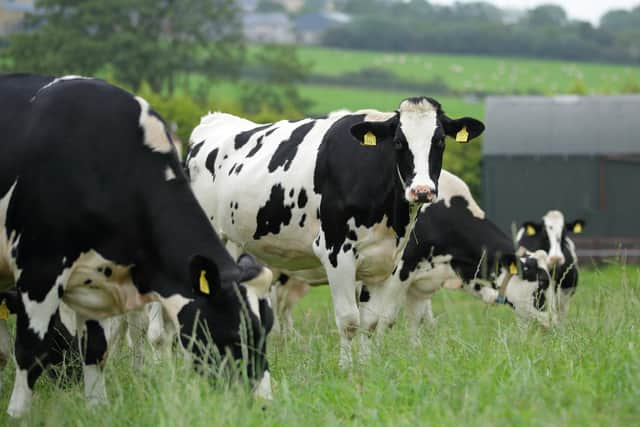

He added: “Our beef levy was increased back in 2015 but those for sheep and dairy have remained unchanged since the organisation was founded back in 1997.
“Our aim is to have all levy rates reconciled with 1997 values in real terms.”
The current AgriSearch levy fees are: 0.02pence per litre of milk; 40 pence per head of cattle processed and five pence per head of sheep.
AgriSearch chairman, Professor Gerry Boyle, commented: “Over nearly three decades, inflation has significantly eroded the real value of this income, making it increasingly difficult to commission meaningful research at the scale and depth required.”
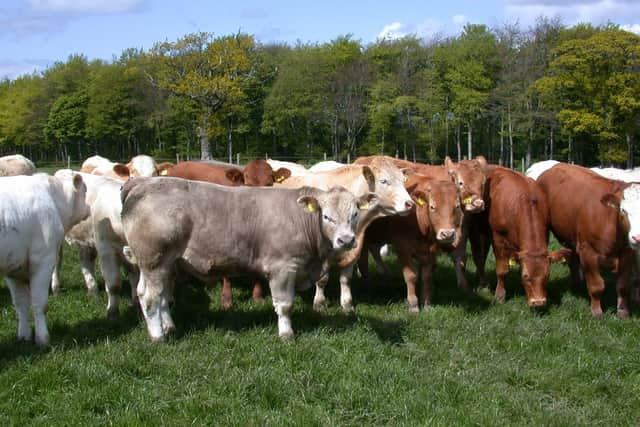
With rising operational and research delivery costs, Professor Boyle has warned that maintaining the high quality research programmes farmers rely on will require a collective industry conversation on strengthening levy collection and reviewing levy rates.
AgriSearch is an independent charity. It was formed in 1997 to provide a mechanism through which beef, dairy and sheep farmers could have direct involvement in production orientated research.
Funds contributed to the organisation are used to commission research into the improvement and development of beef, sheep and dairy farming.
AgriSearch’s guiding principal is to provide practical benefit for primary producers to reduce costs, improve performance, drive innovation and improve welfare.
Duplication of existing research and development work is avoided, and every effort is made to get maximum leverage from complementary funding sources.
AgriSearch management is states that the need for accurate, independent scientific evidence has never been greater, particularly as farmers navigate new environmental policies, higher input costs and rapidly evolving consumer and regulatory expectations.
According to Gerry Boyle, the 2024/25 report underscores AgriSearch’s unique capacity to deliver this evidence.
This is because it is guided by farmers themselves and trusted across government, research organisations and the wider agri-food industry.
Proffessor Boyle emphasised that ensuring AgriSearch remains “fit for purpose and capable of delivering the research and innovation the livestock sector needs” will depend on collective action.
He further explained: “We will engage closely with farmers and processors to explore opportunities to strengthen levy collection and review levy rates.
“This is essential to future-proofing both AgriSearch and the wider industry.”
The AgriSearch annual report summarises a number of the key research and development projects, which the organisation is supporting at the present time.
Twenty-five years of GrassCheck
In 2024, AgriSearch marked the 25th Anniversary of GrassCheck, celebrating a programme that has become one of the most influential and practical grassland management tools available to Northern Ireland farmers.
More than 140 farmers, researchers and industry stakeholders attended the anniversary conference, underscoring the programme’s importance and reach.
Since its inception in 1999, GrassCheck has transformed how Northern Ireland measures, monitors and manages its most valuable crop: grass. Early research highlighted a major gap between what the grass farmers could grow and what was actually being utilised.
GrassCheck filled this void by providing the first national grass growth monitoring system, establishing research plots at AFBI Hillsborough, CAFRE Greenmount and AFBI Crossnacreevy.
Its value was proven quickly. During the severe weather of 2002, GrassCheck data identified a 32% reduction in grass growth, providing the evidence base that secured £4.6 million in weather aid for farmers.
In 2007, long-term growth data was instrumental in securing the Nitrates’ Derogation, protecting productivity across the grazing sector.
A major leap forward came in 2017 with the expansion to on-farm monitoring. Today, 53 dairy, beef and sheep farmers across Northern Ireland contribute weekly measurements and samples, supported by AFBI, CAFRE and AgriSearch teams.
This collaborative effort enables the delivery of highly localised, timely and actionable information through weekly bulletins, social media and a new dedicated email update.
The result is a decision-support system that farmers actively trust. GrassCheck now tracks regional variation, weather impacts, and quality metrics such as ME and protein levels:
offering a level of precision and predictability that was unthinkable 25 years ago.
Looking ahead, the GrassCheck dataset, one of the most comprehensive of its kind, continues to reveal future opportunities. Long-term modelling indicates that by 2100, Northern Ireland could grow an additional 2 tonnes of dry matter per hectare, particularly in spring and autumn.
GrassCheck’s enduring strength is its partnership model: farmers, scientists and industry working side by side. As climate variability intensifies and the economics of production tighten, the programme’s ability to support resilience, efficiency and environmental stewardship has never been more important.
ZeroNSile
ZeroNsile was developed in response to rising fertiliser costs and the need to reduce the carbon footprint of silage production. The project explores whether good-quality silage can
be produced without manufactured nitrogen fertiliser by using nitrogen-fixing legume species.
Building on AgriSearch’s previous multispecies sward work, which mainly focused on grazing systems, ZeroNsile provides a much-needed focus on silage production for both dairy and beef/sheep sectors.
Although earlier research at AFBI Hillsborough has shown promise, on-farm experience with these crops in Northern Ireland remains limited.
The project involves 12 farms across NI (six dairy and six beef/sheep). Each participating farm is establishing dedicated red clover alongside comparable control fields. Soil tests, carbon measurements and nutrient records are being collected to ensure robust comparisons.
Silage yield and quality will be monitored over multiple cuts and evaluated against conventional grass systems. ZeroNsile will provide practical evidence on the feasibility, performance and environmental benefits of low-nitrogen silage systems, helping farmers assess the potential of legumes to reduce input costs and improve sustainability.
On-farm progress and early findings indicate the importance of analysing slurry quality to support accurate nutrient management planning.
During the first year, the red clover swards delivered slightly higher yields than the grass-only swards, while overall silage quality was broadly similar across both treatments.
Mycotoxins in grass silage
AgriSearch is undertaking a pilot project to better understand the prevalence and causes of mycotoxins in grass silage in Northern Ireland.
Recent years have seen a noticeable rise in mycotoxin issues in dairy cow silage across Northern Ireland, with severe cases leading to antibiotic failures in milk tanks and negative impacts on cow health, fertility and production efficiency.
Despite growing concern, there remains limited independent evidence on the scale of the problem or the factors contributing to contamination.Several possible drivers have been suggested, including changes in slurry application methods, the adoption of lighter multi-cut silage systems, increased use of tedding and raking equipment, and the influence of warmer, wetter summers associated with climate change.
To help fill the current knowledge gap, AgriSearch has partnered with Queen’s University Belfast, whose Food Fortress laboratory provides advanced mycotoxin analysis.
Beacon and GrassCheck farmers were invited to submit detailed information on their silage-making practices, covering nutrient applications, cutting and harvesting timings, equipment use, ground and weather conditions, additive use, silo management and post-harvest stubble condition.
From these submissions, thirteen farms were selected for winter sampling, with silage collected from pit faces, core samples and feed passages. All samples have been analysed by Queen’s University to establish a clearer picture of mycotoxin prevalence and potential causes.
This work will deliver the first robust evidence base to guide future farmer advice and research priorities.
UK Dairy Carbon Network Network
The UK Dairy Carbon Network (UK-DCN) is focused on six priority areas with strong potential to reduce greenhouse gas emissions while improving on-farm efficiency and productivity.
By trialling proven approaches on real commercial farms, the project aims to demonstrate that meaningful emissions reductions can be achieved alongside better performance and greater resilience.
Participating farms receive tailored support, including individual implementation plans designed around their production system, local climate and geography. The programme also promotes shared learning through farm walks, open days and peer-to-peer activities, enabling farmers to learn directly from each other’s experiences and build confidence in practical, evidence-based solutions.
A key objective of the UK-DCN is to share results widely across the industry, accelerating the uptake of practices that deliver environmental benefits and strengthen the long-
term sustainability of UK dairy farming.
Within the project, AgriSearch leads the Northern Ireland Farm Network and works alongside AHDB, which manages three additional networks in Great Britain, as well as contributing to communication and knowledge exchange across the programme.
The three-year initiative (2024–2027) brings together partners from leading research, advisory and industry organisations across the UK, including universities, research institutes and agricultural development bodies.
The UK Dairy Carbon Network is lead by AFBI and brings together a consortium of leading research and industry organisations, including: Aberystwyth University, ADAS, AFBI, AgriSearch, the UK Agri-Tech Centre, AHDB, Harper Adams University, Newcastle University, Queen’s University Belfast, Scotland’s Rural College (SRUC) and the University of Reading.
Sheep Genotyping Project in Northern Ireland
The arrival of new genomic technologies that directly assess variation in an animal’s DNA marks a significant step forward for ram breeders in Northern Ireland.
AgriSearch is working closely with AHDB/Signet to support the development of these services, enabling breeders to access more informative genomic data and accelerate progress in both pedigree and commercial sheep systems.
Genomic information allows sheep farmers to move beyond predictions based solely on pedigree and performance, offering major benefits for breeding programmes.
It enhances sire and dam verification, identifies key genes related to traits such as scrapie resistance, myostatin and fertility, and improves the accuracy of breeding values.
Genomics is especially valuable for traits expressed only in one sex, expressed later in life, or difficult and costly to measure, including longevity, methane emissions and meat-eating quality. It also strengthens comparisons between flocks and provides previously unrecorded animals with a more robust starting point for evaluation.
As genomic evaluations expand, breeders will benefit from more reliable breeding values to inform selection and marketing decisions.
Signet currently provides genomic breeding values for six hill breeds within the Hill Sheep Evaluation. Terminal sire breeds—including Suffolk, Hampshire Down and Charollais—will become the first in the UK to receive genomic breeding values for abattoir traits following the launch of the new evaluation in 2025.
AgriSearch is supporting this development by funding the genotyping of high-accuracy sires and breeding ewes across hill, maternal and terminal sire flocks. Building a strong genomic dataset will enhance the accuracy of breeding values in Northern Ireland, strengthen links with genomic data generated elsewhere in the UK, and encourage breeders to engage with genomic sampling.
This work represents an important step towards the routine integration of genomic technologies into the region’s sheep breeding programmes.