
Buffer TMR feeding dairy cows at grass can deliver an extra 54kg of milk solids per lactation
Optimal grazed grass intakes and milk output levels can be achieved through the inclusion of a bespoke total mixed ration (TMR) buffer feed in lactating diets, writes Richard Halleron.
This approach ensures that cows are receiving the appropriate levels of nutrition they need at all times.
The principles involved in making this approach a reality were demonstrated at a recent open day, hosted by Co Offaly dairy farmer: John Gill.
The event was organised by Alltech and KEENAN, in associated with Lely robotic milking systems.
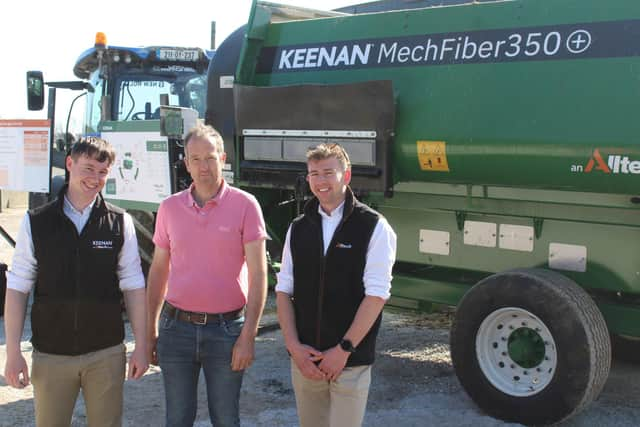

John Gill currently uses a KEENAN MechFibre 350 feeder wagon. The Gill family has enjoyed a long association with KEENAN feeding equipment.
KEENAN’s Adam Hanratty explained the principles that lie behind the buffer feeding approach to dairy cow nutrition.
He said: “The KEENAN feeder is not trying to replace a grass based system.
“What it does is complement the role of grazing in an extremely effective manner.”
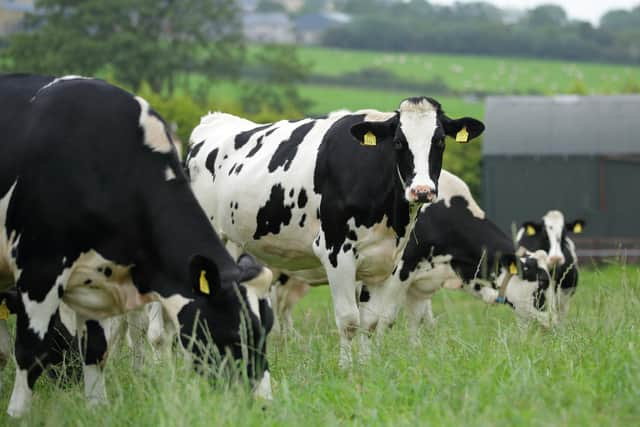
John Gill milks 120 cows close to the village of Kilcormac.
Last year he invested in a robotic milking system, which has been set up to allow the optimal level of grazed grass inclusion within the cows’ diets.
John Gill further explained: “We are milking 120 cows with the use of two Lely robots.
“Buffering works tremendously well, particularly at those times when grazed grass supplies can become limiting.
“It’s very much a case of giving the cows a more consistent feed throughout the day.
“They seem much happier and content when this approach to feeding is used.”
Other management priorities on the Gill farm include the breeding of all herd replacements which, over recent times, has centred on the use of sexed semen.
All beef cattle born on the farm are brought through to finishing weights.The herd has a 70% spring: 30% autumn calving profile.
By the second week of April the Gill herd was averaging 37kg of milk per day at 3.98% butterfat and 3.35% protein.
The cows had just started their second grazing round at that stage.
Adam Hanratty again: “When John bought the MechFibre feeder, he also committed to using the InTouch nutritional service, provided by Alltech.
“The InTouch team will then specify a complimentary TMR ration, which ensures the cows get the nutrition they need to match their full production potential at all times.
“Niall Nolan, our InTouch Nutritionist for the region, works closely with John to optimise and tweak the diet as needed throughout the year.
”It all comes back to the core principle: delivering a buffer feed that will complement any shortfalls in the nutrition delivered by grazed grass.”
“It’s an approach that also requires a close liaison with Lely.
“Underpinning all of the nutritional planning is the accurate and consistent measurement of the grass available in all of the paddocks.
“What’s more, the system works within all dairy farming scenarios: robotic and traditional milking systems.”
The Alltech and KEENAN team has worked out the specific impact achieved buffer feeding systems.
The national production average in 2024, based on ICBF figures was 5480kg of milk.
However, those farmers using the KEENAN buffer system achieved 6,000kg on average.
In addition, the herd owners achieved an extra 54kg of milk solids. At current farm gate prices, this is worth an additional €386 per annum.
Significantly, this was achieved at lower concentrate feeding levels.
Adam Hanratty explained: “The driver here is the fact that the rumen is filled with forage at all times.
“So, for example, with a cow producing 20L of milk per day, the option exists to reduce daily meal feeding rates from 7kg in the parlour down to 4kg.
“The added levels of performance are secured through the enhanced utilisation of forages that are made available through the feeder wagon.
“The availability of high quality grass silage and/or forage maize is important in this regard. ”
Silage specialist, Dr Dave Davies, also spoke at the open day. He confirmed that fermentation drives the quality of all silages: irrespective of their use.
“This principle holds equally well for silages fed to cows in full milk and those in the run-up to calving.”
Davies added that dry matter losses within all silage clamps averages 25% relative to the nutritive value of the fresh grass originally ensiled.
He continued: “For every four loads of grass coming in from a field, there will only be three left to feed.
“These losses take the form of carbon dioxide and water.
“And they result because we are not controlling all aspects of the silage making process.”
According to the Wales-based forage specialist, cutting date is no longer a relevant target when it comes to making high quality grass silage.
This is because most grass swards, particularly in Ireland, are now growing the year round.
He further explained: “However, stage of sward maturing is totally relevant.
“For fresh cow silage, we don’t want any stem.
“So silage made for milking cows should be made at the stage when it is just getting away from a grazing perspective: leaf content is crucial.
“This is when the grass is most nutritious.
“The forage contains the highest protein levels and highest levels of digestible fibre at this stage of growth.
“Come feeding time, forage digestion rates will be higher.
“This in turn, leads to higher digestion rates in the rumen and, as a consequence, greater forage intake rates.
“All of this represents a win:win scenario.”
According to Dave Davies, too many farmers and contractors cut silage swards far too low.
Work carried out at Teagasc Grange two decades ago compared silages made form swards cut at two heights above ground level: 10cm and 2cms.
The subsequent analysis confirmed that silage cut at 2cm contained 20 times more clostridial bacteria per gram of grass, compared with the grass cut at a height of 10cm.
Dave Davies again: “Cutting higher delivers two positive effects. In the first instance, we reduce the levels of soil contamination found within silages.
“And, secondly, clostridial contamination leads to a butyric acid-based fermentation.
“This is a slower process, leading to more ammonia being produced.
“As a consequence there is less dietary protein available to the animals.
“In addition, more carbon dioxide and water are produced, courtesy of the fermentation profile that is secured.”
He added: “Another benefit associated with higher cutting heights is the enhanced wilting times that can be achieved.
“The greater the height of the stubble the more opportunities there are for air to interact with the cut grass.
“The optimal dry matter value for silages is in the range: 28% to 32%.
“Better air flows around cut grass will get grass to this level more quickly.”
Wilting is an important part of the silage making process and this means spreading the crop of grass.
Dave Davies explained: “Spreading delivers a higher surface area to volume ratio and, again, greater opportunities for air to interface with the cut grass.
“A mower conditioner will help deliver this effect when used on grass crops.
“The use of a conditioner, however, needs greater thought when used ion crops containing high levels of clover.
“When it comes to the actual ensiling process, getting the appropriate levels of consolidation within the clamp is extremely important.
“The target density is 700kg of forage per metre cubed within the clamp.
“Clamp slippage will happen when over consolidation takes place within the clamp.
“It is most likely to be an issue when extremely lush grass is placed in the clamp.”
Dave Davies strongly advocates the use of side sheets when it comes to making high quality silage.
This reflects the fact that simply using a top sheet does not allow silage clamps to be sealed properly.
He commented: “Making silage is an aerobic process.
“So when we don’t have side sheets, air can penetrate the clamp. This leads to significant levels of aerobic losses.
“The use of cling film on the top of the clamp will help deliver an enhanced fermentation process.”
Where silage inoculants are concerned, Dave Davies recommends those products containing the required levels of homo-fermentative bacteria only.
Hetero fermentative bacteria convert sugars to lactic and acetic acids in equal measure or lactic acid and ethanol in equal measure.
Both these processes lead to the production of carbon dioxide and a consequent loss of forage nutritive value.
Lactic acid is ten time stronger in bringing down the pH value of a silage clamp, relative to acetic acidic.
Given the fact that most grass silages made in Ireland have high moisture contents, the priority is to get a rapid pH drop within the clamp as quickly as possible.
So lactic acid is the clear option when it comes to securing this aim.
Homo-fermentative bacteria will break down sugars into lactic acid only.
And the key number in this regard is the availability of one million homo-fermentative bacteria per gram of fresh grass that is to be ensiled.
This approach will have a beneficial impact on silage quality.
Declan O’Neill, Farm Resource Efficiency manager with Alltech, highlighted the benefits such an innoculent, like Alltech’s Egalis product can bring: “Overall Egalis will help produce higher yields of quality silage by improving the rate of fermentation.
“This preserves more nutrients in the silage and limits dry matter losses.
“Silage making is crucial to the performance of herds – we want to make sure we are making the best silage possible and Egalis, along with correct pit management practices can achieve that”.
Dave Davies concluded by comparing the options of using silage wagons or precision chop harvesters.
He commented: “Using a forage wagon successfully is all about the mentality of the operator using the system.
“The key is to ensure that the grass being chopped is running at right angles to the cutting blades of the machine
“This requires the grass to be tedded out.
“I would recommend no more than 27% to 29% grass dry matter levels at pick up.
“The other mistake that operators make is that they assume the lumps of grass coming out of the wagon are already consolidated.
“However, this is not the case.
“Extra time should be taken to shake out these clumps of grass in order to get the required level of consolidation within the clamp.
“Many farmers are making good wagon silage.
“But the rules must be followed.
“Using a wagon is an approach to silage making that allows farmers to be very self-reliant, thereby saving costs: it reduces the dependency on contractors.”