
Blue/green algae is 'driven by excess phosphorus entering Lough Neagh over many years alongside warmer weather and wider ecological pressures'
A briefing from NI Water today heard that Lough Neagh’s water quality problems (with a focus on blue green algae) are driven by excess phosphorus entering the lough over many years alongside warmer weather and wider ecological pressures’.
An oral submission was given by Dr Gary Curran, Director of Engineering and sustainability to the Committee for Agriculture, Environment and Rural Affairs and the Committee for Infrastructure on actions to reduce water pollution, and the Planning Statutory Consultee Forum.

Dr Gary Curran said: “Lough Neagh’s water quality problems are real, serious and long standing with a focus on blue green algae.
"They are driven by excess phosphorus entering the lough over many years alongside warmer weather and wider ecological pressures.
"This is not a new issue.
"It is not caused by a single source and will not be resolved easily, quickly or by one sector.
"Phosphorous enters a lot from many different activities across the whole catchment. These include agriculture, septic tanks, industry, urban runoff, and specifically for Northern Ireland, water or treated wastewater, not one sector on its own, which explains the scale or complexity of the problem”.
In his statement, Dr Curran added: “Northern Ireland water has a role to play, but it is one part of a much wider system, in simple terms.
"Unlike other sectors, NI water does not generate the wastewater it collects from homes, businesses and industry, that wastewater is treated in regulated treatment works.
"Around 545 tonnes of phosphorus enters the sewer network each year, around 99% of that is conveyed to wastewater treatment works, on average, around 88% of the phosphorus is removed during treatment".
He added there are ‘349 wastewater treatment works discharging treated wastewater into the Lough Neagh catchment’.
"That catchment covers approximately 43% of Northern Ireland Water's landmass.
"Eleven larger works have specific low level phosphorus limits, which are achieved by chemical dosing to support the biological treatment.
"Those works are outperforming their stringent consent standards by around 30 to 40% based on our measured results, this shows that Northern Ireland water is operating treatment works within the regulatory requirements and removing phosphorus better than conservative assumptions, improving water quality.
That includes whole catchment action across all sources, including farming, land use, septic tanks, industry and waste water supported by investment and regulation.”
He added that "one sector cannot do this alone”.
And he noted that “long standing underinvestment in wastewater infrastructure has left Northern Ireland with systems that are under capacity for today's population, housing need and environmental expectations”.
Dr Curran added that “3.5 billion pounds of investment is needed over the next five years to simply maintain existing services, and to address capacity standards and environmental pressures, with wastewater accounting for about 1 billion pounds of that need”.
He added that “without that investment there is a clear limit to what any operator can deliver, regardless of performance, innovation, efficiency or intent?”.
He said that Northern Ireland Water “is operating treatment works within the regulatory requirements and removing phosphorus better than conservative assumptions, improving Northern Ireland water's water quality will require sustained whole catchment action across all sources, that includes farming land use, septic tanks, industry and waste water supported by investment and regulation”.
"One sector cannot do this alone. It is important to recognize similar issues arrive in other receiving waters, including Belfast lough".
And he added that “long standing under investment in wastewater infrastructure has left Northern Ireland with systems that are under capacity for today's population, housing need and environmental expectations”.
Mr Curran also pointed out that another factor that would improve water quality is a “behavioral change for everyone right across Northern Ireland, around what not to flush”.
"And I'm sure we're all familiar with the fatbergs that arise in wastewater systems. And that's just a whole combination of congealed fat, oil and grease, wet wipes, sanitary items, which cause blockages, operational issues for us and overflows can arise temporarily.”
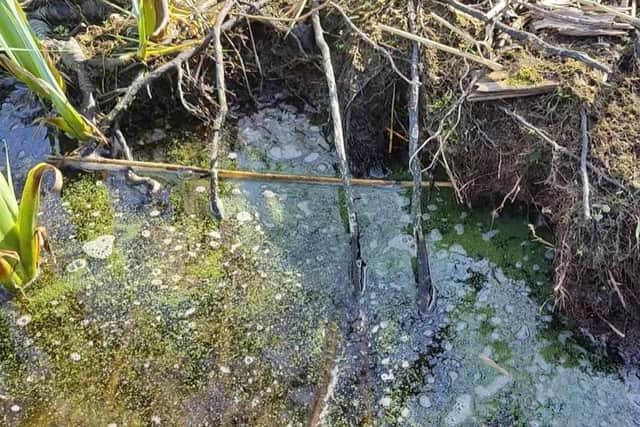
He said that NI Water are aware the “blue/green algae has already started in Lough Neagh”.
"So unless there is very unusual weather conditions or something like that, we would be predicting that it will reoccur again.”