
STOP IT: Could your flock be at risk of getting scab?
How could sheep scab enter my flock?
Whether you have had sheep scab before or not, it’s always important to consider potential risk factors that could introduce scab to your flock. This should be the first step when aiming to prevent scab outbreaks in your flock.
If any sheep have been purchased recently without the appropriate quarantine protocols being followed, these could infect your flock with scab, despite showing no clinical signs at the time. Purchasing sheep in the summer months can be a particular risk factor, as scab mites tend to remain dormant if sheep have been sheared and only begin to become active when the fleece has grown back enough to provide the microclimate the mites require. Therefore, bought-in sheep could be spreading mites across the flock for months before clinical signs begin to be seen.
Sheep returning from winter grazing, markets or shows could bring scab into your flock. It only takes a small amount of sheep-to-sheep contact for sheep to scab, which can also be spread via wool tags or scabs in the environment. Mites can be carried on clothes or equipment and they can survive off sheep for up to 17 days.
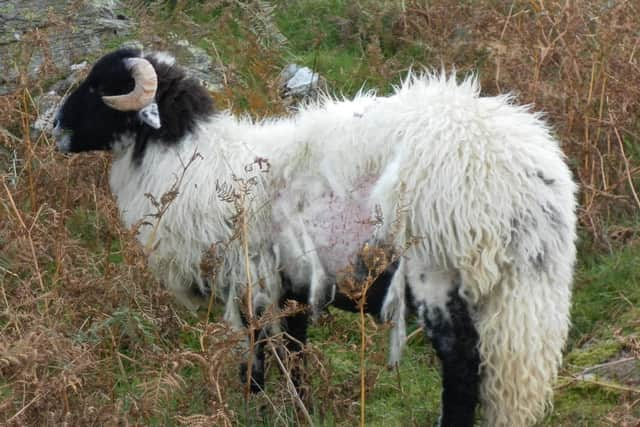

Poor boundaries between your flock and neighbouring flocks are a risk factor. If neighbouring sheep have broken into your flock, or vice versa, and if there can be direct contact between two flocks through fencing or hedges, then there is a risk of disease transmission.
Preventing Sheep Scab
Quarantine and Test
Any purchased animals, or animals returning from winter grazing, market or a show should be isolated for at least 3 weeks. During this period, watch them carefully for the beginning of any symptoms.
After two weeks of quarantine, taking the ELISA blood test is advisable. If animals are in the very early stages of infection, for example, if they became infected with mites at a market, then they may not show clinical signs for 6-8 weeks post infection, although this lag phase can vary in length. The blood test must not be taken before this two week quarantine period, as two weeks post infection is the earliest that antibodies begin to be produced and mites can be detected.
If a quarantine test comes back as positive for sheep scab, treat the sheep immediately via the method that best suits your system but ideally by dipping. Do not mix them with the rest of the flock until the full treatment course is complete (for example, two injections may be required depending on product) to ensure all mites are killed. It can take up to 24 hours after dipping for all mites to be killed, so keep dipped sheep separate from the rest of the flock for at least this length of time.
Biosecurity
The most effective ways to prevent scab entering your flock are to maintain a closed flock or to buy in as little as possible. However, the effectiveness of a closed flock will also depend on how robust other biosecurity measures on farm are, such as boundary fencing.
In order to fully protect your flock from scab, any land that adjoins with neighbouring flocks should be double fenced, or a thick hedge should be maintained that will prevent sheep making direct contact with each other. Even if neighbouring flocks aren’t grazing in an adjoining field at the same time as your flock, mites can survive on wool tags/scabs on fencing and if a sheep rubs against these there is a risk that they will become infected.
Ensure that trailers are cleaned and disinfected on return from markets after purchasing sheep. Take care around any equipment that may have been shared with other flocks, and disinfect it on return. Any strong farm disinfectant should work to kill mites but use these according to the manufacturer’s instructions and remember that these must not be applied to animals.
While most shearers will have excellent hygiene practices, this can be a mode of transmission for mites, through wool tags left on blades. Shearers may be completely unaware if they have clipped sheep that are in the early stages of sheep scab infestation. If you notice wool tags on blades, do not allow these blades to be used to clip your sheep until they are appropriately cleaned.
Collaborative approach
Common grazing is a scenario where sheep scab can be the most difficult to control.
From 2022-2023 AHWNI delivered a research project titled ‘Stamp Out Scab (SOS)’.
During this project, scab was identified in several common grazing flocks in the Mournes. In response to this, the project helped graziers in one common grazing area coordinate dipping of their flocks before they went onto the mountain. This was highly successful and helped to reduce scab in that area at the time.
Sharon Verner, veterinarian at AHWNI, stated: “The campaign of coordinated dipping worked extremely well, due to the willing engagement of sheep farmers with the project and with their own vets. For broader control of sheep scab in NI, a regional plan is needed to assist farmers in affected areas to work collaboratively and synchronise treatments. This would not only improve animal health and decrease the selection pressure for anthelmintic resistance, but also reduce farmer costs.”
If you own common grazing, speaking to other graziers and trustees about scab concerns could be beneficial for all parties. For example, a time that suits all graziers could be organised for a mobile dipper to dip all sheep. This way, costs could be split between flocks. If it isn’t possible to dip sheep before going onto the mountain, then they should be dipped when coming off.
The same principle can work for lowland flocks. If you are concerned about sheep scab, discussing the issue with other farmers can help reduce the risk of it spreading between flocks. Where appropriate, neighbouring farmers could agree on a suitable time to treat their sheep, particularly where flocks have close contact along shared boundaries. This can help reduce the risk of sheep being treated in one flock only, while others remain a potential source of infection.
Working together can make sheep scab easier to control for everyone. If scab is confirmed in your flock, it’s important to let neighbouring farmers know so that they can be alert for signs in their own sheep and take appropriate action. SCOPS recommends contacting neighbours with sheep in adjacent fields and, where appropriate, considering treatment at the same time- the costs of a mobile dipper could be shared between flocks.
This concludes Sheep Scab Awareness Month at AHWNI. If you have any concerns or would like to know more about sheep scab, you can contact us: [email protected].