
Getting to grips with herbicide resistant grass weeds

The challenge of herbicide resistant grass weeds continues to grow on ARABLE farms at an alarming rate, writes Richard Halleron.
Meanwhile, the prospect of a significant decline in the availability of herbicide chemistries needed to deal with this problem becomes ever greater. This is according to Teagasc tillage specialist: Shay Phelan.
Recent months have seen Blackgrass declared a noxious grass weed by the Irish government. But this is only the tip of a fast-growing iceberg. Glyphosate resistant Italian ryegrass populations have recently been identified in Ireland for the first time.
Shay Phelan commented: “Getting to grips with herbicide resistant grass weeds within crops is a priority now. Growers can’t afford to wait until next season and hope to use a chemical at that stage.
“Such an approach just won’t work.”
He continued: “The only way to tackle the issue is to ensure that mature seeds are not allowed to be produced this year. Options here include spraying areas of crops that have heavy weed infestations with glyphosate or hand rogueing, if feasible. But these jobs must be tackled now.”
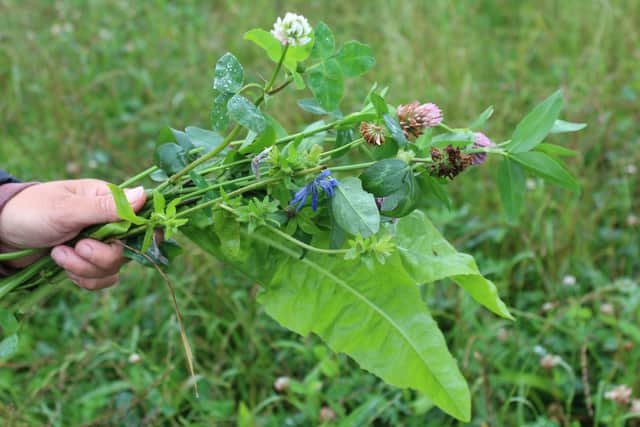
Crucial to all of this is farmers being able to identify the various weeds within crops at their various growth stages.
Shay Phelan again: “These critical grass weeds can produce large numbers of seeds that will reinfest your land if no action is taken. Control measures include marking weed patches, preventing seed return through hand rogueing or spot spraying, and, for severe infestations, whole cropping or spraying off.
“Delaying these measures until after seed set will lead to costly, long-term consequences.”
Mature grass weeds are easier to spot when they are flowering or have visible seed heads.
Teagasc has also quantified the scale of the threat now posed to irish tillage by herbicide resistant grass weeds.
Italian ryegrass represents an increasing threat with 81% of suspected populations confirmed resistant, necessitating zero-tolerance and strict biosecurity.
The plant has flattened spike heads with awned spikelets on opposite sides of the stem.
Blackgrass is not present on every farm. However, cases are cases are rising. Resistance Has been confirmed in 63% of suspected populations, necessitating a zero-tolerance and strict biosecurity on the part of growers.
The plant has compact, slender spike heads with brown or purple-tinged awned spikelets.
Spring wild oats is a common, competitive grass weed with loose panicle, large spikelets and bent awns.
Herbicide resistance has been confirmed in 34% of suspected populations. Growers should Hand-rogue herbicide escapees to prevent resistance development.
In the UK it is the role of the Weed Resistance Action Group (WRAG) produces guidance on pesticide resistance issues.
Hosted by the Agricultural and Horticultural Development Board (AHDB) , this information can be used to help protect crops and the long-term efficacy of herbicides.
Glyphosate resistance
WRAG confirmed the first case of resistance to the herbicide glyphosate in a UK weed species on 10 January 2025.
Resistance at the maximum label rate of glyphosate was identified in tests on a single field population of Italian rye-grass (Lolium multiflorum) from a site (in Kent) considered to have an elevated risk of developing glyphosate-resistant weeds.
On 11 February 2025, WRAG issued an update based on tests on three additional Italian rye-grass populations (from Somerset, Essex and North Yorkshire).
Two of these samples demonstrated significantly reduced control from appropriate doses of glyphosate, with the third showing decreased glyphosate sensitivity. All cases were associated with very-high-resistance-risk situations.
Rothamsted Research
Meanwhile, Research by Rothamsted has helped put an economic figure on herbicide resistance in blackgrass, the farmland weed that is decimating winter-wheat yields across the UK.
Heralded as ‘Western Europe’s most economically significant weed’, herbicide resistant blackgrass is costing the UK economy nearly £400 million and 800,000 tonnes of lost harvest each year, with potential implications for national food security.
Published in Nature Sustainability, the study presents a new model which helps quantify the economic costs of the resistant weed and its impact on yield under various farming scenarios.
The worst-case scenario – where all fields have a high proportion of resistant black-grass – could result in an annual cost of £1 billion, with a wheat yield loss of 3.4 million tonnes per year.
The modelling was carried out by international conservation charity ZSL (Zoological Society of London) based on resistance assay research that was carried out by Rothamsted.
The simulation estimates the UK is currently losing 0.82 million tonnes in wheat yield each year (equivalent to roughly 5% of the UK’s domestic wheat consumption) due to herbicide resistant black-grass. This comes at a cost of £380 million per annum.
Blackgrass is a native, annual weed and large infestations in farmers’ fields can force them to abandon their winter wheat – the UK’s main cereal crop.
Farmers have been using herbicides to try and tackle the black-grass problem – but in many areas of England the agricultural weed is now resistant to these herbicides.
The global cost of herbicide resistance
An estimated four million tonnes of pesticide are applied to crops worldwide each year. There are 253 known herbicide-resistant weeds already, and unlike the known-costs to the economy of human antibiotic resistance – which runs into trillions of dollars – estimates of the costs of resistance to agricultural xenobiotics (e.g. antimycotics, pesticides) are severely lacking.
Over-use of herbicides can lead to poor water quality and causes loss of wild plant diversity and indirect damage to surrounding invertebrate, bird and mammal biodiversity relying on the plants.
As wheat is the main component of many household basics like bread and pasta, consumers may end up absorbing any increases in cost, and so the issue of black-grass should be considered as a nation-wide issue affecting both people and wildlife.
Management industry recommendations have so far advised using a mixture of herbicides, designed to prevent the evolution of ‘specialist’ resistance, however alarmingly recent research has revealed that this method actually alters the type of resistance to a more generalist resistance – and in some cases gives resistance to chemicals the plants have never been exposed to.
Glyphosate is now one of the few herbicides that blackgrass has not evolved resistance to, with farmers now reliant on repeated applications to control the weed. However, evidence from a recent Rothamsted study shows that resistance to glyphosate is now evolving in the field too.
Integrated pest management
Meanwhile, the science behind integrated pest management (IPM) techniques continues to evolve. This is an approach to crop production that reduces growers’ reliance on chemical pesticides.
A Herbicide Resistance Weed Conservation Plan documents decisions by producers who agree to implement a system of conservation practices and IPM techniques.
It places an emphasis on herbicide use orientation in order to suppress herbicide resistant weeds and the potential of herbicide resistant weeds establishing again in the treated area.
This is achieved by the adoption of the following IPM strategies: prevention, avoidance, monitoring and suppression.
The approach will be implemented with the augmentation of one or more of the following key essential conservation practices: crop rotations, cover crops, and residue tillage management practices.
Specifically, where weed control is concerned, the Department of Food, Environment and Rural Affairs (DEFRA) envisages a mix of three methods being used.
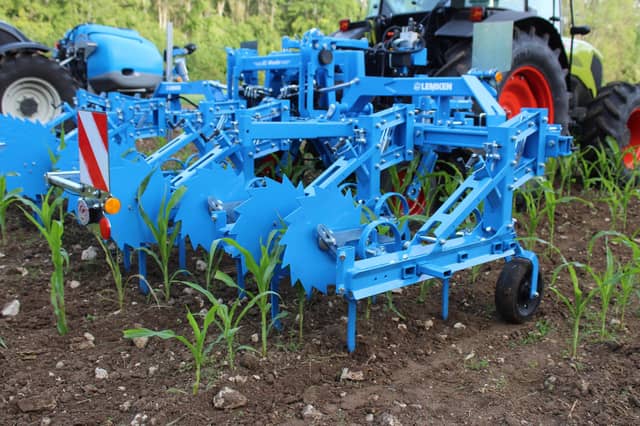
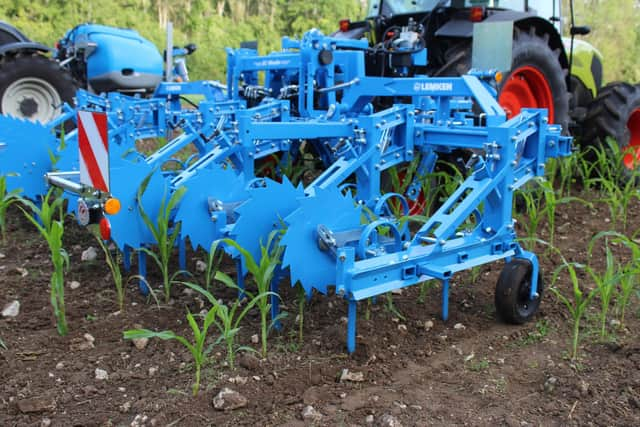
Physical control measures can include mechanical and had rogueing. Biological controls include the use of predatory species and bio pesticides.
However, if chemical pesticides are mandated, the minimum effective dose and application frequency should be adhered to with targeted applications used to minimise potential negative impacts.
Cover crops
A cover crop – sometimes called a catch crop – is sown between two main tillage enterprises. Planting takes place normally during the autumn / winter period.
It is important to establish cover crops rapidly after cereals have been harvested. This is in order to get the full benefits from the new enterprise in terms of soil nutrient and carbon capture.
Significantly, cover crops can suppress weeds and volunteers by competing for light, water and nutrients. Some species also release chemicals that inhibit weed development.
Carefully managed cover crops can suppress weeds through various means. The effect varies depending on the cover crop and the weed species.
They add diversity to the rotation and reduce opportunities for weeds to adapt to a cropping pattern.
Several cover crop types can out-compete weeds and help provide a cleaner seedbed.
Management practices associated with growing cover crops (e.g. mowing and grazing) can suppress weeds.
In addition, ong-term leys, with a lack of soil disturbance, can reduce viable seed numbers. Some brassicas contain high levels of chemicals that can sterilise soil
Cover crops can compete with weeds for light, water, and nutrients.
Increased competitive ability is linked to early emergence, seedling vigour, rapid growth, and canopy closure.
When establishing the following crop, growers should ensure cover is uniform and minimise soil disturbance.
Some cover crops work by allowing weeds to become established and then destroyed before they produce viable seed.
In this situation, cover crop canopies need to be open enough for weed germination.
Allelopathy
Allelopathy is where chemicals produced by one plant (or plant-associated microorganisms) affect the growth and development of another plant.
The release of allelochemicals can be affected by plant age and vigour, environmental factors and the presence of other plants.
The impact of these chemicals is affected by soil texture, organic matter, temperature, light and microbial breakdown.
Some plant species secrete chemicals into the soil (both during their life and after incorporation) that inhibit weed seed germination.
Sometimes, these can also inhibit germination in subsequent crops, especially directly sown (i.e. not transplanted) small-seeded crops; the effect can last for several weeks.
Cover crops reported to have in-field allelopathic effects include rye, oats, barley, wheat, triticale, brassicas (oilseed rape, mustard species, radishes), buckwheat, clovers, sorghum, hairy vetch, sunflowers and fescues.
No easy fix
It is now apparent that the days of simply applying chemical herbicides to control are coming to an end. For one thing, the production pipeline of new chemistries is fast grinding to a halt.
In part, this is due to the expense associated with the development of new active molecules and the required certification processes.
This leaves the way open for the use of IPM techniques. But it is already obvious that taking such an approach may bring about consistent reductions in crop yields.
The implications for future global food security within such a scenario are obvious.