
Once prime farming areas in Europe are now under threat from climate change
While Summer 26 has been hot, sunny and dry by Northern Ireland standards it has not been the disaster it has been for parts of the UK and much of mainland Europe.
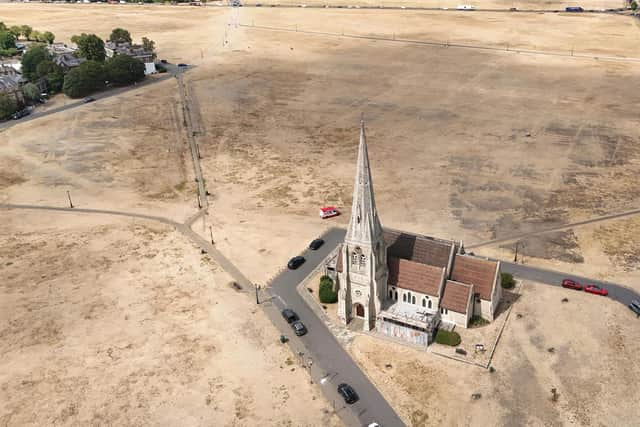
Key agricultural production areas in Europe are counting the impact of successive heatwaves, which have led to wildfires on a scale not seen before, with inevitable consequences for agriculture in both the short and long term. Coceral, the body that represents the grain industry in Europe, has published a July yield forecast. This breaks with the tradition of June being its last forecast before the harvest begins.

The impact of the long, hot summer is clear in these figures. Yield estimates for the EU27 and UK are now 286 million tonnes. This is down by 9 million tonnes since June and well down from last year's final harvest of 310 million tonnes. Wheat is facing particular problems with potential yields down by six million tonnes.
Across all the major production areas – France, Hungary, Germany, Poland – the Coceral report paints a picture of wheat crops not filling out. With more hot weather this week the picture is likely to get worse rather than better and this will have an inevitable impact on food prices in the months ahead. The problems are not limited to grain, with reports that livestock farmers are already being forced to use this year's hay and silage to make up for poor grazing. Over half the UK is now under drought conditions, with concerns about the state of soils for planting winter crops. This prompted the NFU in England to call on the government to review planning rules to make it easier for farmers to secure short and long term additional water supplies as droughts become more common.
The response was a perfect example of how out of touch the government is with reality when it comes to farming. It simply said it had already invested £12 billion in sustainable farming practices. That in no way answers the issues raised, but it manipulated the response to put farmers on the wrong side of the debate. The events of this summer are a mix of global warming and normal weather variations that have been around a long time. It is clear that what is happening is here to stay and that once prime farming areas in Europe are now under threat from climate change. What is happening in the UK and Europe with water resources is akin to what has already happened in parts of Australia, where choices have to be made around the enterprises that can be irrigated with scarce water resources. However knowing what the problem is does not mean it can be easily resolved. Policies are being put in place to tackle climate change, but there are problems with timescale from policy to impact. More significantly nothing the UK or even Europe can do by accepting pain and costs will successfully tackle a global problem others are still ignoring. In climate terms, if the UK returned to a pre-industrial way of life it would do nothing to solve the problems we are suffering from climate change. It is now clear that all of Europe, EU members and others, are facing the realities of summers getting hotter and less certain; winters are wetter, but not as cold, meaning there is less snow melt most years to ensure rivers and reservoirs are able to cope. It is a generalisation, but here we are seeing warmer winters and often wetter springs and summers, with some heatwave peaks. This is hard to manage in agriculture, because it challenges what has been normality for a long time.
There are arguments to press ahead with climate change mitigation measures, while accepting nothing we do will have any impact unless similar actions are being taken everywhere else. Given that this is not happening we need in parallel to gear up ways to cope better with the problems this is bringing.
Here some areas may gain from changing conditions, while others will need government support, via finances and the planning system, to make water resources more readily available when problems arise. This demands flexible thinking and good planning. This is something farmers are more than capable of delivering.
However politicians following the group-think approach on climate change will not achieve what is needed in terms of local solutions to tackle a global problem.