
Peatland restoration at Glenwherry could save up to 250 tones of CO2
At CAFRE’s Glenwherry Hill Farm a 57ha block of conifer forest on deep peat is being cleared with the aim of restoring the land to actively accumulating peat, writes Bryan Irvine, Sustainable Land Management Branch, CAFRE.
With 18% of NI being peatland, how it is managed has a major impact on the many ecosystem services such as water quality, carbon balance, flood control and biodiversity that upland farms provide for Northern Ireland.
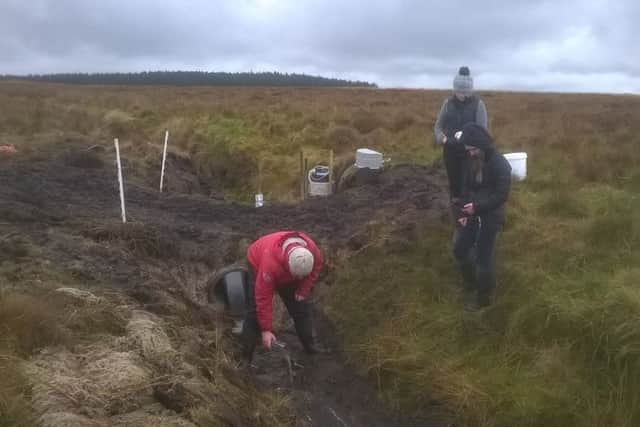

There are various methods which have been tried to restore peatland after deforestation but regardless of the method used ecosystem service delivery success hinges on being able to raise and maintain the water level to 10-15cm from the soil surface.
A successful peatland restoration site at Glenwherry could save up to 250 tons of CO2 equivalent emissions per year compared to remaining in poor yield class forestry, improve the water quality leaving the site and further enhance the considerable biodiversity achievements of the Glenwherry Hill Regeneration Partnership.

Farming the uplands has many facets and can provide more benefits to the community than is generally recognised. Ecosystem services, from both upland and lowlands, are part of a varied programme which will be covered in the new Environmental Farming Business Development Groups currently open for application. If you would like to be part of a local group of like-minded farmers looking at a wide range of environmental farming topics, then for more information on BDGs and how to apply visit: https://www.cafre.ac.uk/industry-support/business-development-groups/