
Planting gospel seeds well
Every fortnight people from a farming background, or who have a heart for the countryside in the Presbyterian Church in Ireland, offer a personal reflection on faith and rural life. They hope that you will be encouraged by it.
I had a wonderful time at the recent ploughing championships near Tullamore in Co Offaly.
It was an opportunity to meet with farmers, agribusinesses and organisations supporting farmers, both south and north.
Having been away from farming for many years, it helped me to better understand the particular challenges facing farm businesses, and farming families.
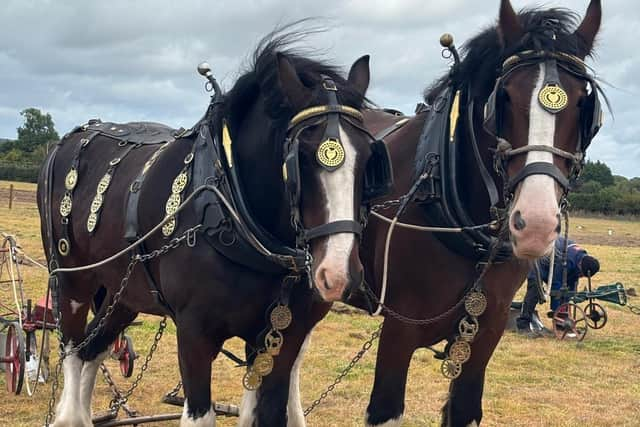

The Presbyterian Church in Ireland stand was a hub of activity as we gave out cups of tea and engaged people in conversation.
I was particularly taken with the large numbers of young people we encountered, and while some may have simply wanted some refreshments, others were asking significant questions about God, the meaning of life and the place of Christian faith. It was the privilege of the team to try to answer some of these questions and to plant the seed of the Good News of Jesus in people’s minds.
As the parable which Jesus told of the sower in Luke chapter 8 illustrates, the word of God is a seed that has the potential to grow and yield a significant crop. What is key is that there is fertile soil to allow it to flourish.
Seeing some of the ploughing and cultivation machinery on display at the ploughing championships reminded me of a job I had as a teenager.
For a few weeks, I worked for an agricultural contractor planting vast acreages of barley and wheat. My job was to load the sower, and ensure that the seed hoses had adequate seed and didn’t get blocked.
If I hadn’t done my job effectively, it may not have been immediately obvious, but mistakes would have come to light as the seeds germinated and started to grow.
Because it’s a basic principle - if the seed isn’t planted, it won’t grow. In a sense a seed has to die to yield a crop.
It is this concept that Jesus is referring to in John 12:24, when He says to His listeners, “I tell you the truth, unless a grain of wheat falls to the ground and dies, it remains only a single seed. But if it dies, it produces many seeds.”
Jesus is clearly referring to Himself and His need to die for the sins of the world. For it is only through His death that eternal life can come. It is only through His death that we can be reconciled to God, and come to Him as our Father.
Jesus is also speaking in this chapter about the need for us to die to our own self-sufficiency, our own efforts to save ourselves, our own tendency to live independently of God.
By implication, He is stressing that it is only through trust in His death on the cross that we can be saved.
Only through His sacrifice that our sins are forgiven.
This cannot be earned or achieved in our own efforts, but it is a gift of God, which we must receive for ourselves and allow to take root in the fertile soil of our lives.
Dr Richard Kerr has been the minister of Templepatrick Presbyterian Church in County Antrim for over 25 years and was appointed PCI Moderator in June 2026. He was brought up in Ramelton, County Donegal before leaving for agricultural college in County Tipperary, becoming a dairy farm manager near Dundalk in County Louth.