
Stormont Agriculture Committee to meet on September 11th
Members of the Stormont Agriculture Committee will hold their first meeting of the new Assembly term on Thursday, September 11.
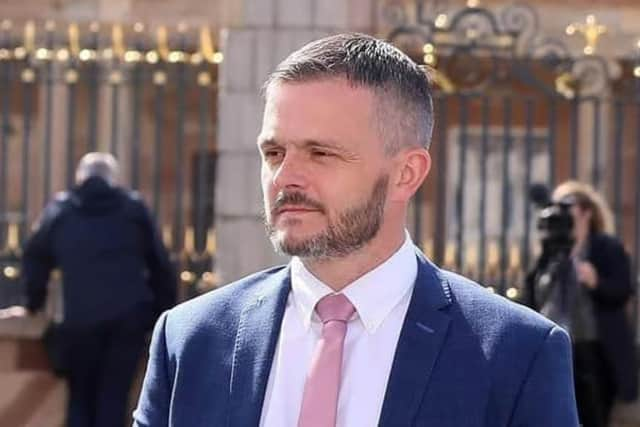
Chair of the committee, Robbie Butler MLA, foresees the coming weeks and months as being an extremely busy period for the grouping’s entire elected membership.
He explained: “There are a number of priority challenges facing local agriculture at the present time. One of these is the development of an acceptable Nitrates Action Plan.
“It was obvious that Minister Andrew Muir failed to deliver such a solution prior to the summer break.

“He is now pushing forward with the new stakeholder forum that has been established.
“However, the members of the agriculture committee will be reaching out to all relevant stakeholder groupings in its own right with the aim of ensuring that we can help deliver the final nitrates’ solution that is required.
“And ensuring that our farming and food sectors can look forward to a sustainable future will be at the very heart of the new plan.”
Turning to the issue of inheritance tax, the Lagan Valley MLA confirmed that stakeholder bodies and elected representatives from the across the UK’s devolved regions are now fully in-step, where this issue is concerned.
He said: “At this stage, I think it is highly unlikely that the Chancellor of the Exchequer will totally reverse her decision to extend the footprint of inheritance to production agriculture.
“However, I feel strongly that it should be possible to secure Treasury recognition of the disproportionate impact the new inheritance tax measures will impose on family farm businesses, particularly here in Northern Ireland.
“And if we can secure changes to this extent, specifically regarding the implementation of the new measures, this is a halfway house that can be built on for the future.”
Meanwhile, the agriculture committee’s chairman views the roll-out of anaerobic digestion (AD) technologies as a form of win: win scenario for Northern Ireland’s farming and food sectors.
Turn to page 14
He continued: “It’s not a silver bullet, but it could be close enough to delivering a solution that embraces the production of green energy and improvements in water quality in equal measure.
“It means that farmers can be both food and energy producers at the same time.”
Plans are currently in place to establish a number of AD hubs across Northern Ireland. These centres would produce bio-methane, using AD technologies, with slurry solids and other farm wastes as a feed stock.
These raw materials would be procured from livestock farming businesses in the vicinity of the various AD operations.
Robbie Butler again:
“The potential to use AD technologies in this way is immense. Northern Ireland is to host two major energy conferences during September. Both will confirm the use of AD as a technology that can add genuine value to farm wastes. This is a very positive development for local agriculture.”
Stormont’s agriculture committee chairman concluded:
“The Assembly’s current remits runs though until the early months of 2027, which is not that far away in parliamentary terms.
“It is the intention of the members on the agriculture committee to scrutinise in detail those key issues that have a direct impact on our farming and food sectors.
“By taking this approach, rather than perusing a much wider range of issues, it will be possible to develop legislation that has real meaning and impact in a positive and strategic manner.”