
The world of agricultural research and development keeps on expanding
Rothamsted Research scientists are confirming that the long-term application of fertilisers can help to boost soil carbon stocks, writes Richard Halleron.
These are the latest results emanating from the world’s longest cereal production trial, which has been ongoing at Rothamsted since 1843.
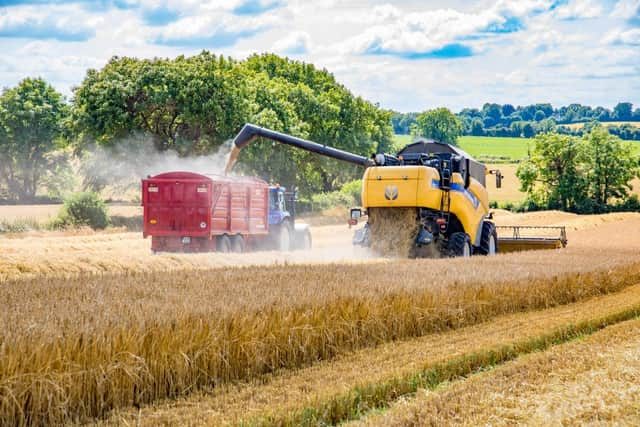
The world famous Broadbalk Classical Experiment has seen winter wheat grown in the one site continuously for the last 182 years.
The most recent soil analysis work was carried out by an international team of scientists.

It has found that found that plots receiving nitrogen and phosphorus fertilisers contained up to 28 per cent more soil organic carbon than those left unfertilised.
The study combined radiocarbon tracing, metagenomics and metabolomics to offer new insights into how fertilisers influence the complex chemistry and microbial life that control carbon storage in soil.
“Soil organic carbon is critical for climate regulation sustainable food production and soil health,” confirmed Rothamsted’s Dr Andrew Gregory.
“But its decline in many agricultural soils has been deeply concerning.
“Our findings show that long-term mineral fertilisation can actually enhance soil carbon sequestration, provided it’s managed carefully to minimise other unwanted impacts.”
Specifically, the Rothamsted research found that nitrogen and phosphorus acted in distinct ways.
Phosphorus alone boosted microbial activity and respiration. These are processes that release carbon, meaning that although microbial biomass increased, relatively little of it was converted into stable, long-lived forms of carbon.
Nitrogen fertilisation, by contrast, improved the efficiency with which microbes transformed plant material into more persistent “mineral-associated” carbon.
When applied together, nitrogen and phosphorus fertilisers produced the strongest effect: enhancing plant growth, promoting the conversion of short-lived “labile” carbon into more stable forms, and increasing both the quantity and durability of carbon stored in the soil.
Further analysis has found similar patterns elsewhere.
Across dozens of long-term fertilisation trials worldwide, nitrogen and phosphorus were associated with average soil carbon increases of 21 per cent and 13 per cent, respectively.
The benefits appeared to fade in the first decades of use, before strengthening again after about 30 years.
This suggests that soil carbon gains from fertilisation build slowly over time.
The findings, the authors say, underscore the importance of long-term research and careful nutrient management in designing climate-friendly farming systems.
Work in Northern Ireland, carried out by scientists at the Agri-Food and Biosciences Institute (AFBI) has found that the long term application of animal slurries to the same ground will build up soil carbon stocks.
This may well be another example of the aforementioned soil fertilisation effect.
Boosting photosynthesis rates in crops
For decades, boosting photosynthesis rates in crops has been viewed as a scientific holy grail.
This represents the engine of growth and biomass production within all cropping systems.
Yet photosynthesis does not operate in isolation: it is tightly interwoven with environmental factors—light, carbon dioxide, soil nitrogen, and water—as well as the plant’s own internal regulatory networks.
These complex interactions mean that improving photosynthesis in real-world agricultural settings requires a holistic, systems-level approach rather than a single, linear solution.
Significantly, scientists at Rothamsted Research are highlighting the role of trehalose 6-phosphate (T6P), a key signalling molecule that coordinates how sugars produced during photosynthesis are used for growth and yield.
Significantly, work on T6P has revealed that aligning sugar production with sugar utilisation—particularly during critical stages such as wheat grain filling—may unlock significant gains in photosynthetic efficiency.
Field trials show that applying T6P as a foliar spray can increase photosynthesis by adjusting the balance between supply (photosynthetic sugar production) and demand (growth processes requiring sugars).
By stimulating sugar utilisation into starch during grain filling, T6P effectively creates additional metabolic demand.
In response, the plant’s flag leaves increase their photosynthetic activity, supplying more sugar to the developing grain.
“The challenge now is to unlock that potential and the endogenous regulatory mechanisms currently holding photosynthesis back,” said Dr Matthew Paul, Senior Plant Scientist at Rothamsted.
“Creating more demand with T6P is one way to do this.”
Looking ahead, technologies that help crops overcome these internal constraints—whether through T6P-based treatments or targeted genetic approaches—could play a crucial role in raising global agricultural yields.
One way of securing the maximum impact generated by T6P is spraying a biochemical precursor of the agent on to commercial crops, which is then activated by light.
Up to now, T6P application has increased yield while maintaining grain protein levels.
Yield benefits were observed under both drought and well-watered conditions, offering a sustainable route to improvement.
T6P treatments have also triggered higher expression of the full sucrose-to-starch pathway in the grain: something never achieved through technological means before.
In addition, Genes linked to nitrate reduction, amino acid production and protein synthesis were upregulated, explaining why protein content remained stable despite higher yields in T6P treated crops.
And, finally, T6P increases in both grain number and grain size were achieved simultaneously, thereby overcoming a long-standing limitation in wheat yield potential.
The use of artificial intelligence within agriculture
Manwhile, there is a growing expectation that new technologies driven by artificial intelligence (AI) will be used to help cereal growers deal with the challenge of blackgrass weed infections.
This is a direct result of a partnership between Rothamsted Research and industry associates: Bosch, Chafer Machinery, and Xarvio.
They have come together, sharing specialist knowledge to bring about an innovative new approach to black-grass control.
In essence, using artificial intelligence, cameras on a spray boom can detect blackgrass at a range of growth stages of the weed.
The system then ensures the correct amount of herbicide is sprayed onto that area of the field.
The new approach should both reduce costs by spraying smaller areas of a field and result in blackgrass prevalence being reduced.
Heavy infestations of the grass weed in cereal crops can reduce by in excess of one tonne per hectare
Rothamsted Research helped to train the Bosch cameras to spot black-grass by photographing both the crop, and weed plants from a fixed height, over a range of plant developmental stages.
An artificial intelligence algorithm was then trained to apply this knowledge to images that came from cameras being driven over real fields across a whole farm.
The camera doesn’t request the sprayer to target a particular plant.
Instead, it asks the sprayer to target an area where it can see black-grass is growing so the technique is in effect map-based rather than targeting individual plants.
Experiments with a Chafer Machinery sprayer using different numbers of cameras and boom heights resulted in a working set up of 28 cameras set at a height of 1.1 metres.
Each partner contributed to the final application according to their own relevant expertise.
Xarvio undertook the agronomics, exploring which chemicals to use, Chafer adapted its machinery and Bosch led the technological implementation.
Rothamsted, Dr David Comont, explained: “This project allowed us to bring the knowledge we have acquired over many years of studying the black-grass problem, and combine it with state-of the art technology.”
The signifivcance of the trial work has also been highlighted by Peter Frankland of Bosch.
He said: “Rothamsted gave us the understanding of types of cultivation that farmers use and some methods of solving the black-grass problem without using chemicals.
“Farmers are increasingly adopting no-till or low-till methods and so weed control becomes a more significant challenge.
“Unlike ploughing, which buries black-grass seeds and prevents germination, these practices leave seeds closer to the surface.”
ADAS responds to UK’s 30: 50: 50 targets
ADAS has officially responded to the UK to the UK’s 30: 50: targets for agriculture, established by an all party grouping of MPs at Westminster last year (2025).
The vision aims to aims to address food security and environmental concerns simultaneously by 2050.
In practical terms this will mean producing 50% more food while reducing the environmental input of production agriculture by the same proportionate amount over the next 25 years.
The attainment of this objective advocates for an innovation-led approach, promoting science and technology in agriculture to achieve more from less, and suggests a land sparing strategy where high-yield farming on some land allows other areas to be dedicated to natural habitats.
For its part ADAS is confirming that central to the 30:50:50 vision is the adoption of a land sparing approach, with 60 per cent of land allocated to high-yield farming, 25 per cent to natural habitat, and 15 per cent to low intensity farming.
To enable a consistent, evidence-based approach to the collection and integration of farm-level data, the report requests the development of a new National Farm Data Initiative (NFDI) to coordinate the collection and integration of farm data and provide a single metric for consumers, policy-makers and investors.
Alongside the NFDI, the 30:30:50 vision is also recommending the establishment of a new national Knowledge Exchange capability.
At the heart of the ADAS response to the 30:50: 50 report is the proposition that its Yield Enhancement Network (YEN) service can play a key role for the arable/tillage sector.
Over the last 13 years, ADAS has created a database of thousands of arable crop yields.
These demonstrate that high-yielding wheat crops had a similar spend on crop inputs and much higher gross margins over variable costs compared to lower-yielding crops.
And, in addition, high-yielding wheat crops were associated with fewer greenhouse gas emissions per tonne and negative fertiliser nitrogen (N) balances.
So, the knowledge already gained through YEN to achieve higher yields could contribute to the goals of 30:50:50 mission and wider national objectives on food security, environmental improvement, biodiversity, and economic development.
Increased yields are also fundamental to reducing the carbon intensity and environmental footprint of crop production.
According to ADAS analysts, N fertiliser is responsible for more than half of greenhouse gas emissions from arable crop production: yet significant reductions in N application rates risk compromising yields.
However, YEN data analysis indicates that the relationship between variable costs/ha and yield is not strong.
In other words, high yields are not achieved by simply turning up the inputs.
And, as a consequence, farms must invest in optimising systems to maximise yields with fewer inputs.