
Tightening global supplies to underpin beef and lamb markets
Projected constraints in supply looks set to be a key driver of international beef and lamb markets over the coming months.
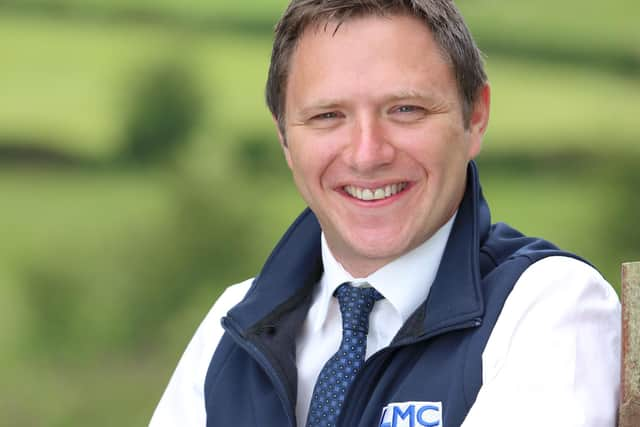
This is according to Livestock and Meat Commission (LMC) Chief Executive, Colin Smith.
He explained: “Brazil is currently approaching a low point in its beef production cycle while climate-related issues have been impacting on beef production levels in the United States.
“Europe’s structural decline is ongoing.

“And it is this pressure on supply that should put a foothold in the market at that global level into 2027.
“Here in Northern Ireland, after early highs,cattle prices settled around 630p/kg earlier in the spring.
“They then fell back in the wake of weaker demand during the summer period before a recovery in late September and October to around the 630 p/kg mark once again.
“However, a flush of cattle has come through the system with the result that beef prices are now under pressure.”
Consumption is the other factor that determines the tenor of the world’s food produce markets.
And, in this regard, there have been developments of late that constitute a good new story for local livestock farmers.
Colin Smith again: “Great Britain remains the most valuable market outlet for beef produced here in Northern Ireland.
“Recent research carried out by the Agricultural and Horticultural Development Board is confirming that demand for beef amongst British consumers remains strong.
“And this is despite the fact that retail beef prices are at historically high levels.
“So the question becomes: can this recent recovery in demand be maintained as cost of living pressures continue to bite?”
Where lamb markets are concerned, the LMC representative believes that the strong prices recorded over recent months will be maintained.
And again supply:demand factors will be key in shaping the market during 2027.
He said: “We saw spring lamb prices exceed £9/kg earlier this year.
Turn to page
“And yes, they fell back as the season progressed. But prices have remained above historic levels throughout most of 2026.
“Meanwhile, breeding ewe numbers throughout the UK continue to decline. We are also seeing strong demand for lamb coinciding with religious festivals, including Easter and Ramadan.
“Meanwhile, demand for cull ewes throughout the UK and Ireland remains strong.
“So there is every prospect of sheep markets remaining buoyant over the coming months.”
Market intelligence is just one of the numerous services that LMC provides for its levy paying farmers in Northern Ireland.
Significantly, an independent economic evaluation of the LMC’s expenditure by the Andersons Centre has confirmed that every £1 spent by the Commissionsis associated with £5.70 of economic contribution on a gross valueadded basis, or £18.3m a year in total.
Colin Smith commented: “This independenteconomic evaluation quantifies for the very first time the magnitude of LMC's activity, putting a monetary value on the return we deliver fromLMC's funds.” The statutory levy is collected in equal parts from farmers andprocessors and contributes towards funding activities that support thedevelopment and promotion of the NI beef and sheepmeat sectors.
The Commission’s chief executive continued: “The Andersons Centre sought the views of stakeholdersacross farming, processing, trade, academia and policy areas andpresented LMC with anonymised findings.
“Stakeholder views helpedvalidate the in-depth Economic Contribution Analysis completed as partof the work. The evaluation outlines in-depth the support for andeconomic benefits associated with our activities.
“Significantly,independent views on a counterfactual world without LMC were explored with the findings highlighting LMC’s economic contribution substantiallyin excess of current spend.”
According to the independent evaluation, LMC costs the equivalent of17.9p for every £100 of red meat sales, of which the levy accounts foraround 8.0p.
Colin Smith concluded: “Total annual expenditure of £3.2m in real terms sitsagainst an industry sales base of £1.78bn. The analysis implies thatindustry sales would be approximately £32m a year lower in the absenceof LMC.
“This statistic accompanied by the over fivefold return per £1of spend underscores the importance of LMC's work on behalf of levypayers and the beef and sheepmeat sector. “This independentevaluation provides strong evidence of the significant economic contribution LMC's levy funded work is having at present. While this sets a benchmark, the focus remains onworking collaboratively with stakeholders to maximise opportunities for the industry.”