
UFU welcomes moves at Westminster to reduce fuel price pressure
The Ulster Farmers' Union (UFU) has described the UK Government's decision to extend the 5p fuel duty cut and introduce a temporary reduction in red diesel duty as a significant and positive step for farmers and rural communities following sustained engagement and lobbying from the UFU.
The 5p fuel duty cut, first introduced in 2022 and originally due to begin phasing out from September, has now been extended by Chancellor of the Exchequer, Rachel Reeves, until the end of the year.
Alongside this, the duty rate on red diesel, an essential fuel used by farmers in tractors, harvesters and other off-road machinery, will be reduced from 10.18p per litre to 6.48p per litre from 15 June until the end of 2026.
Commenting on the announcement, UFU president, John McLenaghan, said: “The UFU welcomes this announcement, particularly the temporary reduction in red diesel duty.
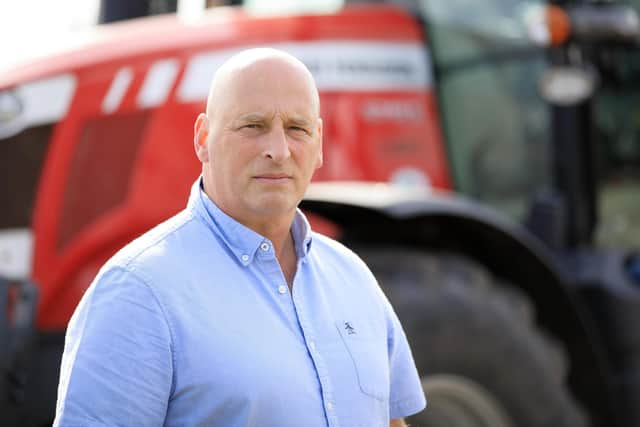

“Red diesel is not a discretionary cost for farmers; it is an essential input used every day to produce food, manage land, keep farm businesses operating, and ultimately deliver high quality, affordable food for consumers.
“Farmers and rural communities have faced severe fuel and input cost pressures with very limited direct assistance.
“This measure is a welcome first step and recognises the immediate pressure that rising fuel costs are placing on agricultural businesses.”
He continued: “However, this cannot be the end of Government action.
“Fuel pressures and wider input costs are already influencing production decisions on farms across Northern Ireland, and further targeted support is needed to prevent serious consequences for domestic food production.”
However, Ulster Unionist agriculture spokesperson and Chair of the AERA Committee at Stormont, Robbie Butler MLA, has criticised the Government's latest fuel package as “smoke and mirrors” for farmers, warning that the red diesel duty cut fails to reflect the reality of modern farming or the growing pressure on household food bills.
Turn to page 7
While welcoming any attempt to ease rising costs, Mr Butler said the announcement ignores the fact that many day-to-day farming activities no longer qualify for red diesel under current HMRC rules.
“On paper this looks like support for agriculture, but the reality on farms is very different,” he further explained.
“Modern farm businesses rely on diversification, contracting and transport work just to survive, yet much of that activity must now use fully taxed white diesel.
“That means many Northern Ireland farmers simply will not feel the benefit being claimed by the Government.”
Mr Butler said that, instead of simply tinkering with duty thresholds, the UK Government should examine the option of temporarily extending permitted red diesel usage during the current fuel and energy crisis.
“A time-limited extension of red diesel eligibility for essential rural and food production activity would deliver immediate, practical relief to farmers, contractors and the wider agri-food supply chain,” he said.
“At present, farmers can use red diesel in one field but face restrictions the moment work crosses into transport, contracting or diversified business activity.
“Those rules no longer reflect how modern agriculture operates.”
The AERA Committee Chair warned that soaring fuel, transport and electricity costs do not stop at the farm gate and will ultimately feed directly into supermarket prices.
He added: “This is not just about farmers, it is about protecting food affordability for families already struggling with the cost of living.
“If Government gets this wrong, the result will be higher production costs, higher prices on shelves and more pressure on households who already have little enough left at the end of the week.
“Supporting local food producers is part of protecting consumers too.”
Mr Butler concluded by questioning why struggling rural businesses must wait until mid-June for the reduction to take effect, during one of the busiest periods of the farming calendar.
He called on the Treasury to urgently review restrictive HMRC guidance and ensure support reaches the areas of the rural economy under the greatest pressure.