
Winter crop prospects remain strong
The Agricultural and Horticultural Development Board (AHDB) is confirming that, for the most part, winter crop prospects remain strong from a yield perspective.
The full details of this assessment are contained in the organisation’s latest crop update. Up to this point the 2025/26 growing season has been marked by an exceptionally wet winter, with some areas experiencing their wettest January and February on record. Conditions began to improve in late March, enabling spring drilling to start, and while most soils have drained better than expected, a few isolated fields remain waterlogged.
Travelling conditions are varied; tracked machinery has proved more effective in wet conditions, whereas wheeled equipment has struggled in places. Growers have generally completed first nitrogen applications, and many are moving on to second doses, though rising fertiliser and fuel costs are prompting some to consider trimming later rates.
Meanwhile, the use of drones for early micronutrient applications has become more common. Autumn herbicides have given good ryegrass and blackgrass control nationwide, and low insecticide use continues to be a notable trend. Disease pressure in winter wheat is rising, particularly from septoria and yellow rust, though remains low for other winter crops. Overall, winter crop prospects are reported to be very good.

Winter wheat crops currently range from tillering to GS31, with early growth generally ahead of the seasonal norm. Growth regulators have been widely applied to manage forward crops and reduce lodging risk. Overall, crops are performing well apart from waterlogged areas, though later-drilled fields have been slower to develop due to fluctuating cold and wet conditions.
However, in the South West, some advanced crops have regressed and yellowed, with localised patchy losses from water logging. Despite these challenges, national yield potential remains good. Some yellowing has been observed following waterlogging, but crops are recovering with nitrogen applications now showing effect. Most growers are up to date with fertiliser programmes, with around 125 kg N/ha applied in the South East, though Northern Ireland growers have only recently begun first applications.
Weed pressure remains low overall, with autumn herbicides proving highly effective. Broad-leaved weed control is generally good, including in Yorkshire and the North East, where only minor patches are left. In Eastern England, broad-leaved presence is limited mainly to cleavers, groundsel, and chervil.
Pest activity is moderate, with gout fly widespread but causing minimal crop impact. Aphids are active in several regions, accompanied by a noticeable population of ladybirds helping to contain numbers. Increased free-living nematode activity has been reported in the Vale of York, while the West Midlands and South West note more visible gout fly damage and aphid presence.
Meanwhile, disease pressure is rising, particularly from septoria and yellow rust. Septoria levels are high in early-drilled crops on wetter ground, while yellow rust has become more widespread, particularly in later sown crops and more susceptible varieties. Brown rust has appeared in southern and eastern areas, and mildew remains present at low, non-threatening levels. In the West Midlands, Barley Yellow Dwarf Virus (BYDV) symptoms are visible in patches, and in the South West, T0 fungicides have mainly been applied to protect against yellow rust. According to AHDB analysts, prospects for the 2026 wheat crop are reported to be very good, with 82% of the crop rated good-to-excellent, down from 83% in November. However, the rating is sharply up in comparison to last March, when just 67% of the crop was rated good-to-excellent.
AHDB is confirming that most winter barley crops are looking well across most regions of the UK. In terms of development they are ranging from tillering to Growth Stage 31. Growers are uniformly reporting that crops are generally clean with good establishment levels achieved. Yellowing is common in winter barley, largely due to nitrogen deficiency. In the Eastern England, crops initially improved after fertiliser application but have since lost some colour again.
Meanwhile in Scotland, deficiency symptoms are more pronounced than in wheat. Northern Ireland reports mixed responses, with some crops showing strong recovery following early nitrogen, though plant growth regulators (PGR) will soon be needed.
In the South East of England, most growers have either completed or are just about to apply their second nitrogen application.
Weed control in winter barley is generally good, with residual herbicides performing strongly across the UK. Autumn treatments have been particularly effective in Northern Ireland, and East Midlands’ growers report excellent grass weed control following cinmethylin applications. Pest pressure has increased slightly, with BYDV symptoms becoming more noticeable and some patchy plant losses where gout fly and virus stress have combined.
Reddening from cold weather and aphid activity is evident in places. Gout fly has been reported in the West Midlands and Scotland, while eastern regions note lighter activity compared with wheat. Disease levels remain relatively low overall, though brown rust, net blotch, and rhynchosporium are present at varying levels depending on variety and local conditions. Brown rust is most evident in hybrids in Yorkshire and the East Midlands; it is also present alongside net blotch in the East of England.
Meanwhile, the South West of England is also seeing some net blotch, with most crops now having received T1 fungicides, while Scotland reports only low levels of rhynchosporium. Like winter wheat, prospects for 2026 winter barley are reported to be very good, with 85% of the crop rated good-to-excellent. This is down from 89% in November but notably up in comparison to last March, when just 70% of the crop was rated good-to-excellent.
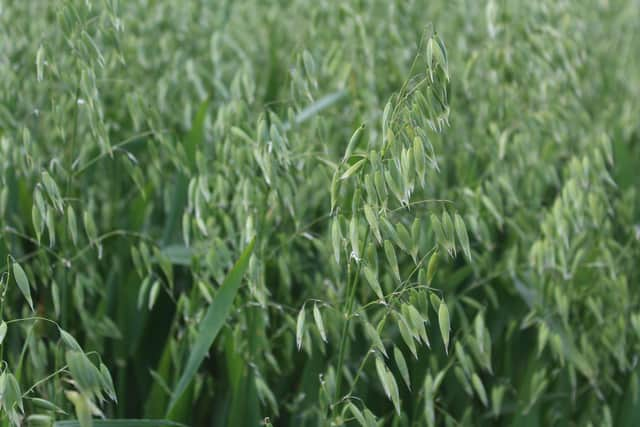
Winter oats are growing well, with crops ranging from tillering to GS31. Most have recovered significantly, following the earlier wet period and are now showing good, even development across fields. Nitrogen applications are now underway on winter oats, with rates and timings varying by region. In the South West, around 50 kg N/ha has been applied at tillering to support early growth, while in Northern Ireland, growers have delayed first applications due to concerns about lodging on strong, forward crops.
Weed pressure remains very low in winter oats, with no significant issues from broad-leaved weeds reported. Pest activity is minimal, though some reddening from cold stress and aphids has been observed. In the West Midlands, aphids are present, but no BYDV symptoms have appeared. Disease pressure is also low overall, with only light levels of powdery mildew seen in some crops including in reports from Scotland, and no major problems have been identified so far. Prospects for 2026 winter oats are reported to be very good, with 88% of the crop rated good-to-excellent, up from 87% in November. Furthermore, the crop is improved in comparison to last March, when 73% of the crop was rated good-to-excellent.
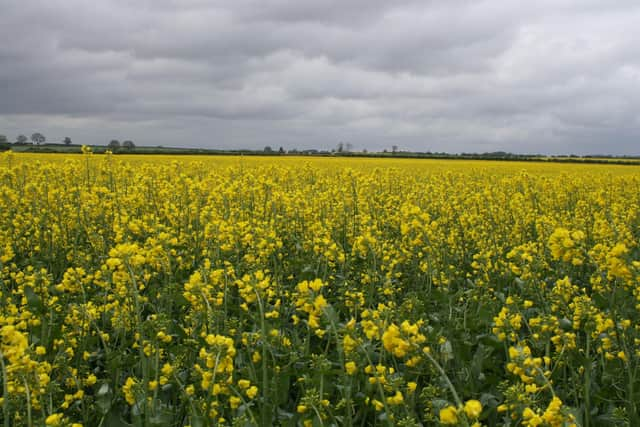
Most winter oilseed rape crops have significant yield potential. The assertion is contained in the latest UK winter crop update from the organisation. Most crops are now showing green buds and are standing out as one of the strongest-performing break crops this season. Yield potential looks very good overall. In the West Midlands of England , some water logging has affected heavier soils, while Northern Ireland reports particularly strong growth in earlier-drilled fields.
Meanwhile, a few crops in the South East have required re-drilling but are now establishing satisfactorily.
Many crops have developed large canopies, prompting widespread use of a plant growth regulator (PGR) to reduce lodging risk. In the West Midlands, PGR is being applied as a precaution on the most advanced crops, while in the South East, growers are completing their final nitrogen applications before plants become too tall for effective treatment. Weed control in winter oilseed rape has been generally better than average this season, with strong residual performance and targeted treatments maintaining clean crops. In the South East of England , clopyralid and halauxifen‑methyl mixes have been used effectively for broad-leaved weed control.
Pest pressure remains low, with cabbage stem flea beetle (CSFB) activity minimal and pollen beetles only starting to increase,but rarely reaching treatment thresholds. In Yorkshire, CSFB larvae are present in many crops but causing no visible damage. Disease levels are also low overall, though some phoma has been reported in Wales, requiring attention, and light leaf spot is appearing at low levels in Scotland.
AHDB is reporting that spring drilling is now underway after delays caused by persistently wet soils. Progress has been steady on lighter land, while heavier fields still need more drying time. Higher seed rates are being used to compensate for later or direct drilling. In the South East, spring oats are expected to be sown over the coming weeks to assist with blackgrass management.
Meanwhile, drilling in the North East and Yorkshire remains limited, confined mostly to light soils, while in Northern Ireland, only minimal drilling has occurred so far as growers focus on establishing spring beans first. Weather conditions will dictate crop planting rates achieved throughout the UK and Ireland over th coming days. Unsettled conditions are expected through the Easter period. However, a more sustained period of drier, warmer conditions is forecast form the middle of April onwards.
The Agricultural and Horticultural Development Board (AHDB) is confirming that its new Barley Yellow Dwarf Virus (BYDV) on-line tool will be launched at the beginning of September. It replaces the existing model, which is driven by a T-Sum calculation. Significantly, the new model draws information form a disparate range of data sources, including the Rothamsted Insect Survey. Other variables to be factored-in include the growing impact of BYDV tolerant winter barley varieties, sowing dates and projected grain prices at harvest.
Genetic analysis of the different aphids that act as a vector for BYDV will continue apace with real time data from this work also included within the data inputs used to formulate the new disease control service. AHDB staff stress that the new model will not deliver recommendations in terms of when best to spray newly planted cereal crops with an insecticide. Rather it will provide growers with an assessment of the variables impacting on the spread of BYDV at a particular time.
The new model has been developed on the back of a four-year research and development programme carried out by ADAS. The work was specifically commissioned by AHDB. There is a strong expectation that the updated BYDV model can deliver better crop outcome scenarios with a reduced reliance on the use of insecticides to control BYDV infection levels within cereal crops. Post launch, the new model can be accessed free-of-change by arable farmers throughout the UK. AHDB is currently seeking the views of growers regarding tweaks that can be made to the new tool prior to launch.