
‘World Bee Day’ marked
This week marked ‘World Bee Day’ where organisations across the world, acknowledged and recognised the role and importance of bees.
While bees are renowned for their role in providing honey the greatest contribution of bees and other pollinators is the pollination of nearly 75% of the plants that produce 90% of the world’s food. Therefore, bees and other pollinators play a crucial role in agriculture across the world and without them farmers would struggle to produce many crops, fruits and vegetables.
Insect pollination is estimated to be worth around £600 million per year to UK crops and at least €53 million in the Republic of Ireland. Regional estimates of the value of pollinators to individual crops were made some years ago, with values of over £7 million per annum for apples in Northern Ireland and €3.9 million for oilseed rape in the Republic of Ireland. These likely underestimate the current economic value for our pollinators.
There are 98 bee species on the island of Ireland; one species of managed honeybee and 97 different wild bees (20 bumble bees and 77 different solitary bees). Research shows that reliable pollination services depend not only on healthy honeybee populations but also on an abundance and diversity of wild bees and other insect pollinators. The economic contribution of pollination by wild bees has been assessed as £1,800 per hectare.
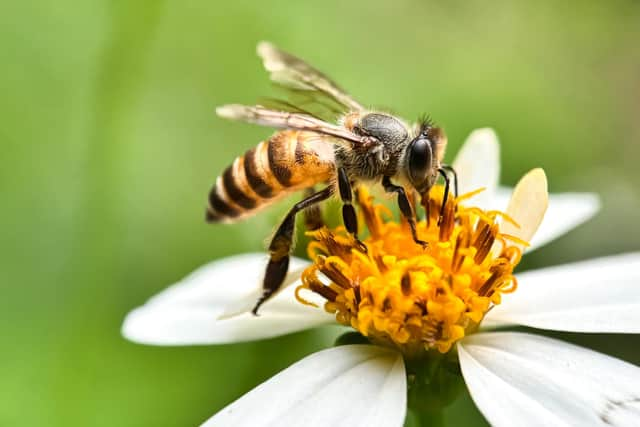

Unfortunately, pollinators are in decline and on the island of Ireland one third of bee species are threatened with extinction therefore, it is important that everyone takes action to help bee species. Pollinators need food and shelter to survive, and farmers can take some simple actions to help support pollinators.
The Ulster Farmers’ Union (UFU) has been supporting the ‘All Ireland Pollinator Plan’. This project has produced guidance for different sectors outlining what can be done to support bees. The guidance documents can all be found on the www.pollinators.ie website and includes useful guidance for farmland. Farmers are encouraged to read this and see what simple steps they can take on their farm to help pollinators.
One of the most basic steps is to maintain flowering hedges on farmland. Under Farm Sustainability Standards hedges must not be cut between 1 March and 31 August unless there are health and safety issues. Good hedges provide food (flowers) from spring to autumn, and shelter for nesting bees as well as acting as corridors to help pollinators move through the landscape. Neat and tidy intensively managed hedges offer little benefits for wildlife, pollinators or shelter for livestock. In addition, the DAERA Farming with Nature Transition Scheme offers some options to support pollinators including funding to plant hedges. DAERA are expected to open year 2 of the FwN Transition Scheme soon which will have additional options which will support pollinators and biodiversity.
The UFU are also supportive of another initiative which supports pollinators. Since 2017, the UFU along with the Ulster Beekeepers Association, the Voluntary Initiative (VI), and Crop Protection Association launched ‘BeeConnected’. BeeConnected is an initiative that provides a more efficient and effective way for farmers to inform beekeepers of their intention to apply an insecticide to their crops. Farmers are committed to the responsible use of plant protection products and protecting pollinator health and the UFU would encourage all farmers who spray insecticide to register and support the scheme. More information is available at www.beeconnected.org.uk.