
Brussels notebook: Dairy sector now seems to be slipping into a crisis
Just when we were tempted to think things were not too bad the EU has begun using the C for crisis term to describe the dairy sector.
This is a worrying development, raising fears that markets are not just softening – as they have been for some time – but running into a potential over-supply situation in Europe.
We might be out of the EU and living in a post-Brexit world, but that does no make us any more immune to problems in the European dairy sector than was the case when we were an EU member state.
The crisis term was used by some EU member states in documents submitted to a recent meeting of farm ministers.
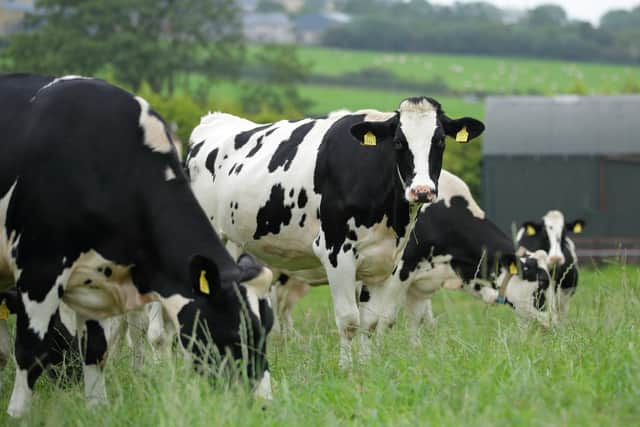

Titles of the documents ranged from 'crisis' to 'deepening crisis' and the message was that the European Commission needed to be gearing up now to step in with market support to prevent things getting worse. The documents refer to 'structural problems' in the industry – better summed up as increasing milk supplies in the face of European and global demand that is static or falling.
The picture painted is a classic one of agricultural markets that reflect thousands of individual decisions by farmers. As a result 2025 milk production rose, with the rise biggest at more than five per cent in October. This was down to farmers responding to high prices earlier in the year; cow culling was reduced by 14 per cent, despite strong beef prices; weather was good for production in the summer.
The extra supply produced the inevitable result. Average EU milk prices fell from 53 euro per 100kg in September to 49 euro in December, with a further drop expected to be confirmed for January.
Some member states say farmers are now operating at prices below the cost of production, although that seems a big claim on the basis of a still relatively modest price fall from high peaks.
That claim is however to be expected. Member states want the European Commission to take their concerns and warnings on board now and gear up to support markets, rather than waiting for a full-blown crisis. They say export trade is not being helped by the instability of all markets as a result of geopolitical events, including the distortion and nervousness created by Trump tariffs.
These have created opportunities for Europe in some markets, but in uncertain times buyers are more reluctant to hold stocks. As ever with 27 EU farm ministers there was no agreement on the best way forward. What they did agree on was that there is a developing crisis in the dairy sector across Europe.
However there was no agreement on when and how Brussels should push the panic button. Some wanted funding for a scheme to encourage farmers to curb milk production, but as it is still open to question as to whether what is happening is just a cyclical market adjustment there was little support for that thinking.
Support instead was for the European Commission to be ready to use the crisis reserve fund in the CAP to put in place a private storage scheme to take surplus product off the market. There was also a clear message to farmers than in the absence of any scheme to curb production they needed to do that at farm level, by reversing production decisions taken when milk prices were high. It was interesting in this debate that the pressure came from different EU member states than those traditionally seeking dairy sector protection. They included Slovakia, Romania, Hungary and Poland – but Italy and France followed their lead, with France in particular warning of dangers in relying on China as a reliable dairy market.
Brussels has been conservative in its response, accepting ministers' concerns and saying it will step up its analysis of trends in the dairy sector over the coming months to assess the case for market intervention.
There is a warning in this for farmers here, but what was highlighted is the cyclical nature of agricultural markets. There was no collective decision by farmers to increase production and equally no long term plan to do so. Instead, across Europe thousands of farmers read the market signals from high prices.
They took modest decisions on individual farms to respond. Add those together and the result is the crisis the sector now seems to be slipping into.