
Brussels Notebook: Future of the CAP and farm support squeezed out by Ukraine
Dublin was at the centre of European politics this week. It hosted a meeting of EU heads of state and a meeting of the wider European Political Community (EPC) group.
This goes beyond EU member states and this time went even further by including the Canadian prime minister and former Bank of England head, Mark Carney. His presence was further evidence that the EU, the rest of Europe and Canada see the need to become a major political and trading bloc. The aim is to counter Donald Trump's drive to create a different economic and political model to the one in place since the end of the second world war. The big ticket item on the agenda was not one Ireland might have chosen to dominate its event. That item was Ukraine, with its president addressing the EPC before meeting American negotiators under pressure from a now lame duck US president to forge some form of peace deal between Washington, Moscow and Ukraine.
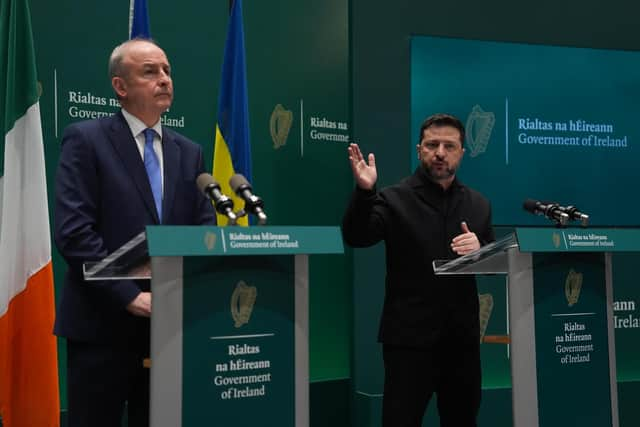

This eclipsed domestic issues at the high profile events of Ireland's EU presidency. Issues squeezed out included the future of the CAP and farm support. Irish farmers had wanted to see these on the biggest EU political stage of the Irish EU presidency. Joined by farm organisations from across the EU, the Irish Farmers Association held a rally to coincide with the EU summit, but inevitably other issues dominated the event and the new agenda.
In the run up to the summit the Organisation for Economic Development (OECD), which represents the world's developed economies, published a new report harshly critical of global farm support. The OECD figures cover 2024 and 2025, meaning they do not include the financial response by the EU, US and others to the spike in fuel and fertiliser costs from the Iran war that began in February 2026. That means that if the issues being flagged by the OECD are bad for the global economy they are getting worse. The headline figure is that support to agriculture rose by 15 per cent to top 710 billion across 56 countries. Put another way the increase alone was 90 billion. By any standards these are significant numbers, but think back to 2024 and 2025 and they were far from a golden age for farm incomes. What is not highlighted in the OECD report is that consumers were winners from this approach, in that it did more to keep down the price of food than improve farm prosperity.
The big issue for the OECD, going back over its annual reports, is not that governments support agriculture, but that they do it in ways that distort trade. Over half the subsidies fell into this camp, with the biggest amount going to help reduce input cost increases from higher energy and fertiliser costs. The OECD says this leaves some better placed to export than others, but more significantly also discourages innovation. That may be so, but aid against rising costs is immediate and necessary, while innovation is long term. The OECH says the other driver of support was the response to climate disasters where the solution is even more elusive and long term.
Realistically, change is not on the horizon. Things will continue getting worse, and the pressure for support greater, until ways can be found to end the global trade distortion from wars in Iran and Ukraine. That will not be an easy or speedy process. The EU has traditionally been high on the naughty step because of the CAP, but as EU heads of state crunch numbers for its future budget the CAP is under pressure as never before. The cut on the agenda is around 25 per cent, partly driven by member states that now say they cannot afford to continue bankrolling the EU. Cuts will be fudged, delayed and probably reduced, but the free spending days of the CAP are now in the rear view mirror. The inevitable question is whether support will remain even less generous in the UK. The conclusion has to be that farming here will remain politically weaker and so less able to resist pressure for further cuts, as spending priorities move towards defence. A couple of years from now the next OECD report on agriculture will almost certainly point again to things getting worse. However it needs to remember that the greatest trade distorting measure ever seen was from Trump imposing tariffs. These were a key reason farmers turned against Trump in the recent mid-term elections.