
Dairy Council Insight: New research confirms the dietary risks linked to plant based dairy alternatives
One of the most fundamental aspects of sustainability is protecting human health and wellbeing through dietary patterns that provide adequate essential nutrients and energy while having a low impact on the wider environment. Patterns that are, in essence, affordable, accessible, and culturally acceptable.
The physical inclusion of these critical dietary components is one thing, but more significant is their level of bioavailability in the foods that we consume.
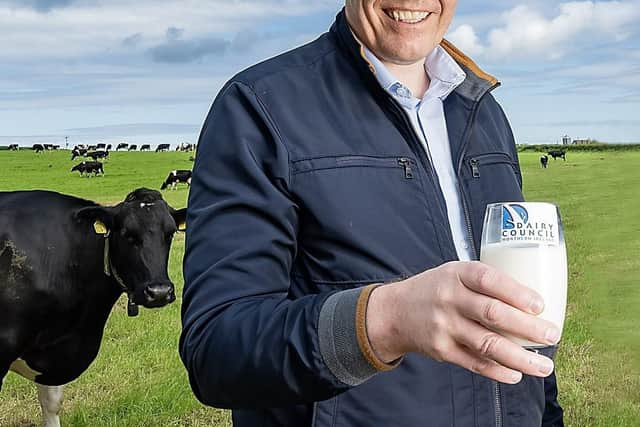

The Dairy Council for Northern Ireland has been to the fore in communicating the role of milk and dairy foods to schools, consumers, health, nutrition and sports professionals enabling them to make well-informed choices about dairy products and their role in a healthy, sustainable diet.
This work has consistently reflected the outcomes of independent research trials.
Such, then, is the significance of a recent study jointly undertaken by scientists at the University of Surrey and Queen’s University Belfast.
The first of its kind in the UK, the study examined the impact of replacing dairy products with plant-based dairy alternatives on iodine and other micronutrients, inclusive of a modelling study and evaluation of policy options to support population intake, which has recently been published in ‘Lancet Planetary Health’.
The rationale for this study is grounded in the increasing emphasis within nutritional guidelines on incorporating a greater proportion of plant-based foods in diets while reducing the consumption of animal-derived products. This shift is being promoted in response to growing concerns regarding sustainability and the need to develop food systems that are more environmentally responsible. Consequently, dietary recommendations are increasingly framed not only in terms of human health but also in the context of addressing broader environmental challenges.
However, with the rise in plant-based alternative foods, it is important to understand if they are like-for-like replacements when compared to the micronutrients found in dairy products.
This is particularly important for vulnerable groups, including young children and adolescent females, who are more likely to be deficient in certain micronutrients leading to potentially adverse effects on their overall health.
And it is in this specific context that these new findings from University of Surrey and Queen’s University Belfast are highly significant.
Specifically, they indicate that replacing dairy products, even partially, with unfortified plant-based alternatives may lead to a deficiency in vital nutrients.
In addition, the mandatory fortification of plant-based alternatives and other foods, including bread, could lessen the risk of deficiencies, particularly iodine deficiency.
This pioneering study investigated the impact of replacing milk, yogurt and cheese with commercially available plant-based alternatives on an individual’s micronutrient intake.
Drawing on data from the National Diet and Nutrition Survey, the survey considered 3,500 individuals aged between 18 months and 100 years old and used modelling techniques to assess the impact of replacing dairy products with plant-based alternatives across four essential micronutrients: iodine, calcium, riboflavin and vitamin B12.
Notably, the researchers found that even modest substitutions of dairy products with plant-based alternatives resulted in substantial reductions in the intake of all four micronutrients examined. Iodine was identified as the nutrient most sensitive to dietary replacement, exhibiting the greatest decline as dairy consumption was reduced. Iodine is a vital nutrient needed to make thyroid hormones to regulate metabolism, support healthy growth and brain development.
For example, replacing just 20-to-35% of dairy products with plant-based dietary alternatives, under current market fortification levels, increased iodine inadequacy among adolescent females from 54-to-65% , and from 32-to-42% in women aged 19-49 years old.
At total replacement, the prevalence of iodine inadequacy rose to 80% in adolescent females and 72% in adolescent males.
The team from Surrey and Belfast also examined the impact of mandatory fortification of plant-based dairy alternatives with micronutrients as a potential way to prevent deficiencies.
It was found that while such fortification prevented declines in micronutrient intake when dairy products were replaced, levels of iodine remained inadequate in 59% of adolescent females.
Such telling results are a reminder of both the rich nutrients within milk and dairy, as well as the inherent difficulties in trying to replace them.
While the results of the trial are certainly noteworthy, the conclusions derived from them by the research scientists involved send out a very clear message to policy makers.
Specifically, the global push for a shift towards sustainable diets should consider the risk of micronutrient deficiencies arising from the replacement of nutrient-rich animal-sourced foods with plant based dairy alternatives.
This study, together with international evidence on successful iodine fortification programmes, underscores the importance of aligning nutrition policy with environmental targets.
Moreover, nutrition policy should evolve alongside climate targets to ensure that shifts towards more sustainable diets do not compromise public health.
Updating dietary guidelines, fortification standards, and labelling regulations will be crucial for maintaining micronutrient adequacy during the transition to more sustainable diets.
And, finally, tailored policies addressing dietary guidelines, fortification standards, and labelling regulations will help to ensure that sustainable diets remain nutritionally adequate and environmentally sustainable, thereby aligning global sustainability targets with evolving public health needs.
Here in Northern Ireland, dairy farmers continue to make significant progress in advancing sustainable dairy production, demonstrating a strong commitment to reducing environmental impacts all the while maintaining the high standards of quality and animal welfare for which the sector is globally recognised.
Emission levels per litre of milk produced continue to fall. And this trend is on course to gain greater momentum into the future.
Driving this will be the implementation of new technologies capable of securing greater levels of production efficiency at farm level including livestock genetics and the embracing of new innovative techniques and processes.
These commitments are being mirrored by significant and ongoing investment on the part of dairy processors to drive down the environmental footprint of their businesses.
Ultimately, this creates a win-win scenario for consumers, providing access to dairy products of the highest quality while supporting an industry that is wholly committed to advancing environmental stewardship, economic viability, social responsibility, and nutritional sustainability.