
Foyle virtual grazing hill cattle with Monil technology
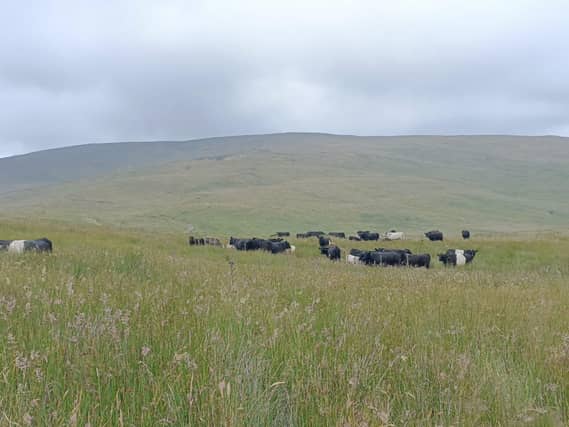

Foyle Food Group, a Northern Ireland based beef processing company have recently embarked on a Hill Farming Project with Norwegian Agri Technology Company, ‘Monil’.
The project aims to examine how ‘virtual fencing’ can optimise grazing management of a suckler herd in a hill farm setting.
Monil has developed grazing technology, making virtual fences for better livestock and grazing management. The technology allows farmers to set up fences, find and track animals with a mobile app, control where the animals should graze and get notifications if something is wrong.
Monitoring cattle in upland areas can be a challenge however, with Monil technology, all animal’s live movements are visible. This is also beneficial to encourage cattle to graze certain areas and to remain in one area at a time.
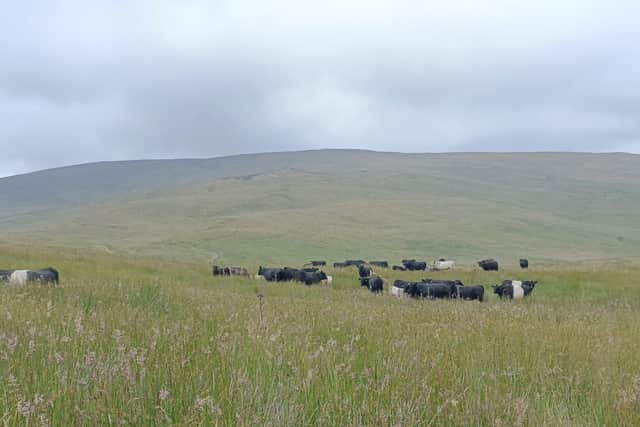
The virtual fencing is facilitated through an electronic, lightweight, solar powered collar.
Users can draw an area where the animals should stay in the app, and the collars will ensure they remain contained in the area using sound and power signals. The system works by playing a sound when the animals approach the virtual fence. If they go too far, they will receive a mild shock. A training period is essential to ensure animals understand the signals.
In normal operation, the animal will primarily react to sound signals, and electronic signals will rarely be used.
Christoffer Grindheim and Ann Elinor Jamtvoll Aasen from Monil travelled to Northern Ireland to meet Foyle agricultural team including Wayne Acheson, Procurement Director, Andrew Clarke, Agriculture Manager and Wilson Marshall, Agricultural Technology Specialist to discuss their product and take a look at the Foyle Hill Farm.

The Foyle ‘Farms of Excellence’ is located in County Tyrone and encompasses three different farming systems, a finishing unit, lowland grazing platform and an upland hill enterprise. Continuous research and development is being carried out to provide up-to-date information to suppliers on ways to maximise economic and environmental efficiency and sustainability.
The hill farm comprises around 570 acres in the Goles and Lough Fea areas of the Sperrin Mountains. Suckler cows and calves graze on rough terrain for most of the year from mid-April, post-calving, until approximately mid-November.
Monil have provided collars for Foyle to trial for this grazing season which is currently being used on a batch of 26 suckler cows and a breeding bull, with no collars being worn by the calves.
Andrew Clarke commented on the convenience of the technology: “I’m sitting here in the office and if I want to give the cattle grazing on the hill a fresh area to graze, I can use the technology to create a bigger grazing zone for the cattle to make their way into.”

He also explained: “The phone app will tell you what each collar battery is and if you have a collar not working or the battery’s not charging”. Collars are fully charged at the start of the year and the solar panel will keep them charged for the remainder of the season. The collars were fitted last week and have been “working well on the herd so far”, according to the Foyle representative.
There were two main reasons why Foyle were interested in trialling the collars. Firstly, Clarke noted: “We want to better manage the grazing of cattle on the hill. We want to bring the cattle to graze areas of the hill where they wouldn’t normally go as a group.
“Secondly, when we are serving cows with a bull on the hill. Sometimes the cows could be on one end of the hill and the bull could be on the other. The cow could be cycling, and the bull would never see her within 24 hours.
“The aim of the virtual fencing is to keep the livestock batched and moved across the hill. We hope to be able to basically rotationally graze the hill. That’s what we are trying to achieve.”