
Genotyping cattle has so much to offer the dairy and beef industries
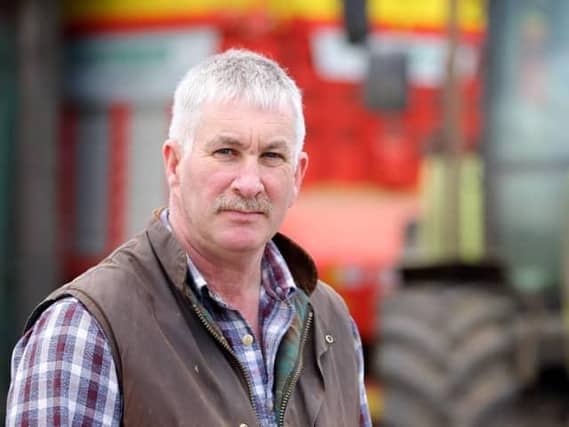

Quantifying the full genetic merit Northern Ireland’s cattle population will help revolutionise the dairy and beef sectors.
This is the strongly held view of Victor Chestnutt, the chair of the Sustainable Ruminant Genetics (SRG) programme.
He explained: “Securing genetic information on this scale is an approach that will help deliver tremendous improvements in the levels of performance and efficiency achieved across our cattle sectors.
“In the first instance, the significant impact on the carbon footprint generated by both the dairy and beef industries will be immense, once farmers are armed with this specific information."
Chestnutt went on to confirm a number of specific benefits, which the work of SRG will deliver.
“At a very fundamental level, identifying the parentage of individual calves becomes a very straightforward task,” he explained.
“Where dairy is concerned, once all milking cows within a herd have been genotyped, the taking of a bulk milk tank sample should allow the identification of each individual cow’s cell count figure on an almost real time basis.”
Turning to the beef sector, the former Ulster Farmers’ Union (UFU) president highlighted the significant level of DNA testing already carried out by the meat plants.
He continued: “A lot of this work is undertaken to verify carcases’ eligibility for the various beef schemes. This information can also be used to relate various aspects of animal performance and final meat quality.
“But, surely it would be much more effective to secure this information at time of birth, rather than waiting until the animals are dead.”
Chestnutt stressed the need for the beef industry to get serious about quantifying the levels of performance achieved at farm level.
He further explained: “This is all about the data and making this information available to farmers in a meaningful way.
“And it doesn’t take significant investment in new technology to make this happen. For example, the installation of weigh bridges in meat plants would allow liveweights to be accurately recorded prior to slaughter.
Turn to page 11
“Armed with this information and the accompanying kill weights, farmers would be able to quickly work out the exact kill-out percentage of every animal they send for slaughter.”
Meanwhile, work continues apace on the part of SRG to identify the best way of securing the tissues sample required for DNA analysis and, subsequent to this, having them accurately assessed.
Victor Chestnutt again: “Using appropriate ear tags would seem to be the best way of securing the tissue samples that will be needed.
“We are also in discussion with a number of laboratories, which would be in a position to carry out the accompanying analysis work.
“The jury is still out as to whether we go with a single organisation or bring a number of companies on board.
“There are two priorities to be met: delivering a service at least cost to farmers and ensuring that the interpretation of the genetic data generated from the tissue samples is carried out to a uniform standard.”
The tissue sampling campaign gets under way the beginning of 2026.
“The first 12 months will see the sampling of all breeding females and male animals within the beef and dairy herds,” Victor Chestnutt commented.
“This work will be funded by DAERA. Beyond this point, farmers will pay for the tissue sampling and analysis work.”
He concluded: “Looking ahead, I see no reason why the beef processing sector would not want to contribute to the costs involved with the ongoing roll-out of the SRG programme.
“After all, the plants are already committed to the DNA sampling of cattle in large numbers. Committing to the SRG programme would mean they would ensure that they getting the required genetic information at a much earlier stage in an animals’ lives.”