
Good news for the countryside: Making good choices for the future
Every fortnight people from a farming background, or who have a heart for the countryside in the Presbyterian Church in Ireland, offer a personal reflection on faith and rural life. They hope that you will be encouraged by it.
As the agricultural show season continues, many of us will enjoy a day out viewing the prizewinning livestock, seeing the latest machinery and catching up on the craic with a few old friends, who we haven’t seen since last year’s show.
My recent visit to Balmoral in May brought back childhood memories of when I first visited the Show with my late father in the early 1960s. Dad was too nervous to drive his car into Belfast, so he parked up at a friend’s house in Lisburn and we travelled the remainder of the journey to the King’s Hall by bus.
In those days, there were very few small tractors to choose from, and I remember seeing the shiny new Massey 135s. Later, I was so excited when dad ordered one from White’s garage in Armagh for the princely sum of £910 - the special Orchard Model with round mudguards and a downward exhaust!
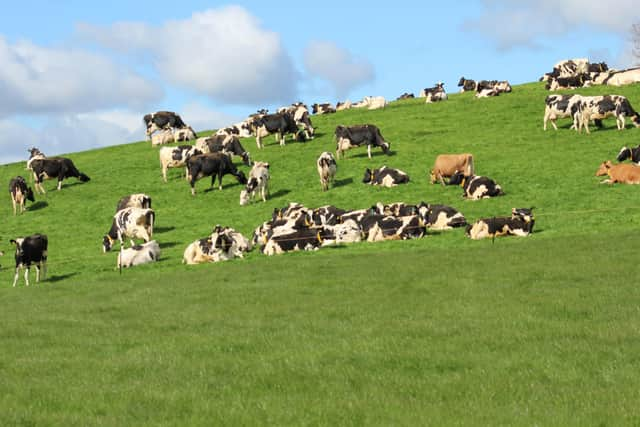

At the recent shows, however, I have noticed a renewed interest in ‘multispecies swards’, which under some situations, are more drought, or nutrient efficient. I inherited this interest in grass seeds from my granda Bingham, an agricultural merchant in Markethill.
That interest led me to spend many years in grass breeding at AFBI in Loughgall. The constituents of these multispecies swards, which include Cocksfoot, Timothy and Dogstail, are quite similar to what my grandfather used in mixtures a century ago, although the choice of varieties available nowadays is much wider.
Grass remains our most important forage crop and Northern Ireland has such an advantage in being able to produce high yields at relatively low cost. Studies by AFBI have shown that by using well managed swards of new, improved varieties, farm output can be greatly increased. So, there is a unique opportunity to capitalise on our natural advantage, thereby enhancing our international competitiveness for both milk and meat production.
Choosing seed mixtures, tractors, and machinery, are not the only things which we have to think carefully about. In fact, there are other choices which each of us have to make, that will affect not only our daily life, but more importantly, our life after death.
Sadly, many of the difficult situations which each of us can get ourselves into are as a result of bad choices. In the Old Testament, the children of Israel, who had been led out of captivity in Egypt, often made bad choices and turned away from worshipping God. But their leader, Moses, encouraged them to “…choose life, so
that you and your children may live and that you may love the Lord your God, listen to his voice, and hold fast to him” (Deuteronomy 30:19).
The choice of following God’s way, and accepting the offer of everlasting life, which his son Jesus secured on our behalf by His death on the Cross, is so important for us all. Later, in the Old Testament, Joshua, the successor to Moses, again challenged the children of Israel, “…choose for yourselves this day whom you will serve…as for me and my household, we will serve the Lord” (Joshua 24:15).
What choice are you going to make today?
David is married to Pauline and they have four grown up children. Since retiring from the Grass Breeding Department at AFBI Loughgall, he grows Bramley apples which he supplies to local processors and packers. David is a member of Loughgall Presbyterian Church.
If you would like to talk to someone about any of the issues raised in this article, please email Rev Kenny Hanna, PCI’s Rural Chaplain at ruralchaplain@presbyterianireland.org or call him on 07938 488 372.