
Hot weather puts combinable crops under stress across the UK
The Agricultural and Horticultural Development board (AHDB) has published its UK crop report for the month of May.
It reflects the changing weather conditions that impacted on Great Britain (GB) and Northern Ireland during this period.
May stayed cooler than the long-term average across all regions until the third week.
Rainfall was similarly subdued for the first half of the month, before a shift to much wetter conditions in week three, when every region saw above-average totals ranging from 30 mm to over 80 mm.
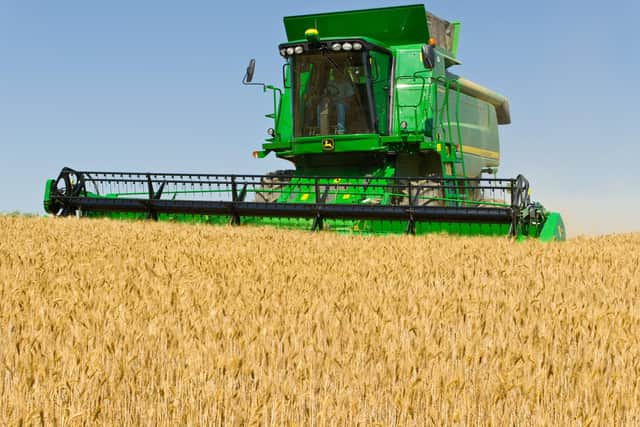

Even with this late surge in rainfall, some areas, especially those with lighter soils, remain moisture limited.
Overall, crops are growing well, with late May rainfall aiding recovery after the earlier dry weather, although more will be needed to sustain crops through to harvest. Where sufficient rainfall occurred, crops have recovered, but some still lack biomass and tiller development.
Recent high temperatures (30°C+) have increased crop stress, with visible leaf rolling in wheat crops, indicating benefits from recent rainfall may be short-lived.
Oilseed rape (OSR) has generally fared better than winter cereal crops, and within the cereals, winter oats seem to be holding up better than wheat and barley. The weather negatively impacted early spring crop development. Crops in England are generally worse affected than those in the other nations of the UK.
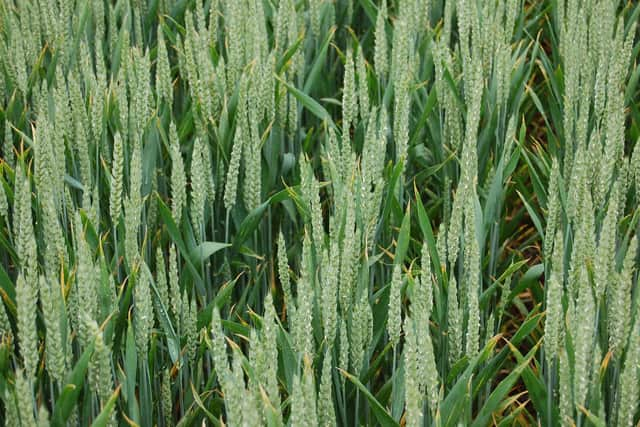
Disease levels are generally low, but yellow rust remains a concern, particularly where spray timings were missed or applications didn’t achieve sufficient control. Septoria risk is declining due to dry weather.
Aphids are emerging as a key concern in several regions, with the potential to move into ears. Barley Yellow Dwarf Virus (BYDV) is present, but it is generally at low to moderate levels so far.
Fungicide programmes have generally been maintained based on crop risk rather than cost pressures, although the prolonged dry spell has reduced septoria pressure, enabling reductions in some T2 applications.
Where growers are reducing inputs, this is being driven more by crop potential than by fuel or input costs.
Meanwhile, some growers are avoiding insecticides due to environmental scheme requirements.
Moisture availability is expected to be the main limiting factor across most of the UK.
Rainfall in the next 2-3 weeks will be critical in determining crop yields.
Meanwhile, global grain prices fell ovwer recent days amid improved weather forecasts, harvest pressure and lower crude oil prices.
The forecast rain would benefit newly planted maize crops in the USA, and offer relief after hot, dry weather in Western Europe.
Traders also re-positioned as harvesting of the 2026/27 crops in the Northern Hemisphere gets underway.
Crop breakdown
Meanwhile, AHDB has confirmed a general decline in the condition of combinable crops in the UK as the month of May progressed.
This trend has been, very much, weather driven with record breaking temperatures over recent weeks impacting very significantly on soil moisture levels.
Recent rains have helped to reverse this situation somewhat. However, the weather over the coming weeks will be the real determinant of the grain yields secured during Harvest 2026.
Winter wheat
According to AHDB, 64% of winter wheat crops across the UK are in a good or excellent condition. This is down from the 75% rated good or excellent at the end of April and 82% at the end of March, showing the impact of the dry weather this spring. The latest rating is still well above both this time last year (36%) and May 2024 (55%).
Winter barley
Across the UK, 62% of the winter barley crop is rated as in good or excellent condition, down from 70% a month ago and 85% at the end of March. It is still above the 48% of winter barley with this rating a year ago. But it is now in line with the 62% reported in late May 2024.
Winter oats
71% of the UK winter oat crop is rated as good-to-excellent, down from 81% in late April but still well above the 52% at this point a year ago.
Winter oilseed rape
Nationwide, 78% of winter oilseed rape crops are in good or excellent condition. This is down slightly from the 84% reported last month but is still notably above last year, when 52% of winter oilseed rape was in good-to-excellent condition.
Spring wheat
Just 35% of spring wheat crops are in good or excellent condition nationwide, notably below the 50% at this time last year.
Spring barley
Across the UK, 57% of spring barley crops are in good or excellent condition. This is slightly above last May (54%) and May 2024 (55%), but it is well below the 73% in late May 2023. In Scotland, spring barley is performing well due to good establishment.
Spring oats
55% of spring oats nationwide are in good or excellent condition as of late May. This is above the 42% of spring oats in good to excellent condition reported a year ago, but below the 73% at this stage in 2024.
Grain supply and usage
AHDB has also published updated 2025/26 projections for grain supply and usage in the UK. The figures relate to the 12 month period ending June 30 this year.
The estimates are based on the official production figures for wheat, barley and oats published by the Department of Agriculture Food and Rural Affairs (DEFRA) courtesy of the cereals and oilseed rape production survey.
Total cereals demand for animal feed in 2025/26 is estimated at 13.453 Mt, an increase of 149Kt from March’s estimate and 1% higher than 2024/25.
According to AHDB analysts, a number of factors are contributing to this positive year-on-year trend including higher consumption by Great Britain (GB) Integrated Poultry Units (IPU’s), GB cattle compounders and Northern Ireland (NI) compounders.
Cattle compound demand is expected to ease in the final three months of the season whilst IPU’s are forecast to continue the current trend.
Estimates of the amount of cereals Fed on Farm have been revised upwards to levels comparable with the previous season. Market comments indicate that grain is less available than had been previously forecast, which all else assumed equal, suggests more has been consumed on farm or that supplies are less than indicated.
In 2025/26, total cereals demand by human and industrial (H&I) sectors is estimated at 9.182 Mt, 184 Kt higher than March’s estimate but 12% lower than 2024/25 levels.
Following government support, bio-ethanol production at Ensus, based in the North-East of England, resumed in April and is expected to continue this crop year with no indication, as yet, of production beyond this period.
This has increased wheat and, to a lesser extent, maize demand for H&I use. Usage data to March shows the expected declines in usage for brewing, malting and distilling (BMD) and flour milling, with forecasts in line with the previous estimates.
At 16.188 Mt, total availability of wheat in 2025/26 is 50 Kt higher than AHDB’s March estimate but lower than 2024/25.
Imports are estimated at 2.250 Mt, 50 Kt higher than the previous estimate, but 818 Kt lower than 2024/25 levels.
From July 2025 to March 2026, the UK imported 1.867 Mt of wheat, 536 Kt less than the same point in 2024/25.
However, regional variation is key with data to end-February showing strong demand for imported wheat to Northern Ireland, and a greater share of UK imports destined for NI ports than last year. The import forecast assumes usage of imported grain will decline in the final three months of the season.
In 2025/26, H&I demand for wheat is estimated at 6.640 Mt, up 159 Kt from March’s estimate but 466 Kt down from 2024/25 levels.
The increase from the previous estimate is driven by usage of wheat for bioethanol and starch with estimates included for Ensus to the end of June.
Lower than forecast flour extraction rates also contribute to the uplift, however, flour production and therefore wheat usage by millers continues to be lower. Demand for wheat by distillers is also in decline as previously forecast.
The amount of wheat used in animal feed in 2025/26 is estimated at 7.151 Mt, 136 Kt higher than March’s estimate but 309 Kt up year on year. The increase is driven by data to the end of March, with wheat usage by IPUs remaining strong, and adjustments to more typical levels of ‘fed-on-farm’ grain.
Livestock rations
Significantly, AHDB is confirming the continuing commitment of GB compounders to barley as a constituent of livestock rations.
Usage of barley in animal feed in 2025/26 is estimated at 4.457 Mt, up 35 Kt from March’s estimate, but down 43 Kt from levels recorded in 2024/25.
AHDB analysts estimate that the amount of barley fed on farms across the UK has increased slightly from March’s estimates reflecting the lower on-farm stocks figures, lower ex-farm prices and depressed demand from the brewing, malting and distilling (BMD) sector.
In 2025/26 total UK availability of barley is estimated at 7.835 Mt, 20 Kt lower than the previous forecast and 651 Kt lower than 2024/25 levels.
Full season barley imports up to the end of August this year are estimated at 190 Kt.
The lower trends in BMD demand have continued as anticipated with 2025/26 human and industrial (H&I) barley demand expected to be the lowest on records going back to 1990/91.
The current cost of living crisis is having a major impact on current estimates with several distilleries being mothballed this season.
Full season barley exports from the UK are estimated at 450 Kt with closing stocks of the grain pegged at 1.266 Mt.
Maize
In 2025/26, total availability of maize is estimated at 2.386 Mt: 918 Kt lower than 2024/25 levels.
The increase in availability from the previous estimates is due to an increase in imports with 1.77Mt imported from July to March.
At 557Kt, human and industrial maize usage is 47% down year on year. Animal feed demand for maize is similar (-4 Kt) to the previous estimate and 197 Kt down on the year.
Displacement of maize in feed rations is occurring at the present time.