
How are crops coping with the driest conditions recorded in almost 70 years?
By the middle of May, the UK had recorded the driest and sunniest start to spring on record (and the warmest since 1960).
According to the Agricultural and Horticultural Development Board (AHDB), most cereal and oilseed rape crops were in fair, good or excellent condition at the end of April. But some were showing the first signs of drought stress.
A fortnight later and many more crops are showing signs of stress. Some farmers, blessed with water sources and infrastructure, even started to irrigate some cereals. In winter wheat, most nitrogen is taken up during the construction phase during April and May to support tillering and stem elongation. Naturally, most nutrients are applied before and during this phase.
For the fertiliser applied, some will be sitting, waiting patiently for moisture to work its magic. Recent showers will have provided some relief, especially to the stressed crops lucky enough to see them.
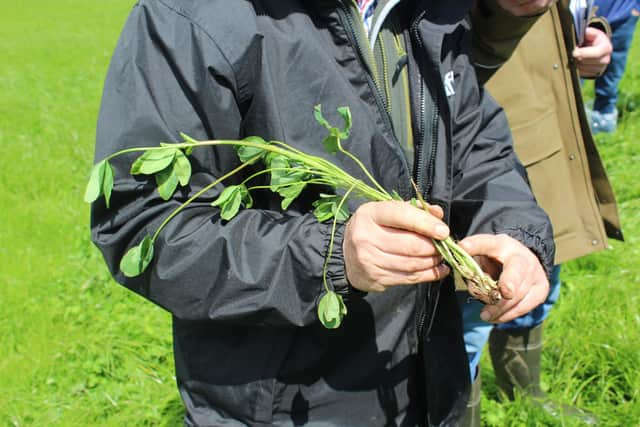

Moisture is needed to dissolve nutrients and move them to plant roots. However, it does much more. For example, ammonium nitrate contains nitrogen in nitrate (NO₃⁻) and ammonium (NH₄⁺) forms. Although the former is immediately available for crop uptake, the latter needs moisture-loving microbes to convert them to nitrates (via nitrification).
For urea fertilisers, an extra moisture-requiring step is required. This is because urea first needs to be converted by urease enzymes (which are naturally present in soils) to ammonium forms.
Even liquid nitrogen fertilisers, which are solutions of urea and ammonium nitrate, are still hampered by a lack of soil moisture (which is still needed to convert nitrogen into crop- available forms). If crops cannot absorb nitrogen, yields suffer and fertiliser investment is lost. It is a major economic risk.
Dry, sunny conditions also cause another fertiliser issue: leaf scorch, which reduces the photosynthetic area.
According to Teagasc, a range of crop nutrient deficiencies are now visible in spring cereals: a direct result of the ongoing dry weather.
Phosphorus (P) deficiency is characterised by purple red colours on older leaves and poor tillering. Potassium (K), shows as yellow tipping, starting on the older leaves that moves down the leaf margins. The affected leaf feels like paper and eventually turns white, Magnesium (Mg), recognised by yellow striping down the older leaves between the leaf veins. Manganese (Mn) deficiency shows up a similar striping to Mg but on newer leaves and spotting between veins.
In addition, Mn deficiency is evident in affected fields, by a “wheeling” effect. As soils continue to dry and with no rain predicted, other deficiencies such as Zinc (Zn) and Copper (Cu) are inevitable in fields with a history of such issues.
While rain would alleviate a lot of the deficiencies currently being observed in spring cereals, if there is a history of a specific nutrient deficiency problem associated with a site, or a nutrient deficiency presents in the crop and the symptoms persist, action may be required in the form of foliar applications.
Correct identification of the deficiency is important. Soil analysis can help to identify high risk areas for most of the trace elements. However, for some, such as Mn, tissue analysis can be more accurate.
Research shows that there is no economic justification for the addition of trace elements mixes prophylactically, where no deficiency is evident. Additionally, due to the small quantities that some of these are required in by the crop, adding trace elements unnecessarily could have a negative impact on crop performance.
Applying foliar trace element treatments in hot and dry conditions requires some careful considerations. The following are some tips for the foliar applications of trace elements to
crops:
Apply early in the morning or late in the evening - stomata are open and temperatures are generally cooler, reducing evaporation and preventing leaf scorch. Check the weather forecast for suitable spray conditions. Avoid applying immediately before rain and in very high or low humidity. Avoid applying in midday sun.
Ensure good leaf coverage.
Choose appropriate formulations - chelated compounds or inorganic formulations, that can be absorbed quickly and efficiently through the leaves. Although more expensive, these may be more effective in drought conditions compared to inorganic salts.
Apply label rates: too much trace element solution in dry conditions can stress the crop further.
Don’t mix incompatible products: some trace element solutions or pesticides can react negatively with each other, reducing efficacy or even causing damage to the plant.
Growers should always check compatibility before mixing treatments. In a severe deficiency situation, it is advisable to address the deficiency before applying further pesticide products.
The Potash Development Association (PDA) has highlighted the key role of sulphur in crop production systems.
Sulphur in the soil acts in a similar way to nitrogen. It arises naturally from the breakdown of organic matter, and to some extent from soil minerals. Soils which are organic, or heavy textured are more able to supply adequate sulphur than light and inorganic soils.
The organic sulphur compounds are broken down to inorganic forms, which are then useful to the plant.
The Sulphur Cycle demonstrates these processes which are driven by microbial action, so moisture, warmth and time are required. Organic sulphur in the soil comes from organic matter, whether from applied organic materials or from grazing/crop residues. The organic sulphur has to be “mineralised” into the sulphate ion (SO 4 2- ) in order to be taken up by plants.
These sulphate ions reside in the soil solution which means they are liable to be leached, depending on the soil texture and rainfall, just like nitrates. This risk must be taken into account when nutrient planning, which will be covered later.
Immediately available sulphur in the soil can be measured by lab analysis, but its variability both down the soil profile and over time, means that the normal 4 yearly soil analysis (pH, P, K, Mg) regime is not appropriate. Both the organic processes and the leaching potential cause levels to vary by month and by year.
Some research work has been done by measuring sulphur in deep core samples taken for soil mineral nitrogen testing in oilseed rape crops. However, clear conclusions on guide levels are still being determined.
The major role of sulphur in all plants is in support of nitrogen in protein production which is hugely important for high crop yields. For bread making wheat, protein production and its quality are even more important for loaf volume. In brassicas, (vegetables, oilseed rape, kale etc) sulphur is also in glucosinolate compounds, which give them their hot taste.
Sulphur also reduces the likelihood of immature rapeseed which faces penalty pricing in the market. This explains the greater requirement and importance of sulphur applications to brassicas.
In grass, sulphur is probably more important for improving the quality of grazing and silage, in terms of protein, than the yield increase achieved.
Deficiency symptoms in cereals, grass and brassicas show up in the younger leaves first. Symptoms are a pale yellow appearance (chlorosis) and, later on, stunting. Much later, oilseed rape flowers will have pale yellow, or almost white, petals. Symptoms in some crops are easily missed, or confused with nitrogen deficiency, and may not be noticed at all, especially in cereals and grass.
Because routine soil analysis cannot be used to predict sulphur deficiency, plant tissue testing is often used. For oilseed rapoe and cereals there is the Malate Sulphate test, which can be done early in the crop’s life. But it may need to be repeated later at stem extension.
Alternatively plant tissue analysis, for nitrogen and sulphur concentrations, can be carried out for oilseed rape and other crops.
But the results may not become available until too late to correct for the current crop. However, it should give good indications for future policy.
Any long-term plan designed to enhance arable farming systems needs to improve soil health to provide a buffer against the increasingly unpredictable and extreme weather.
In practical terms, this means improving soil quality. This can be achieved by taking a number of fundamental steps.
Enhanced water retention: Healthy soils with high organic matter content retain more
water, which reduces the impact of drought
Improved soil structure: Good soil structure promotes better root growth and water
infiltration, helping crops withstand both drought and heavy rainfall (such soils are also less
prone to erosion from heavy rain and wind)
Nutrient availability: Healthy soils support a diverse microbial ecosystem that enhances
nutrient cycling, helping plants get the nutrients they need