

They set sail for new life from ports such as Belfast, Derry and Donaghadee with pots, pans, plants, seeds, recipes…and loads of hope for a better and harmonious future. They endured turbulent times, deprivation and starvation crossing the Atlantic.
As I was thinking about our connections with the new world, I heard that two of our member companies, Linwoods of Armagh and Wild Atlantic Distillery in Castlederg, are now developing business successfully in the US and Canada. Linwoods is shipping overnight oats to the US and Wild Atlantic has just completed a successful marketing trip to a number or the original states in the Union for its recently launched IslandMen Irish Whiskey. The states being Pennsylvania, Maryland, Delaware, and New Jersey.
The US continues to be an immensely important marketplace for our food and drink producers.
The Ulster Scots/ScotchIrish, understandably, named settlements after their homeland. So, there’s an Ulster County in New York, Derry and Londonderry, both in New Hampshire, Belfast in Maine, Antrim County Michigan and no fewer than 16 Tyrones. There’s also a Banbridge in Ohio, Hillsborough in Washington and a Dungannon in West Virginia.
The intrepid settlers pushed on down the Shenandoah, for example, into what became Tennessee and Kentucky. Some travelled to what became Texas and were eventually part of the revolution which separated the region from Mexico. The links with Davy Crockett, Jim Bowie and Sam Austin are well-known.
The Belfast News Letter carried contributed columns every few months of reports from settlers on the frontier and their confrontations with the native population. It subsequently became the first European newspaper to carry the American Declaration of Independence on its front page, that was in 1776 – legend has it before even King George III heard he had lost the colony.
The settlers became a driving force in American agriculture, farming potatoes, corn and greens on small homesteads. They enjoyed fiddle tunes from back home and brewed beer and, of course, a rough whiskey influenced by historic Irish distilleries like Bushmills in Co Antrim and McConnell’s in Belfast, the latter celebrating its 250th anniversary later this year.
Bourbon producers in Kentucky and other neighbouring states owe much to the early American producers of whiskey who began distilling with corn and rye which was easier to farm than barley favoured for Irish whiskey. Interestingly, bourbon barrels today are favoured by local distilleries in the maturation of Irish single malts.
The US remains the single most important market for distilleries here. Whiskeys like Bushmills and Dunville’s from Belfast dominated whiskey sales in the US until Prohibition led to a ban on all spirits. The US remains the biggest market for Bushmills, now owned by Proximo Distributors of New Jersey, and it’s probably our biggest selling and best-known in international markets. Dunville’s has been revived successfully by Echlinville Distillery in Kircubbin, a FoodNI member, and it is growing strongly in the US and other global markets.
Other local producers of whiskey and other spirits like McConnell’s, Shortcross, Hinch, Wild Atlantic, Boatyard and Twin Stacks have been building sales in the US in the face of severe head winds from the Trump administration on tariffs. We would certainly support the Irish Whiskey Association’s recent call to the UK and Irish governments for action on tariffs and other support for this important industry.
Overall, The US is a growing market for our food and drink, heavily driven by premium dairy, red meats, and Irish whiskey. The US represents one of the largest global destinations for local exports, contributing to the £1.68bn in total goods exported to the US. It’s a huge and sprawling marketplace that’s far from easy to penetrate profitably.
Foyle Food Group in Derry, our largest red meat exporter, recently successfully shipped landmark batches valued at over £190,000 directly to American grocery shelves, thanks to US market access agreements for UK beef. Premium cheese, milk, and cream derivatives from the likes of Dale Farm, another member, are some of the most consistent performers in US retail.
Some smaller producers including artisan enterprises have gained a foothold. There’s Mash Direct, for instance, from Comber with potato and vegetable sides in New York, Glenarm Salmon has also supplied major hotels in the city, and Irish Black Butter has won small batch business in New York, Boston, Nashville and Dallas.
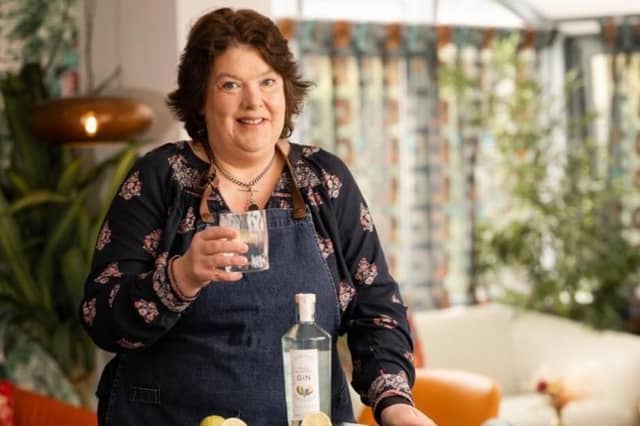
Of course, the cooking tradition in the Southern States of using buttermilk for pancakes for example was influenced but the Ulster settlers. There are many cultural overlaps that exist between the two regions, beautifully captured by Judith McLoughlin in her book The Shamrock and Peach. She tells the tale of immigrants which forged the trails of Appalachia years ago. And there is a belief that baking soda was brought back from the US in the mid-19th century to Ulster to create soda bread. Chef Paula McIntyre has revived frontier cooking in her Hamely Kitchen series of BBC.
With a connection that goes back hundreds of years we look forward to continuing the historic relationship with the US and doing much more business in the future.
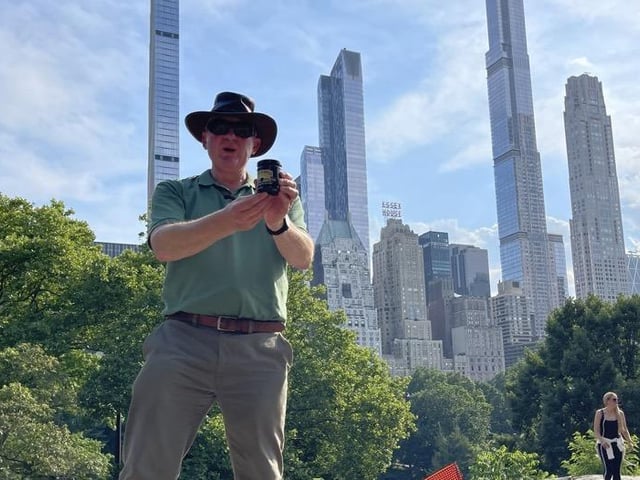
1. Alastair Bell of Irish Black Butter, Portrush, pictured in New York
Alastair Bell of Irish Black Butter, Portrush, pictured in New York Photo: Freelance
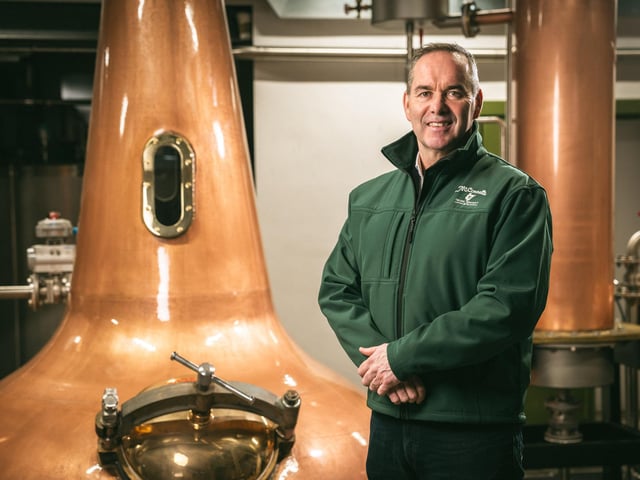
2. Graeme Millar of McConnell’s Irish Whisky in Belfast celebrating 250 years with the US
Graeme Millar of McConnell’s Irish Whisky in Belfast celebrating 250 years with the US Photo: Freelance
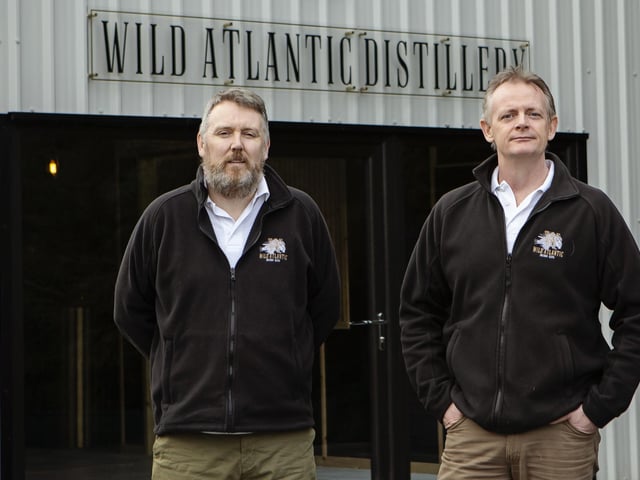
3. Jim Nash and Brian Ash founders of Wild Atlantic Distillery in Castlederg now selling IslandMen Irish Whiskey in the US
Jim Nash and Brian Ash founders of Wild Atlantic Distillery in Castlederg now selling IslandMen Irish Whiskey in the US Photo: Freelance