
Jim Allister highlights the challenges posed by inheritance tax and NAP
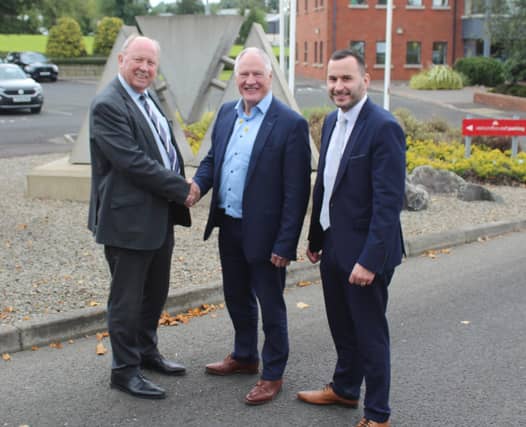

North Antrim MP, Jim Allister, has stressed that the evolution of Northern Ireland’s new Nutrients Action Programme (NAP) must not be used as means to reduce livestock numbers.
He added: “There are two key challenges currently facing agriculture in Northern Ireland. One is the new NAP: the other is the extension of inheritance tax to include farm assets.
“Both have very serious implications for the future sustainability of local agriculture as a whole.”
Significantly, the Traditional Unionist Voice (TUV) party leader views the NAP issue as part of an evolving process, where the subject of environmental targets is concerned.

He explained: “There seems to be a rowing back, to some extent, on previous climate change commitments and other related matters.
“There is a growing belief that targets within the various climate change acts will not be met, while the road to ‘net zero’ will be much longer than previously anticipated.
“Specifically, where NAP is concerned, it is important that we have unanimous agreement amongst all the parties at Stormont.”
Jim Allister continued: “Meanwhile, there seems to be a growing acceptance that more UK oil can be sourced from the North Sea.
“It makes no sense that the UK continues to buy oil from Norway, a country that continues to extract this fuel source from the very same North Sea.”
Where inheritance tax is concerned, Jim Allister believes that the changes announced almost a year ago by the Chancellor of the Exchequer will remain on the statute nook, for the foreseeable future at least.
“A new government at Westminster may opt to reverse the inheritance tax changes. But this could be a number of years off,” he said.
“Meanwhile, the current administration may well have failed to grasp the significance of the inheritance tax changes and the specific impact they will have on farming here in Northern Ireland.
“But this is not about winning the moral argument: the current labour government has the votes it needs to get its legislative programmes through. And this will always remain the bottom line.”
The TUV representative believes the combined impact of NAP and the changes to inheritance will lead to a significant reduction the confidence of farm families in Northern Ireland to invest in the future of their businesses.
He further explained: “Generally speaking, local agriculture is in a pretty good place at the present time. Farm gate prices remain strong across the board.
“The weather has also played its part in making 2025 a successful year across agriculture as a whole.
“However, all of this is tempered by the fact that the new inheritance tax arrangements are forcing farm families to retain monies now to pay an unfair tax at some future stage, rather than investing in their businesses at the present time.”
The North Antrim MP believes he can make a real difference for agriculture in Northern Ireland on two fronts.
One of these is the opportunity to highlight the inequalities of the new inheritance tax measures at Westminster whenever possible.
The other is to push for the full re-alignment of the entire UK as a single and uniform trading entity. And this means dealing with issues pertaining to the Windsor Framework.
Jim Allister notes the recent agreement reached between the UK and the European Union on the issue of a biodynamic alignment of plant and veterinary health standards.
He said: “Agreeing on a matter of principle is one thing; assessing the technical details that follow is another issue altogether.
“But even if we reach a point when veterinary inspections of produce shipped from Great Britain to Northern Ireland are no longer required, the businesses involved will still have to complete customs declarations.
“This is additional bureaucracy that adds to the cost of the business being transacted for no good reason.
“But this is all in the future. Right now, we have the scenario of the Westminster government having removed the Movement Assistance Scheme, which underpinned the costs of veterinary inspection and certification required when plant and animal products are shipped from GB to Northern Ireland.
“As a result, we are now seeing a scenario unfold within which companies in GB are telling their customers in Northern Ireland that they must pay these charges. And again this is adding to the produce coming on to our local market.”
Jim Allister made these comments while visiting the Ballymena-based precast concrete business, Moore Concrete. The company manufactures a range of products for use throughout the UK and the Republic of Ireland. Approximately, 45% of its total output is used with the agri sectors.
Jim Allister concluded: “Moore Concrete is a tremendous success story, one which continues to develop. I would like to wish the management of the business every success for the future.”