
Most farms in Northern Ireland have been removed from the scope of Inheritance Tax
A leading accountant has confirmed that a very significant majority of family farms in Northern Ireland have been taken out of the Inheritance Tax net.
This follows the pre-Christmas decision taken by the Chancellor of the Exchequer to increase the threshold above which the tax kicks in from £1m to £2.5m per person.
As a result, husbands and wives can now avail of a combined £5m tax-free threshold.
Omagh-based accountant, Seamus McCaffrey, commented: “For most of our farming clients, inheritance tax is no longer an issue, as a result of the most recent decision taken by the Chancellor.
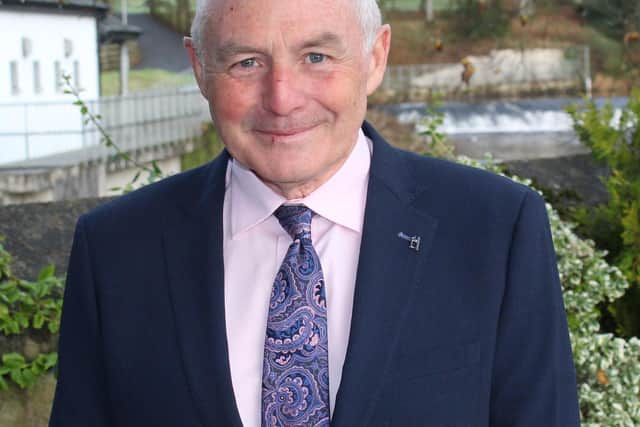

“This is good news from a potential tax liability perspective. However, it should also encourage all farm families to double down and make suitable succession plans, given that the threat of a large inheritance tax bill has been removed.”
However, McCaffrey is also confirming that the farming industry as a whole is looking at the prospect of paying one of the largest income tax contributions in living memory.
He further explained: “Farmers across all sectors enjoyed strong returns in 2024/25. And this trend was maintained during the first six months of the 2025/26 tax year.
“In addition, feed costs have been relatively stable throughout this period. So, when one adds in the fact that tax-free allowances have been frozen for quite some time, the end result is a higher exposure to income tax for sole traders and partnerships.”
Retrospectively, farmers operating as sole traders or within a partnership can request to have their tax liability averaged over a two or five year period.
Seamus McCaffrey again: “The decision can then be taken as to which option offers the most effective way of reducing a tax liability.
“However, if farmers consistently find themselves paying 40% tax, then converting the structure of a business to that of a limited company is well worth looking at.
“In fact, this is an option many of our own clients are now taking. However, it only works from a future tax planning perspective. It cannot be introduced on a retrospective basis.”
Meanwhile, cash flow challenges can arise within farm businesses at this time of the year.
Seamus McCaffrey again: “In such instances farmers operating as sole traders can request HMRC to facilitate a tax time to pay arrangement, which allows the payment of tax liabilities to be made over an agreed period of time.
“But this only works on the basis of the applicant having submitted a tax return on or before January 31st.”
Meanwhile, the 2026/27 financial year will see the introduction of HMRC’s new Making Tax Digital initiative.
Seamus McCaffrey explained: “This measure relates only to sole traders with an annual turnover of more than £50k. It requires the digital submission to HMRC of all monies received and outgoings generated on a quarterly basis.
“All accountants will be able to submit these figures on behalf of clients. There is no tax payment provision linked to these quarterly returns.”
He concluded: “Livestock valuations represent an important element within a tax return for those farmers with breeding cows and ewes. This is an issue that should form a central part of the discussions held between accountants and farmer clients prior to a tax return being submitted as to whether an election for Herd Basis is appropriate.
“And finally farmers should strongly consider making a personal pension contribution, particularly if they fall within the 40% income tax category.”