
The cost of waiting: Why Autumn could be the right time to lime
The decision to delay liming can seem relatively straightforward when farms are balancing competing priorities. However, this year the cost of that decision may be greater than many realise.
With grass supplies under pressure on some farms and silage reserves being opened earlier than expected, there is less room for underperforming paddocks. When grass covers are tight, every day of lost regrowth matters.
In 2026, liming is not simply another task on the farm calendar; it is fundamental to maintaining soil fertility and the cost of delaying it can be felt immediately.
Across Irish farms, soil tests continue to show a large proportion of grassland soils below their optimum pH, despite productive grassland performing best at around pH 6.5. As soil pH falls, the availability of Nitrogen, Phosphorus and Potassium (NPK) falls too. Fertiliser, slurry and other nutrient sources can therefore deliver less of the return they should, while nutrients already present in the soil can become less available.


The problem is that there is never an invoice for poor soil pH. Instead, the cost is spread across slower grass growth, reduced nutrient efficiency and lower output from the same acreage. When margins are tight, that matters.
Harnessing weather windows and correcting soil pH through lime application could ease the pinch. Rectifying soil pH helps improve nutrient availability and allows fertiliser and other inputs to work more effectively, supporting stronger grass growth from the same acreage.
With grass covers lower on many farms this year and some already drawing on first-cut silage reserves, fast recovery after grazing is increasingly important. It is not simply about growing more grass; it is about protecting grazing days, maintaining supply and preserving winter feed stocks to avoid a soil issue snowballing into a supply issue.
Lime’s role, however, extends beyond nutrient availability.
It supplies calcium, which can help improve soil structure, creating soils that are easier to manage and less prone to compaction. Better soil structure in turn supports rooting, water movement and a healthier environment for grass growth. When farms are trying to maximise every acre, those benefits become increasingly important, and anything that slows grass recovery after grazing simply cannot be in the mix.
The challenge for most farmers is not understanding the importance of soil pH. It is finding the time to act.
At this point in the season, grazing management, slurry applications ahead of the closed period and winter preparation are all competing for attention. With weather windows often narrow and workloads already stretched, liming can easily be pushed down the priority list despite the important role soil pH plays in grass growth, nutrient efficiency and soil performance.
Yet postponing lime until next spring can simply mean another important job competing for attention at what is already one of the busiest times of year. For farms with a lime requirement identified through soil testing, autumn can present an opportunity to address soil pH before winter and reduce pressure on next season’s workload.
When it comes to liming, not only does the ‘when’ matter, but the application method deserves consideration too. Practicality can often determine whether a planned lime application actually happens, particularly during busy periods on farm.
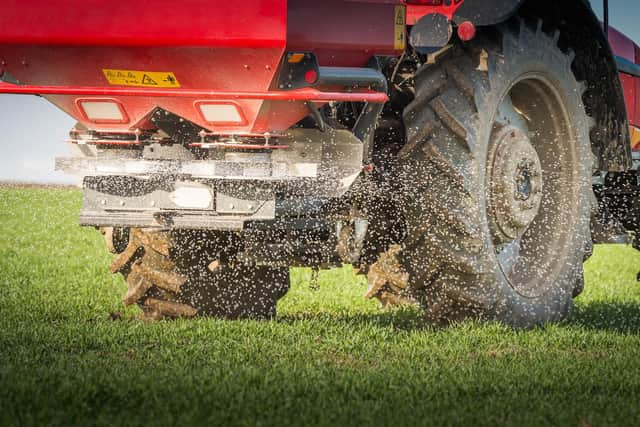
For some farmers, granulated lime offers greater flexibility as it can be applied using conventional fertiliser spreading equipment. This can make it easier to incorporate liming into routine field operations and take advantage of available weather windows.
Rather than relying on contractor availability and suitable ground conditions for larger applications, farmers may find it easier to schedule smaller, targeted applications alongside other nutrient management activities.
The practical benefits of improving soil pH become even more apparent when farms are investing in grassland improvement. This is particularly true for farms considering reseeding this autumn, where a significant investment is being made in future grassland performance.
A reseed is one of the largest investments a farmer can make in grassland productivity, from varieties and cultivation to seed and establishment.
Yet even the best grass varieties cannot overcome poor soil conditions. A reseed can only unlock the potential that already exists beneath it.
That is why soil pH deserves attention before investment is made above ground. By improving nutrient availability and the efficiency of fertiliser and slurry, lime helps create the conditions for a new sward to establish, persist and perform. Few inputs influence the effectiveness of so many others in quite the same way.
With workloads growing and weather windows becoming less predictable, the benefits become hard to ignore, and there is value in getting ahead while the opportunity is there. This year is not rewarding paddocks; it is exposing them. The burning question for farmers this season should therefore no longer be “can we leave liming until next year?”. Instead, it should be “can the farm afford to wait?”