
Making sense of your silage analysis
Testing silage is paramount to ensure that the nutritional needs of these animals are met whilst housed.
Summer 2026 brought challenging weather conditions, from a warm and damp spring bringing forward grass growth to dry drought conditions in July ultimately producing a season of extreme contrasts. This, coupled with varying soil types in Northern Ireland has produced a season of varying silage qualities.


College of Agriculture, Food and Rural Enterprise (CAFRE) Beef and Sheep Adviser Faith Stewart comments: “Now, as daylight hours and soil temperatures are reducing, combined with increasing rainfall, livestock of all ages and types are being housed. As feed costs are a large contributor to variable costs in any livestock system, it is important to monitor silage quality and only balance the ration with concentrates when required. Silage analysis provides farmers with the information needed to accurately assess forage quality, make better feeding decisions and improve the efficiency of livestock production.”
Not testing silage results in guessing, and the risk of over or under-feeding. Similar to the weather, silage quality within the clamp or bales can vary not only from year to year but from field to field. (don’t think we need the weather comparison either) It is important therefore to analyse it accurately and regularly (every four weeks).
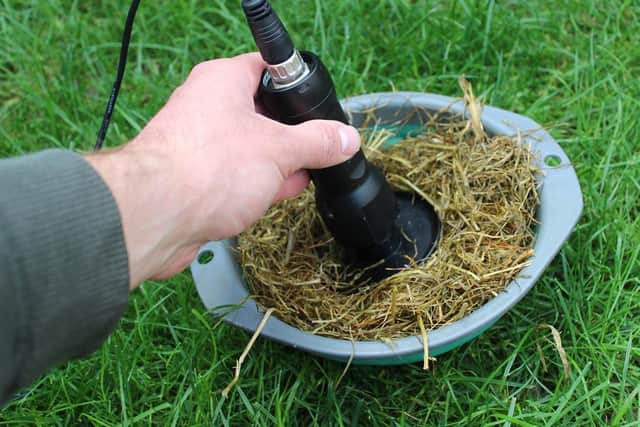
Testing should take place six weeks after harvesting and ensiling to allow fermentation to occur. It should be a fair representation of the silage, if there is only one cut then 10-12 sub-samples should be taken in a W-shape across the pit face. If there are multiple cuts in the clamp, layered on top of each other, be mindful to keep these samples separated for testing. A similar process should be carried out for bales. Bales from the same field should be sampled separately, this can give an indication of grass quality and yield and potentially show if a field needs reseeded. Using a core sampler allows for bales and clamps to be tested without opening. When taking samples, avoid areas of waste or spoilage and express all air from the sample bag to prevent deterioration of the sample and ensure accurate reading.
The main parameters of a silage analysis to interpret are dry matter, energy, protein and fermentation values. Dry matter measures how much of the silage isn’t water. The lower the DM value, the more cattle have to consume to meet their requirements as the silage has a higher water content, good quality silage should be in the rage of 23-30% DM. Low DM silage can tend to be acidic with low intakes and high DM silage can lead to heating and spoilage, in this case careful pit management is key.
Digestible organic matter is expressed as D-Value. Good quality silage should have a D-Value of at least 68%. This value measures how digestible the silage is for the animal and is directly related to stage of grass at harvesting. For example, young leafy grass harvested in May will tend to have a higher D-Value reading compared to grass harvested in late June when there will be greater seed head emergence in the grass.
Metabolisable Energy (ME) is the energy content of silage. Different types of stock will require varying levels of energy. Dry suckler cows will require a low level of energy, whereas, younger, growing and finishing stock will require more energy to gain weight. Good quality silage should be at least 11 MJ ME/kgDM. ME is predicted based on the D-Value reading of the sample.
Protein within the silage sample will be displayed as Crude Protein %, this is exactly what it is as the parameter is only an estimate of the quantity of the protein and does not provide a picture of the digestibility or quality of protein. Coupled with ME, this is an important parameter to take into consideration when formulating feed rations.
Fermentation characteristics are represented by pH and lactic acid. pH should be between 3.8 and4.2. Silages with a high pH, for example >4.7 indicate poor fermentation and these silages will tend to be high in butyric acid, resulting in a sharp, unpleasant smell. These sour-smelling silages will also tend to be dark in colour and spoil quickly when fed out. To aid intakes, molasses may be added to improve palatability and in extreme cases a buffer may be considered. On the other hand, low pH silages, for example <3.6 may have secondary fermentation, reducing the protein content. Low pH silages will have a high content of lactic acid, and the inclusion of a buffer may be considered to stabilize the rumen pH and avoid any rumen upsets. This is a particular issue for finishing cattle where high levels of grains are coupled with the silage diet.
Ash content of the silage is another parameter to consider; High ash content indicates soil contamination, which can increase the risk of listeriosis in sheep and contribute to a greater challenge from harmful microorganisms and associated toxins. Results higher than 9% are a warning and care should be taken when feeding out. High readings can follow a wet season, for example, if ground conditions were soft then there is a high chance that soil may have been carried into the pit or bales.
Getting your silage tested is the first step in correct management and feeding. Understanding your silage analysis allows you to target the silage available to the right livestock. It also gives you confidence to plan any supplementary feeding that may be required.
Whilst there is little that can be done to improve the silage in the clamp at this stage, careful management in feeding out is essential to minimise losses. For example, maintaining a clean, straight and tight clamp face can reduce the amount of air entering the silage, reducing aerobic spoilage. This will also help to reduce the risk of moulds and mycotoxins in high DM silages.
CAFRE provides silage analysis for Business Sustainability Group and Themed Group clients. Speak to your adviser or themed group facilitator to arrange testing and discuss how the results can help you make best use of your available forage.