
A deal on Trump’s terms could cost us very dear with the EU

When plans emerge from DAERA it is hard to remember Brexit was supposed to deliver an escape from the green thinking in the EU that was divorced from practical farming.
I was never a supporter of Brexit, but I could understand the attractions of an agricultural policy less centralised and trying to tackle issues across Europe.
Now with the latest missive – the Nutrient Action Programme – we are back on the merry-go-round of centralised thinking that ignores practical farming.
The irony is that the UK and its regions, including Northern Ireland, are still wedded to the green thinking of the EU back in 2016, when the Brexit vote happened.
By contrast the EU has eased back on its green measures in favour of policies that are more farmer friendly and focussed on encouraging young people into a more dynamic farming industry.
Then and now the EU and CAP are far from perfect, but policies like NAP confirm that Brexit has not delivered a framework for the progressive, globally competitive farming industry we were promised. This week also brought a reminder of how tough the food industry can be, with the collapse of the Karri Kitchen business in Co Armagh.
This was a business targeting what appeared to be the right end of the food market, with healthy ready to cook products.
This is the reality of the risks businesses take to develop new products in a tough, price-driven market.
Decent prices for farmers ultimately depend on adding value via premium products. What happened this week is another reminder that the grocery market is becoming more competitive and that impacts the prices farmers receive and their ability to cope with more red tape. According to press reports the US has cooled on a mid-May trade deal with the UK, claiming it is more focussed on deals in Asia.
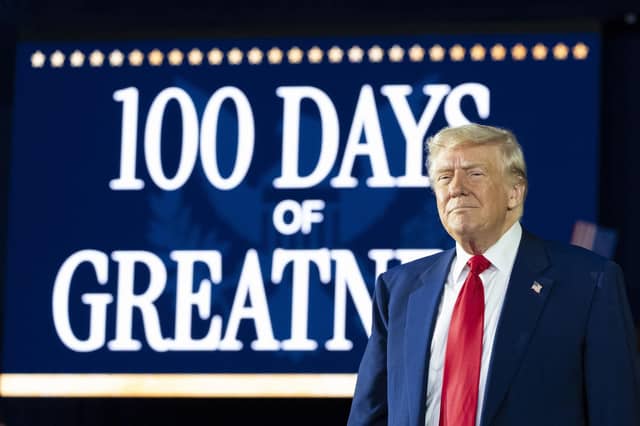
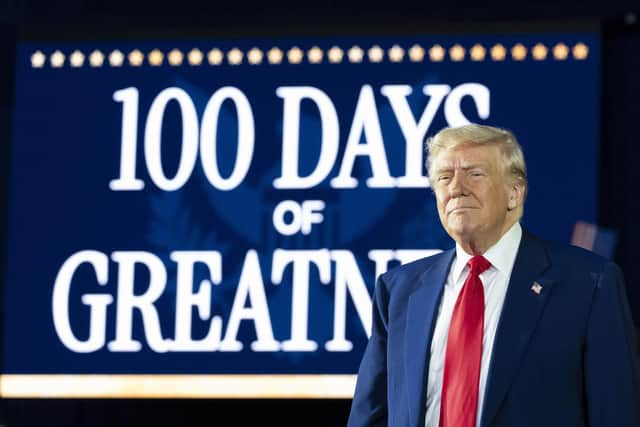
This may be true, in that the UK is not a big player when Trump needs the publicity oxygen of big deals to head off economic criticism at home.
There is also a concern that this is a tactic to force the UK to back down on its commitment not to dilute food standards to allow in US beef and poultry that neither meets UK or EU standards.
The US wants this and may sense a desperation on the UK’s part for a deal. That makes it willing to use delay to force the UK to go back on commitments, most recently from the Chancellor Rachel Reeves, not to back down over food standards. The farming and food lobbies cannot relax their guard.
The threat remains, as the US is not trustworthy in negotiations.
A deal on Trump’s terms could cost us dear in a bigger and much better markets in the EU. Just as the UK, to its credit, seized the initiative with others to secure a just peace deal for Ukraine, not driven by a Washington/Moscow alliance, there is a case for the same over world trade.
Lots of major trading nations – including the EU, China, Australia, New Zealand, Canada and many in Asia – are disillusioned and lack trust in the US. They may well be open to a new free or at least freer trade alliance to counter Trump’s misuse of tariffs.
This would be a new world order when it comes to trade, bringing together some strange bedfellows, such as communist China now advocating free trade. But it could be the answer to Washington seeking to bully the rest of the world with tariffs. China is one of the biggest markets for agriculture and it is easy to envisage an alliance, no matter how loose it may be, that more than matches the perceived power of the US.
It is still the world’s biggest economy, but its lead over China is sinking fast. The only response to any bully is to stand up to them and the vision of radical new trade alliances excluding the US could be an effective response to Trump’s tariffs. The EU, over many years, has built more free trade deals around the world than any other country.
It is well placed to do so again. Following an early draft plan for a new alliance, rather than begging the US for trade deals, would massively strengthen the hand of all countries against the tactics of a Trump administration more interested in a radial conservative agenda than the economic health of the United States and the global economy.