
Brussels Notebook: Defence is now a costly issue and farmers are now forgotten
It has been said that a farmer’s biggest asset is optimism and a short memory.
Both allow them to hope, in the face of weather, politics and all the other things that can go wrong, that the coming season will be better.
Indeed in many cases we would now settle for what is coming down the track to mean things will not get worse.
That optimism has been needed in Europe this year. Farmers in every enterprise were hit by rising costs, driven by higher energy prices.

On top of that came one of the hottest and driest summers on record, driving down yields and leaving farmers dipping into winter hay and silage when grass should have been growing. This is similar to the pressures here, with the difference that while we had a dry summer that caused some problems we escaped what much of Europe faced.
One big difference now in conversations when EU farmers get together is that the CAP is under budgetary pressure in the next round of EU spending.
This is not an issue for us; Brexit took us out of the CAP and into a less generous but equally bureaucratic support system. In Europe there has been no loss of political support for farmers and no loss of sympathy from the general public.
The CAP is under pressure, even during an Irish EU presidency, because the entire EU budget is in trouble. To turn around an old adage for the CAP, a falling tide lowers all boats and that is where EU agriculture finds itself. The new demands on the EU budget are around a shift in priorities. Defence is now a major and costly issue, linked to Ukraine and the threat from Russia. This will not be easily solved and Trump’s intervention to break sanctions on Russian fuel exports has made the situation worse.
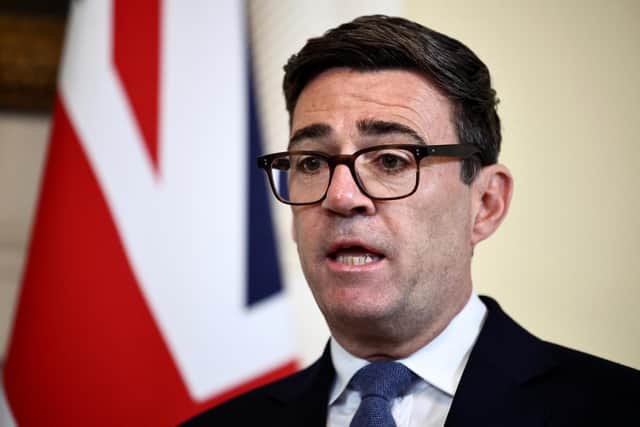
This is the EU’s new spending priority and member states are not in an economic position to increase contributions. Spending areas like social funds, cohesion projects and the multi-billion euro CAP are inevitable casualties in this reallocation of priorities and funds. This is what EU agriculture faces and it will take a lot of optimism to see any upside. Critics of the prime minister, Andy Burnham, say that with some of his policies around public ownership he is going back to the 1970s, having forgotten just how bad many services were then.
That is open for debate, but one certainty is that with his open criticism of Brexit and his wish for closer relations with the EU he has taken us back to 2010, when the Conservatives began to tear themselves apart over Europe.
The result is history and one of the worst economic decisions ever taken by the UK. This is because Brexit coincided with a changing world order and a lack of political nerve or vision in successive Conservative governments to exploit any benefits of independence from the EU. History will not judge those decisions kindly and Burnham is the first politician to confront this political hot potato.
If, as he has suggested, Russia did try to influence the 2016 vote this confirms it was a decision perceived as good for Putin's Russia because it would destabilise the UK economy.
Burnham has a summit coming up with the EU next month and the signs are that he will be pushing on an open door over better relations.
The EU regards the UK as a faithful ally and under both Starmer and Burnham how the UK has taken the lead over Ukraine is admired. It is a big step from that to a return to membership. A key issue is how the EU perceives a UK return and whether it would be subject to the same complex process as any other country seeking membership.
For now, it is not an outcome that can be assumed. Under Labour's manifesto there can be no customs union or return to the single market before a general election. Even if Labour makes a fresh referendum a manifesto commitment the shape of the next parliament is far from certain.
A new referendum vote could be smothered by uncertainty.
In 1981 the Liberal leader, David Steel, buoyed up by some successes, urged party members to “return to their constituencies and prepare for government”.
That ended in humiliation and any euphoria around returning to EU membership any time soon could be equally misplaced.