
Holyrood reception puts Scotland’s £350m red meat growth opportunity in the spotlight

Scotland’s red meat sector has set out a compelling case for confident, sustainable growth at a reception in the Scottish Parliament, showing political decision makers how coordinated action across the supply chain could unlock around £350 million in additional economic output by 2032.
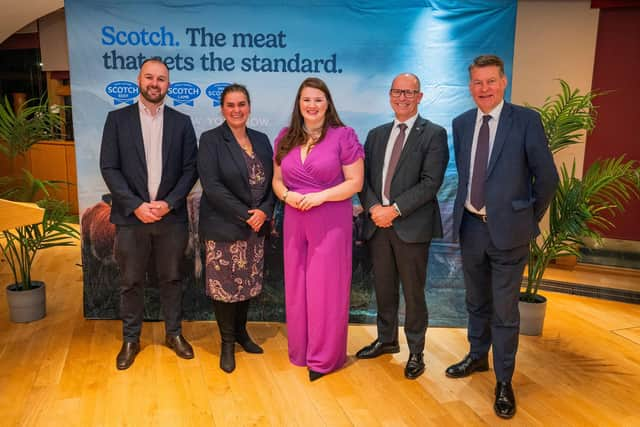
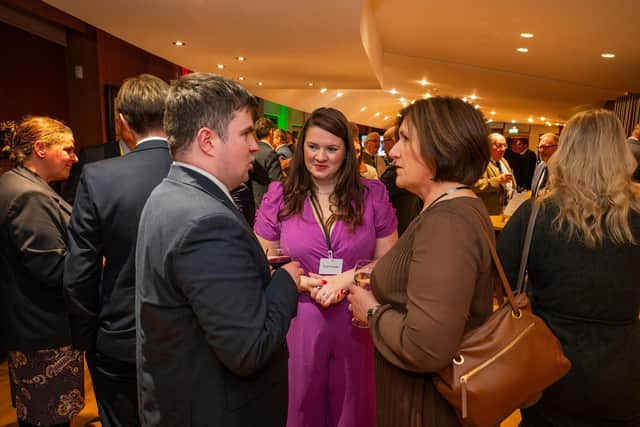
Sponsored by Murdo Fraser MSP on Tuesday 27 October, the Meating Our Potential reception brought together MSPs, rural stakeholders and representatives from farming, livestock markets, processing and independent butchery.
The event was organised by Quality Meat Scotland (QMS) and the Scottish Red Meat Resilience Group (SRMRG) to demonstrate the economic and social importance of a resilient domestic red meat supply chain, and the opportunity to retain more value, skills and activity in Scotland. A demand-led opportunity for Scotland Meating Our Potential modelling indicates that supported growth across Scotland’s beef and sheep sectors could generate approximately £100 million in additional Gross Value Added (GVA) each year by 2032.
The opportunity is demand-led and an additional 15,100 tonnes of beef and 4,300 tonnes of sheepmeat could be produced through a modest 5–6% increase in cow and lamb numbers, supported by Scotland’s available productive capacity. The sector already makes a substantial contribution. In 2025, farming, processing and associated supply-chain activity generated an estimated £4.2 billion in output and almost £1.3 billion in GVA. The campaign argues that productive and profitable growth can build on that platform while sustaining the farms, marts, processors, butchers, hauliers and specialist services on which rural communities depend. Kate Rowell, chair of QMS, said: “Meating Our Potential is about giving the whole sector the confidence to embrace that opportunity. Farms, livestock markets, processors, butchers, hauliers, vets and supporting businesses depend on one another. When one part comes under pressure, the impact is felt across businesses, specialist skills and communities. “Every Scottish constituency has a connection to this supply chain. With the right conditions, we can retain more value here, strengthen domestic capacity and deliver economic and social benefits from our busiest cities to our most remote rural and island communities.” Six stories, one connected supply chain Six case studies put people and businesses behind the headline figures and showcase the wider societal benefits of the Scottish red meat sector, giving MSPs the opportunity to hear directly how decisions made in one part of the chain affect the rest:

Harriet and Ben Lowe, Aberdeenshire pig and arable farmers, showing how productive farming supports domestic food production and a wider network of rural businesses.
Scott McLellan, Islay beef and sheep farmer, highlighting livestock farming’s role in island life and the realities of distance, transport and access to markets and services.
Niall Jeffrey, East Lothian beef farmer and QMS Board member, demonstrating the future opportunity for productive Scottish beef businesses and sharing a first-hand farming perspective.
Jane McHarg, Dunbia Site Operations Manager in Saltcoats, illustrating the importance of processing capacity, skilled employment and close relationships with Scottish livestock producers.
Amy Haddow, Lanark Market Fieldsman, showing how livestock markets connect farmers, buyers and rural businesses while providing essential routes to market.
Tom Courts. Burntisland Butcher, representing the consumer-facing end of the chain through Scottish sourcing, specialist butchery skills, local employment and community presence.
The stories were showcased through dedicated displays and a Meating Our Potential video reel, complementing direct conversations between case study participants and MSPs. Each participant is also being featured in a short social media film as the campaign continues beyond the reception. View all the stories on the Meating Our Potential Hub. Speakers at the reception included event sponsor Murdo Fraser MSP; Kate Rowell; Jim Fairlie MSP, Minister for Agriculture, Marine and the Islands; Niall Jeffrey; and QMS Chief Executive Sarah Millar. Agriculture Minister Jim Fairlie said: “I was pleased to join the industry in celebrating the resilience of the domestic red meat supply chain, and to look ahead towards a positive future. Scotland’s Vision for Agriculture sets a clear direction for a future farming system that supports high-quality food production, thriving agricultural businesses, nature restoration, climate change mitigation and adaptation, and a just transition. “Our support for Scotland’s livestock sector is unwavering, and I was pleased to sign the Meating our Potential pledge at the Royal Highland Show last year alongside the First Minister and the Cabinet Secretary. We are working with farmers on reducing emissions through improved animal health, productivity, breeding, feed efficiency and innovation, in a way that works for rural Scotland and plays to our strengths.” Murdo Fraser MSP said: “QMS do such brilliant work highlighting the importance of the industry and I was glad to host yet another successful event in parliament. “Red meat is woven in the history of this country, and today farmers still produce some of the best meats you can buy. “The industry contributes massively to both the rural & national economy, and I am glad I can welcome QMS to the Scottish Parliament so they can showcase this and help to protect and promote the industry going forward.”