
'Lough Neagh is being polluted but no-one will take any blame' - fisherman brothers say our 'water is so precious'
Former Eel fishermen and brothers David and Richard McElroy have also refused to drink tap water, for the past three years.
David McElroy, an eel fisherman "since I was at school” says Lough Neagh “is being polluted but no-one will take any blame”.
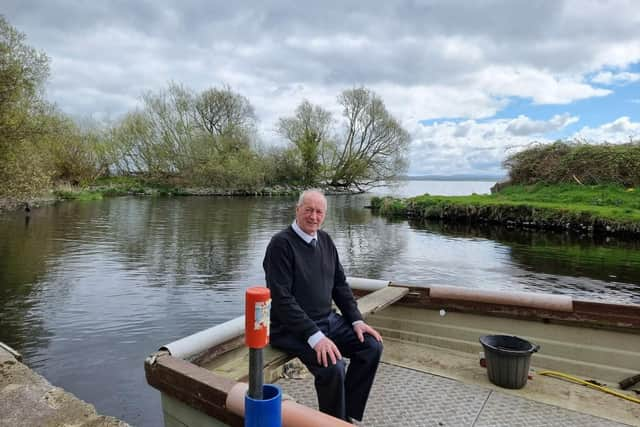

The 73-year-old from outside Toome blames the pollution on slurry.
‘”A tanker load of slurry that a farmer has to get rid of causes massive damage to the water system,” he said.
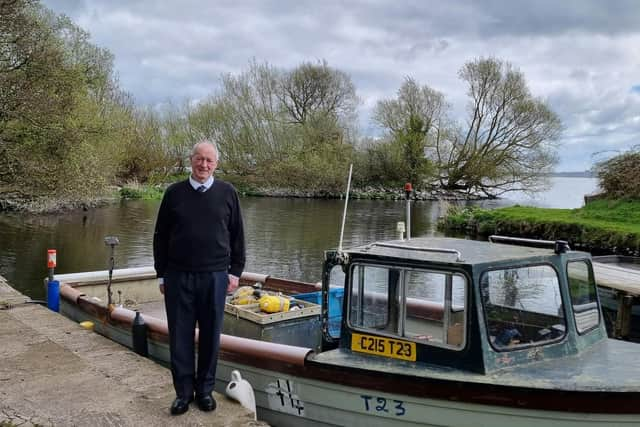
"The thing is that fines are so little now it is almost worth it to get rid of the waste rather than doing it properly.
“Then there is other carelessness, dead animals left lying about rather than being properly disposed of and which end up in our waterways.
“The bottom line is DAERA is responsible for pollution and allowing pollution of Lough Neagh, but no one will put their hands up and take the blame. Because they don't want to pay for it,” he claimed.
David said fishermen are “not the only ones affected by the pollution as the other industries around the lough – the AirBnb's and restaurants – suffer too".
David said that for the last 10 years it has been increasingly difficult to earn a wage as an eel fisherman.
“There used to be 100 boats and 200 people out eel fishing, but people had to move on to other jobs," he said.
“Gradually the lough has been poisoned, invertebrates and every other species and no-one has investigated why this was happening.
“In fact the last investigation I remember was about sand dredging and that has been happening in the lough for 60 years.”
David added that “closing down eel fishing will solve nothing until they tackle pollution and underinvestment by NI Water”.
“They need to build new septic tanks because the infrastructure can't cope with the number of people using it, storms or with heavy rainfall.
“A society that poisons its own water is a very sick society. They are using a lot more chemicals than they used to and it has come close to a stage of toxicity.”
The veteran fisherman said the Lough Neagh Fishermen's Co-operative Society had a programme of restocking from 1995 through the Lough Neagh Management plan.
“We have been stocking and buying elvers since 1994,” he said. “Our eels were tested in Holland and they told us 75% are not fit for purpose with their fat content.
“So the eels are being starved, pollution has killed off invertebrates, micro invertebrates, and all fish are starving, not just eels. Birds are being starved too as you would hardly see a bird on Lough Neagh now.
“And then the Zebra mussels were blamed, but they are just a nuisance factor.
“They are not the pollutors.”
When asked what he would like to say to the DAERA Minister, he said: “You are afraid to address the system of farming and slurry. The whole system of slurry is wrong and they are going to have to find some other method of dealing with the waste from pigs, chickens and cows.”
His brother, Richard McElroy, 80, who also has been fishing since his school days, says: “I don’t ever remember life without the lough and this was always our peak time now – May, June, July, August, September and maybe October depending on the weather.”
He added that fishermen “can tell what the weather is going to be from the area the wind is coming”.
“If it is going to rain, the wind will come from the south west, and if it’s coming from the east it will be good weather,” he said.
Richard said during peak fishing season “it could be a 16 hour day”.
“You fish in pairs and my brother and I have been fishing together for more than 25 years,” he added.
When asked about the change in Lough Neagh, Richard said: “I don’t like blaming the farmers because farming is the biggest industry we have.
“But I would like the Agriculture Minister to realise that water is precious and we need it cleaned up,” he said. “It is so important and it doesn't matter who you think is responsible, but it needs cleaned up and working again.
“Like many I don't drink water from the tap, I take bottled water now. There is a lot of the time our animals won't drink tap water either which says a lot.”
DAERA has responded to the following questions:
What is the reason for stopping eel fishing in Lough Neagh for three years?
These measures are necessary to support the recovery of eel stocks and to ensure that the Lough Neagh eel fishery can be sustained into the future. Populations of European eel have been declining since the 1980s and the long-term sustainability of the fishery is dependent on a sufficient number of silver eels escaping from Lough Neagh to migrate to their breeding grounds in the Sargasso Sea. The Neagh Bann Eel Management Plan has an escapement target of 200 tonnes of silver eels and this target is no longer being achieved. The Eel Management Plan requires that measures should be taken to reduce exploitation of yellow or silver eels when the silver eel escapement, measured on a rolling average basis, falls below the target of 200 tonnes. Recent three-year rolling escapement estimates are: 144 tonnes in 2023 (average annual escapement from 2021 to 2023), 124 tonnes in 2024 (2022-2024) and 92 tonnes in 2025 (2023-2025).
The silver eel fishery operated by the Lough Neagh Fishermen’s Co-operative Society will continue to operate up to a catch limit of 25 tonnes. The Co-operative uses income from the silver eel fishery to undertake restocking and assisted migration activities, which are key components of the Eel Management Plan, and the long-term future of the Lough Neagh eel fishery depends on the continuation of these activities.
These new measures are informed by scientific advice from the International Council for the Exploration of the Sea (ICES) and the Agri-Food and Biosciences Institute (AFBI) and reflect the Department’s statutory responsibilities to protect the European eel, which is classified as critically endangered.
Fishermen (with around 60 years experience each) are blaming intensive farming (slurry) and the inability of the sewage infrastructure in NI to cope, for changing Lough Neagh.
DAERA response: European eel populations are declining globally because of both fishing and non-fishing impacts and it is essential that action is taken to address all impacts. The Neagh Bann Eel Management Plan focuses primarily on measures to reduce fisheries related impacts on eel populations and alongside this, the Lough Neagh Action Plan and River Basin Management Plan focus on measures to improve water quality in Lough Neagh which is essential to providing a healthy ecosystem that fisheries are reliant on.
DAERA Minister Andrew Muir said: “I appreciate the work that the Lough Neagh Fishermen's Cooperative do, and I fully value the importance of the eel industry to the history and heritage of the communities around the lough and people's livelihoods.
“We have a real challenge in relation to eel stocks in Lough Neagh, but it is one that is not unique to Lough Neagh. This is a wider issue, they are a critically endangered species and it's important we intervene.
“The international recommendation would be a zero catch. I am trying to strike a balance in terms of sustainable management of eel stocks, but also in terms of the ongoing stability of the cooperative.
“I have to take a long-term approach to ensure the sustainable management of those eel stocks. It has been a difficult decision, but I want to reassure the people who are affected by this, that my department is now actively looking at a support scheme and hope to bring forward details associated with that in the short time ahead.”