
Putting a clear focus on soil management
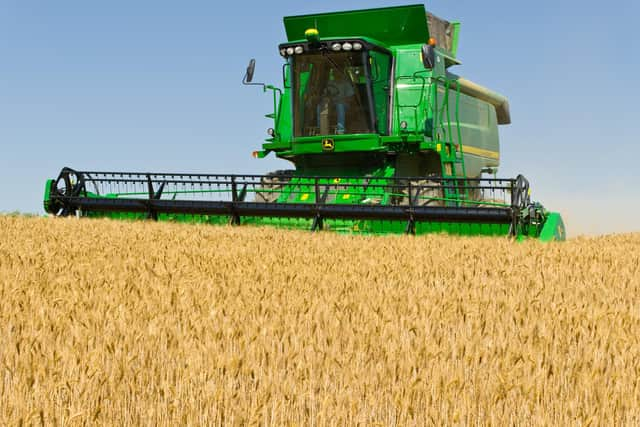
The month of August is one of the few times in the year when arable farmers can put a clear focus on soil management.
As the harvest comes to an end, growers can start to think strategically of their plans for the future. If our soils are not kept in optimal condition, then we can say goodbye to any hope of feeding the world’s fast-growing population into the future.
Farmers often get criticised for not managing soils in a sustainable manner. This, however, is a case of total misconception. The reality is that farmers should be praised for doing such a good job in managing our soils sustainably, given the continuing pressure put on them to produce unending quantities of cheap food. Every farmer worth his or her salt knows that proper soil management must go to the very heart of their business plans. If they fail to address this core issue, then they have no future. It must also be articulated that hard experience down through history has taught farmers this very salutary lesson.
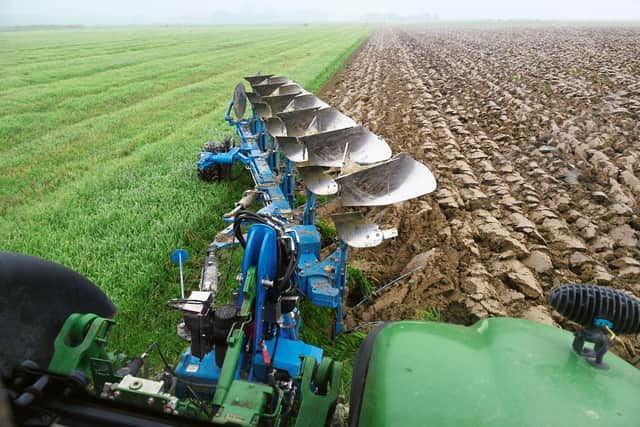
History shows that the world’s first farmers in what is today’s Iran and Iraq fell afoul of the problems caused by the continuing erosion of their soils. That was three thousand years ago. But flash forward to the twentieth century and farmers in the United States got caught in the same way – the end result being the Oklahoma Dust Bowl. So yes, farmers do have prior form when it comes to the mismanagement of their soils. But one should also point out that they have always been able to learn from their mistakes. For example, the Dust Bowl experience created the impetus for what we know today as ‘min till’ cultivation.

Our land is a finite resource. Looking around the world today, it is not soil mismanagement that is causing the genuine concern that exists regarding our potential to grow food on a sustainable basis for the future. Rather it is the ever-increasing rate at which developers continue to build on prime agricultural land. Once this resource is taken away from us, it can never be replaced.
Sustainable intensification was a phrase coined by Ireland’s former farm minister Simon Coveney as he chaired the 2013 negotiations that led to the settlement of the Common Agricultural Policy (CAP) reform package.
In essence, this means achieving higher crop yields in ways that the future sustainability of our soils.
Farmers are more than happy to buy into this principle. But it comes at a price, one which consumers around the world will have to pay. The days of cheap food are over. Farmers cannot be expected to work for nothing. All our farming makes great play of the fact that farming must be placed on a long-term sustainable future. And driving this key agenda is the need to ensure that our family farms can make a living. And they are right!
A recent report assesses the current state of soils in Europe. Significantly, it confirms the magnitude of soil degradation across the region. The publication also highlights the challenges arising from the impact of warfare on soils, particularly in conflict-affected regions such as Ukraine. This document is a publication by the Joint Research Centre (JRC), the European Commission’s science and knowledge service and the European Environment Agency (EEA).
The report concludes that new policy measures may need to be considered to address these emerging issues and ensure the resilience of European soils. Despite significant progress, knowledge gaps persist, particularly regarding diffuse pollution, the social impacts of soil degradation and the effects of warfare on soil health. Bridging these gaps, according to the report, will require further research and greater public engagement to raise awareness and foster collective action.
The findings presented in the publication highlight several key policy-relevant consequences of soil degradation and recommendations for addressing this issue in Europe. Firstly, it is evident that existing policy frameworks need to be strengthened to effectively monitor and mitigate soil degradation processes. This will involve, for example, implementing legislative mechanisms such as the proposed soil monitoring and resilience directive, which would provide a framework for comprehensive soil health assessments that could in turn support targeted interventions.
In addition, there is a clear need for cross-sectoral coordination and collaboration to tackle soil degradation comprehensively. Policy measures already in place could be strengthened to incentivise farmers to adopt soil-friendly agricultural practices (e.g. reducing tillage and planting cover crops) and to promote sustainable land management practices through support schemes and capacity-building initiatives. Overall, the findings of the report emphasise the urgency of addressing soil degradation in Europe through targeted policy interventions, collaborative approaches and continued investment in research and innovation.
Specifically, the report offers a comprehensive examination of soil degradation in the 32 European Environment Agency member countries and in 6 collaborating nations in the western Balkans, Ukraine and the United Kingdom. Moreover, it draws on the latest research, case studies and soil monitoring data, providing a thorough analysis of soil threats and their implications. Between 2012 and 2018, more than 400km² of land was lost per year to soil sealing in the European Union.
In addition, about 74% of agricultural land in the EU+UK faces excessive nitrogen inputs, while extensive areas exhibit phosphorus surpluses. Meanwhile, pesticide residues and other pollutants are prevalent in agricultural soils, further exacerbating environmental concerns. However, many countries still lack comprehensive data on soil health. The report has been written in a way that addresses this gap while supporting the transition towards a more sustainable future.
Soil science is delivering very real and very tangible climate change mitigation measures on behalf of Irish agriculture. This is the view of Teagasc’s Dr David Wall.
But according to the soil scientist, there is no silver ‘bullet’ coming down the rack in terms of soil research programmes delivering an over-arching response to climate change. He also recognises that much of the public debate, where farming’s response to climate change is concerned, has centred on methane emission levels from ruminant livestock.
Wall further explained: “It’s very easy for farmers to focus on their livestock. For one thing they are working with their animals on a daily basis. So the issue of developing the likes of a feed additive is a very tangible subject for them to comprehend. Making technologies of this kind work would physically require farmers to include whatever product we might be talking about into a ration on a regular basis. Soils, on the other hand, are much more abstract in nature. And, as a result, they tend not to get prominence in terms of farmers’ perception levels on a regular basis.”
Wall specifically highlights a number of soil-related management choices that will act to mitigate climate change. Two of these include the tweaking of soil phosphorous levels and pH values.
He explained: “We know that nitrous oxide emission levels are linked to available soil phosphate values. And the same principle holds where soil pH values are concerned.”
The soil scientist said that farmers should aim to have all fields in Index 3 for phosphorus. He also cited the role of available phosphate as a key constituent of the energy-related pathways that operate within all living organisms.
Teagasc recommends an optimal pH value of 6.3 for grassland, rising to 6.5 for cereal ground. Research has confirmed that achieving these soil nutrient targets can result in nitrous oxide emissions reducing by up to 20% relative to current figures.
Much of this is already turning out to be a good news story for Irish agriculture. David Wall referencing the significant upturn in lime usage throughout Ireland over the past few years as a case in pint. Approximately 1.2Mt of agricultural lime was applied in Ireland last year. The comparable figure from a decade ago was 750Kt.
Meanwhile, David Wall confirmed that the European Union is actively working on the development of a soil framework directive, the recommendations within which will have a major impact on Irish agriculture. One of the reasons why a measure of this nature has not been introduced to this point, according to the Teagasc representative, reflects the very complex nature of soils and the problems of coming up with accurate definitions.
Farmers should not be lulled into thinking that their soils have gone into a state of total hibernation in response to the current drought conditions. In fact, the very opposite is the case. This is according to Teagasc soil and plant nutrition specialist: Dr. Veronica Nyhan.
She explained: “While activity below ground has slowed, soil biology hasn’t disappeared. Soils are home to almost 60% of all known species, making them one of the largest reservoirs of biodiversity on Earth. Like crops, the billions of organisms living in the soil are simply responding to the conditions around them.”
Nyhan continued: “Every day, billions of soil organisms are quietly working beneath our feet. They recycle nutrients, help break down crop residues, improve soil structure and support healthy root growth: in many ways, they are the engine that keeps soil functioning.”
Meanwhile, microorganisms such as bacteria and fungi depend on soil moisture to remain active. As soils dry, their activity slows, reducing the breakdown of organic matter and the release of nutrients into forms that crops can use. This is one reason crops often respond more slowly during prolonged dry weather. Even where nutrients are present, the biological processes that help make them available are operating at a slower pace.
Veronica Nyhan again: “Larger soil organisms, including earthworms, springtails and mites, respond to drought conditions in different ways. Some become dormant, others move deeper into the soil profile or into protected habitats, while others survive the dry period as resistant eggs, spores or cocoons until favourable conditions return. Instead of thriving, soil organisms are simply surviving.”
She added: “The good news is that healthy soils are remarkably resilient. When rainfall returns, soil biology quickly becomes active again and nutrient cycling resumes. Soils with good organic matter levels and stable soil structure are generally more resilient to drought and recover more quickly because they retain more moisture and provide a better environment for soil life.”
The Teagasc soil specialist concluded: “While we can’t control the weather, we can improve the resilience of our soils. Maintaining soil organic matter, returning organic materials such as manures, straw and cover crop residues, reducing unnecessary soil disturbance, avoiding compaction and maintaining optimum soil pH all help support a healthy and diverse soil community. These management practices won’t prevent drought, but they can help soils cope better with periods of stress and recover more quickly afterwards. Soils are still working, even if it doesn’t look like it.
“The recent dry spell hasn’t switched off soil biology. It has simply slowed one of the busiest engines on every farm.”