
Soil fertility: the impact of changing agronomic practices
Soils are our most important resource, a reality that is rising in prominence as the world seeks to feed its fast-growing population.
So, here comes the fundamental fact: without soils, there would be neither farming nor food production taking place anywhere in the world. As a consequence, understanding the core functionality of our soils is key to managing them on a sustainable basis.
Significantly, Soil testing throughout the UK and Ireland is confirming the impact that changes to industrial and agronomic practices are having on spoil fertility levels.
And this is very much an ongoing process.
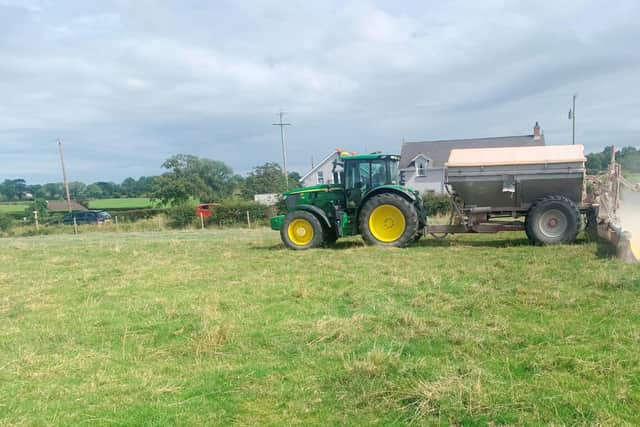

Take sulphur as a case in point. It is an essential nutrient for all plants and animals. Its behaviour in the soil is very similar to that of nitrogen. In other words, high rainfall can lead to leaching. This, in turn could lead to sulphur deficiencies despite attempts to avoid this.
Sulphur is known to be important for yield and quality. However there is strengthening evidence to suggest that the chemical element has an important relationship with a large number of other nutrients. So ensuring an adequate supply of sulphur through the growing season could be key to ensuring these other nutrients are taken up efficiently also. Sulphur is an essential nutrient for all plants and animals, with some crops more vulnerable to deficiency than others. Historically, sulphur was deposited on land from the atmosphere in adequate quantities for optimal crop growth and development.
However, this scenario has changed radically with the ever lessening use of coal in power stations and domestic fires. It is now estimated that between 1.0 and 3.0kg/ha of sulphur are deposited on land from the atmosphere on an annual basis. These levels are well below what would have previously been the case. As a result of this reduction, soils are now showing critical signs of sulphur deficiency and applications of sulphur to crops has become an essential part of nutrient management planning on farms. Sulphur in the soil behaves in a similar way to nitrogen. It becomes plant-available from the breakdown of organic matter, and to some extent from soil minerals.
Soils which are organic, or heavy textured are more able to supply sulphur than light and inorganic soils. Plants take up sulphur in the form of the sulphate anion. These predominate in the soil solution, which means they are at risk of leaching depending on the soil texture and rainfall. This risk must be taken into account when nutrient planning.
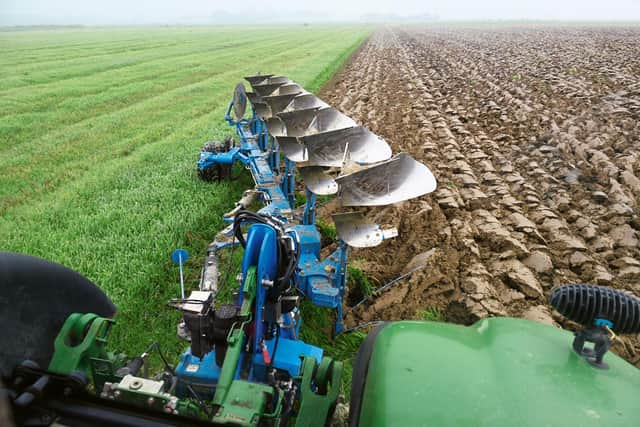
Available levels of sulphur in the soil can be accurately assessed by laboratory analysis. However, its variability both down and across the soil profile and over time, means that the normal four yearly soil analysis for pH, phosphate, potash and magnesium is not appropriate. It has been usual practice to apply a readily soluble source of sulphate in the early spring in the expectation that it will provide sulphur throughout the growing season. However, there are now doubts thsat taking this approach will not always satisfy crop need. Given this scenario, the PDA is highlighting the need for tillage farmers to ensure that sufficient sulphur is avail able to crops throughout the growing season.
Professor Mike McLaughlin – originally from Co Antrim- is now working as a research professor at the University of Adelaide in Australia.
He explained that clay, silt, sand and organic matter are the solid components of soil, adding: “Clays are important because they have a lot of the nutrient holding and water capacity within any soil. Similarly, the organic fraction within soil contains high levels of nutrients. It’s the interaction of clay with the sand, silt and organic fractions that determines the fertility of soil in both a physical and chemical sense.”
According to McLaughlin, if any of these components are taken away, problems will follow in terms of agricultural production.
“It really is a team activity in soils,” he said. “Clays are critical: they are very small particles, which means they have a very large surface area and charge. This helps to maintain nutrients within soils and prevent leaching.”
The organic matter in soils comes from the original vegetation that was on the land.
McLaughlin continued: “We also add organic matter to soils. When a crop is grown, up to 50% of the associated carbon is found below ground. In the case of 12t/ha wheat crop with its associated straw, there is in the region of 12 to 15t of carbon biomass growing below ground as well. There is a huge throughout of carbon within agricultural systems that we forget about.”
McLaughlin went on to point out that agricultural production systems actively put carbon into soils.
“It’s the tillage-related operations that we have to be careful about as these activities tend to mineralise the organic matter,” he further explained.
Turning to the issue of pH, McLaughlin stressed that alkalinity or acidity is the master variable within soils.
“This factor alone controls the availability of so many nutrients for crop growth,” he commented. “Soil pH also controls the activity of microorganisms in soil.”
Why are soil pH values so important?
When soil H values are low, clay is actually dissolved. This leads to problems from an agricultural point of view. According to Professor McLaughlin, the soil clay fraction is made up of aluminosilicate minerals or aluminium hydroxide.
He added: “In very acid soils, the clay mineralogy is broken down. As a result, two things can happen: aluminium moves out of the soil and/or the free aluminium can add to the toxicity of the soil. In either case a leaching of the soil’s clay fraction takes place.
Professor McLaughlin took part in the most recent issue of the Tillage Edge podcast.
He pointed out that low pH values change the charge patterns on soil particles, involving the clay and the organic matter, adding: “This can impact on how the soil holds nutrients. Acid soils, in particular will bind phosphorous very strongly. This is because of the very active aluminium. They will also bind a number of micro elements, including molybdenum, which is important for nitrogen fixation.”
McLaughlin explained that soils should not be too acidic or too basic.
“On the alkaline side, problems associated with trace element availability will arise,” he commented. “Those with a strong positive change, including copper, manganese and zinc, will have a problem in alkaline soils because they get bound up very strongly, as does phosphorous. So, at the two ends of the pH spectrum, issues with regard to nutrient availability will arise.”
McLaughlin also confirmed that microorganisms are not very happy when soil conditions are either very acidic or basic.
He said: “The objective should be to keep soil pH values in the mid-band range of 5.5 to 7.5. This is the sweet spot for pH.”
In the case of soils with pH values that exceed a value of 7.0, McLaughlin indicated that farmers should evaluate the various forms of phosphate (P) fertiliser available to them. He pointed out that diammonium phosphate (DAP) undergoes a very alkaline type reaction in the soil when first applied. However, conditions very quickly turn acidic because the freed ammonia is converted to nitrate.
“In a very alkaline soil, this is good because it brings the pH value back towards the sweet spot,” he explained. “Triple super phosphate, on the other hand, is acidic to start with. Primarily this is because of the residual phosphoric acid in the granules. But then it becomes quite alkaline over time. There is a lot of calcium in the soil and calcium in the product, this can reduce the diffusion of phosphorous a little bit. Overall, it has been shown that adding DAP can be beneficial for crops. There is a synergy between the phosphorous and the nitrogen.
“The ammoniated phosphates tend to do better than triple super phosphate, which is basically calcium phosphate. However, triple super phosphate is preferred when growing legumes. One of the unfortunate things with phosphorous is that, when applied as a fertiliser, binding with the soil increase with time, particularly within low fertility scenarios. So we do have to build up a soil phosphorous bank. Phosphorous binding is reversible, up to a point, over a number of years.
“So, over time farmers do get some of the phosphorous that was applied as fertiliser back from a plant growth perspective.”
Regular soil testing is critical when it comes to determining P availability, according to Professor McLaughlin, a research scientist at Adelaide University in Australia.
He added: “If a high soil test value comes back and the land in question is n the top phosphorous tier, there is probably no need to apply fertiliser P. But soils in the very lowest tier will need a fair chunk of added fertiliser, in order to get crops up to their full yield potential. The reason fr soli testing is to get a measure of phosphorous availability from previous fertiliser applications.”
According to McLaughlin, a lot of farmers are not adding phosphorous to soils because of the cost involved.
He further explained: “If this went on for decades, soil P test results would slowly decline. And crop yields would also decline in step with this trend.”
Meanwhile, the Potash Development Association (PDA) is highlighting the benefits to be accrued by actually measuring the potassium (K) concentrations of growing crops. In a lot of cases, farmers may base their K requirements based on the needs of a growing crop only. This would assume that the field, or fields, in question had previously been confirmed as Index 2 for this crop nutrient, based on a soil test result. But according to the PDA, this one-off assessment may need monitoring to ensure this remains the case for each specific soil type and across the years between sampling and even within fields.
Any in-field tests for K sufficiency should meet a number of basic requirements. These are: it is easy and inexpensive to carry out and it gives a definitive answer on sufficiency/deficiency. In addition, the timing of measurement and turnaround time gives growers the opportunity to respond. And, finally, the testing should allow management practices that give a high level of successes.