
Suddenly cheap cuts of meat braised slowly in wine are back in vogue again
When I was learning to cook in the 1980s French cuisine was the be all and end all of cuisine.
It was the benchmark from how you cut your vegetables, making stocks and sauces and all the finished dishes. We had a book called “Le Repertoire de la Cuisine” by the godfather of French cooking, August Escoffier, that we used everyday. The recipes were for classics like beef bourguignon, bouillabaisse, blanquette de veau and myriad of others. We learned how to make the “mother” sauces, hollandaise, béchamel, espagnole, veloute and tomato and their derivatives. It all felt so Gallic and sophisticated.
When I went to work in restaurants I discovered a big culinary world out there. I fell in love with Italian food, was intrigued with Mexican ingredients and discovered a world of spice through Indian and Lebanese cooking. French food suddenly felt a bit fuddy duddy and dated and I turned my back on it. Except I didn’t really because all food has a common stream, based on the classics – good knife skills, a respect for ingredients, consistent recipes and no waste. Like most fads the circle has now turned 360 degrees. We’ve all fallen in love with French cooking again. Young chefs are embracing it and sharing it on social media. Suddenly cheap cuts of meat braised slowly in wine are in vogue again, as are rich potato dishes and buttery sauces.
One of the dishes I learned at college was coq au vin, chicken braised in wine with bacon, mushrooms and onions. The aroma was intoxicating. We were taught how to break down a chicken into breasts, drumsticks and thighs and used the carcass to make stock. There was always a pot of stock simmering at some stage that would be used for sauces and soups. The coq au vin was garnished with heart shaped croutons that were half dipped in the finest chopped parsley and the dish was served with buttery mash. How things like this ever went out of fashion is beyond me. I’ve added the recipe minus the crouton – a needless garnish, just sprinkle some of the herb instead. I recently discovered frozen baby onions and what a revelation. No need to blanch and stand and peel tiny onions – that’s a gift I’d have liked at college. If you can’t source them then just leave them out.
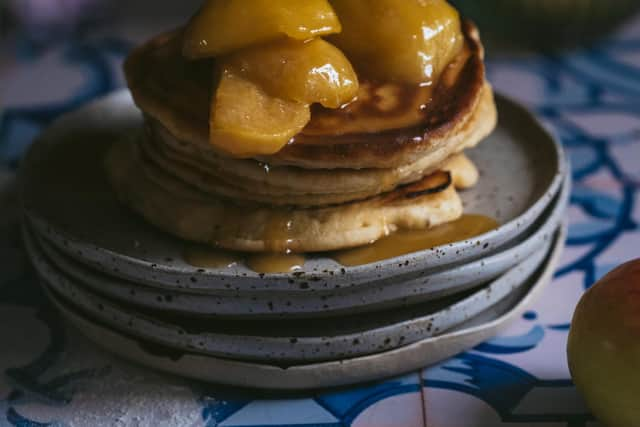

Tarte Tatin is a dessert synonymous with French pastry cooking. It’s an apple dessert invented by the Tatin sisters who ran a hotel in the town of Beuvron about 100 miles south of Paris. Legend has it that Stephanie Tatin was making a traditional apple pie but ran out of time and pastry. She topped caramelized apples with a lid of pastry and baked it. When it turned out the result was crispy pastry and burnished, candied apples. It went down a treat with the hotel guests and has been popular throughout France,and beyond, ever since.
You’ll need to use a tart apple for the recipe and one that holds its shape, making Granny Smith ideal. Spread an oven proof pan with butter, sprinkle over sugar and then arrange quarters of peeled and cored apples on top. Top with pastry and then start on the stove to get the caramelisation going before baking. Turn out and serve with cream on the side. I’ve included a recipe for pastry but feel free to buy ready made. There’s nothing more comforting than a hot apple pudding – a timeless dish that survives fads.