
There is no real appetite to see UK return as a member state
I was back in the EU last week on some once familiar stomping grounds. Those were Luxembourg, where, under rules setting up the original EEC, decision making decamps from Brussels for three months of the year – April, June and October.
This was where, by coincidence, I reported on some significant decisions for agriculture – a major CAP reform and the easing of the BSE beef export ban for Northern Ireland. I was also in Strasbourg, a beautiful city and host to the European parliament, with its seemingly ever expanding buildings. Ten years on from the Brexit vote it felt bizarre to see how the footprints of the UK’s fifty year EU membership have all but disappeared. It is a largely forgotten member state, despite the contribution it made to diplomacy, not least over the successful accession of former Communist countries after the collapse of that regime.
One UK link that remains in Strasbourg is in the name of the Churchill building. Churchill was one of the first people, after World War 2, to use the term “United States of Europe”.
Prophetically, he suggested this might be needed to offset the power of the US and Russia in a new post war era. This makes it all the more ironic that the UK’s role in that process was scuppered by someone who claimed to be an admirer of Churchill. That was Boris Johnson, who wrote a biography of Churchill, describing how “one man made history”. That is all water under the mythological bridge and water is something Europe now lacks. Its great rivers are seeing historically low water levels, with the Rhine and Danube at a virtual halt as major shipping arteries.
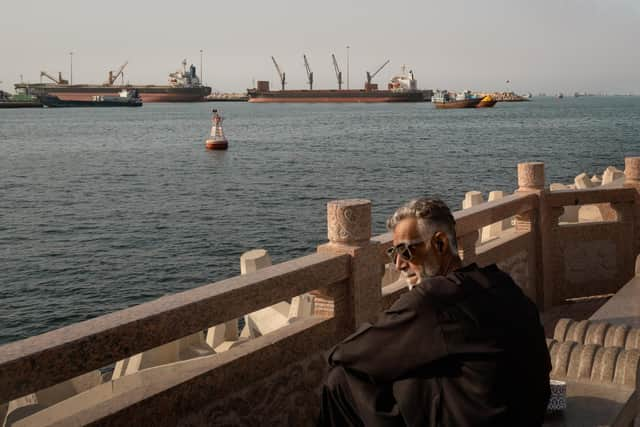

Europe is used to hot summers, but this year has broken all records and agriculture, both arable and livestock, is paying a heavy price in terms of lost yields and enforced use of hay and silage because of a lack of grazing.
Consumers will ultimately pay for this as shortages can only take food prices in one direction. If there were ever any doubts about the impact of climate change, 2026 seems set to be the year when those will be dispelled.
We frequently complain about our wet climate, but Ireland could be on the winning side as temperature rises eventually force European agricultural production north and west, away from the traditional European bread basket countries. The current mix of climate and war is having a big impact on all aspects of agriculture, including food exports. Rising energy costs have left consumers with less disposable income and that is hitting demand for premium products.
There is also a new global caution about holding stocks in an economically uncertain world.
The EU’s food export figures have always been impressive, when measured either in terms of contribution to the eurozone economy or the big balance of trade gap between exports and imports.
The most recent EU figures show that positive gap is still there, but dig down and the reality is that exports are falling month on month and year on year. The gap is now being maintained less by exports than the falling cost of some key imports. That underlines how volatile markets are. Once valuable food export markets, such as the Gulf states and Asia, now have economic problems linked to the war in Iran.
US consumers are suffering high food price inflation and this is why the Trump war in Iran is such a political disaster for him as November elections move closer.
One irony in the trade figures is that, despite Brexit, when it comes to food the UK is still by far the EU’s number one market. The EU is also our biggest food export market. For both, Brexit has made trade more cumbersome and costly.
This reflects the reality that business has had to pick up the pieces to maintain trade after politicians who supported Brexit found they had no plan and no ideas about how to make it work. At the same time they lacked the courage to fully implement it without clinging to EU policies.
That is a debate now long forgotten in Europe; there is little sympathy for the UK over our now ailing economy living daily with a growth hit from Brexit.
The UK’s departure from the EU was regretted – but there is no real appetite there to see it return as a member state.