
Tremendous attendance at EasyCare Open Evening 2026
There was a tremendous turnout of visitors for the recent EasyCare sheep open evening, hosted by Campbell Tweed, on his farm at Carncastle in Co Antrim.
He farms with his wife Isobel.
The Tweeds’ Ballycoose flock is home to a selection of the most progressive EasyCare bloodlines available in the UK and Ireland.
Performance recording all the sheep born on the Tweed farm over many years through both the Signet and Sheep Ireland programmes has been at the heart of this ongoing success story.
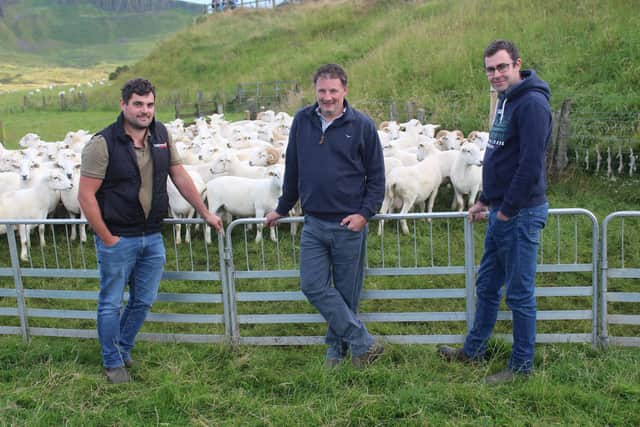

Campbell explained: “The open evening allowed visitors to view a selection of the ewes, lambs and rams currently available within the flock.
“EasyCare sheep are synonymous with wool shedding. But this is only part of the story. At the very heart of the Ballycoose development programme is an absolute commitment to breed ewes that perform well, making best use of grass, maintaining the highest levels of animal health and lambing each year outdoors with the absolute minimum level of human intervention.
“And it is the results generated from the flock recording programmes that have allowed to make this happen.”
Meanwhile, EasyCare numbers continue to grow across the island of Ireland.
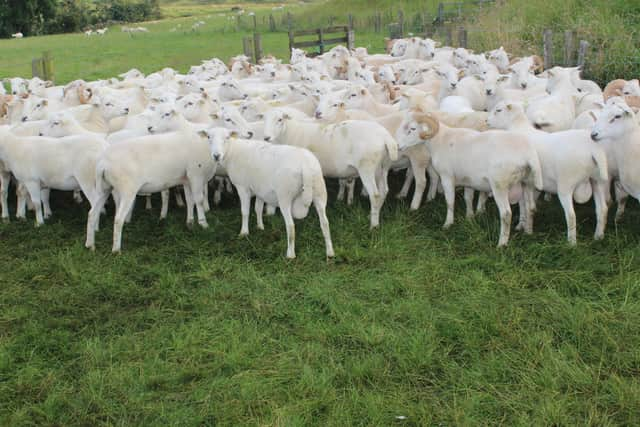
Campbell Tweed again: “This reflects a growing recognition that the sheep allow flockowners to make best use of their time while also maintaining exceptionally high levels of performance.”
He continued: “EasyCare sheep have a key role to play on sheep farms of all types.”
He added: “They are particularly suited to flock owners who work out from 9.00am to 5.00pm between Monday and Friday.
“To a significant extent, the sheep can manage themselves.”
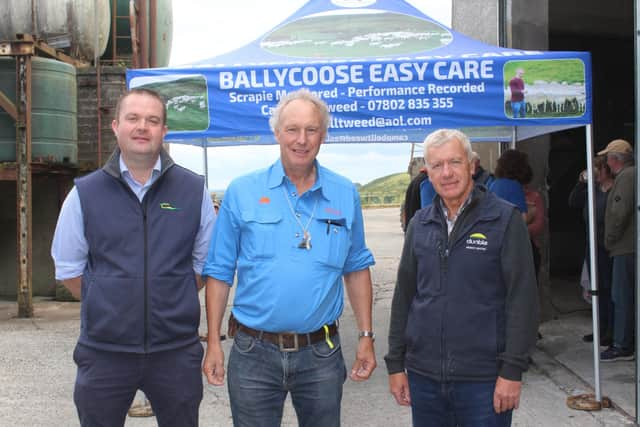
Campbell is currently taking orders to sell breeding EasyCare ewes, lambs and rams to flock owners throughout Ireland and the UK, adding:
He commented: “We are offering fully recorded stock that can add significantly to any sheep enterprise.
“Demand for EasyCare bloodlines is increasing and this trend is very encouraging.”
Harry Stevenson, agricultural manager at Dunbia Dungannon, spoke at the open evening.
He confirmed the commitment of the business to the sheep sector, adding: “Dunbia is part of the Dawn Meats’ group: we are the largest exporter of lambs in Europe.
“We process between 3M and 3.5M sheep across the UK and Ireland on an annual basis across 24 facilities.
“This includes six abattoirs in the Republic of Ireland and a further eleven such facilities in the UK.
“The export of lamb is of very significant importance across all the Irish processing sites.
“Germany, France and the Netherlands are very important outlets in this regard.
“Many people eating lamb now are from a Muslim background. And it is their religious feasts that really drive the lamb trade across Europe throughout the year.”
He continued: “Sixty per cent of the lambs processed in Dungannon are destined for carcass export into Europe. But form a UK perspective, the business supplies the Co-op and the Sainsbury supermarket group.
“Dungannon is killing 3,000 lambs per week. It is the largest facility of its kind in Northern Ireland.
Lamb carcass quality: injection sites
Dunbia’s Kenny Linton also addressed the meeting. He specifically highlighted a number of farm management issues that can impact on carcass quality. These include the issue of injection sites.
He further explained: “Vaccination and injection sites on the shoulder of lambs can lead to meat inspectors removing a small area of surrounding tissue.
“If this happens, the carcasses cannot be exported to Europe. So the advice to sheep farmers is to look at injecting or vaccinating sheep in the neck. The issue can be gotten round when it comes to the supermarket trade as lamb carcases are cut up for that purpose
“If meat inspectors find one injection site within a batch of lambs, they will tend to look more closely at the other carcasses in the batch. They will also remove grown over fat tissue from old injection sites.”
Linton also confirmed the growing issue linked to the C ovis contamination of lambs.
He commented: “Worms can be found in the heart and in some cases it can lead to the total condemnation of the complete carcass.
“This is the case if the problem is caught in more than three sites.
“Sheep Scab is also becoming a key challenge for the sheep sector as a whole.”
The need for flock owners to dip sheep for scab was highlighted with Campbell Tweed confirming the availability of new technology that puts the effluent form the dipping process through a carbon filtration system.
In summing up Kenny Linton confirmed the continuing fall-off in Irish sheep numbers. However, he held out the prospect that the encouraging prices available for sheep that have been available for some time might help to reverse this trend.
Cambell Tweed concluded: “I would like to thank Dunbia for their support of our Open Evening,” Campbell explained.
For further information, contact Campbell Tweed on: 07802 835355