
Yellow rust reported in winter wheat across the UK says AHDB

Reports of yellow rust in many winter wheat varieties are coming in from across the UK.
Varieties susceptible at the young plant stage may need yellow rust treatment during the T0 to T2 fungicide period to manage the disease, even if they have a high level of adult plant resistance (ratings 8 or 9) in the Recommended Lists for cereals and oilseeds (RL).
For the most susceptible varieties (ratings 3 or 4), growers should even consider a pre-T0 spray, where there is active yellow rust. However, it is important to consider the maximum permitted number of applications for some fungicide products and classes across the programme. If in doubt consult a BASIS qualified agronomist.
The main RL disease resistance ratings (1 to 9 scale) are based on adult plant resistance, which kicks in from stem extension onwards. The timing is specific to individual varieties.
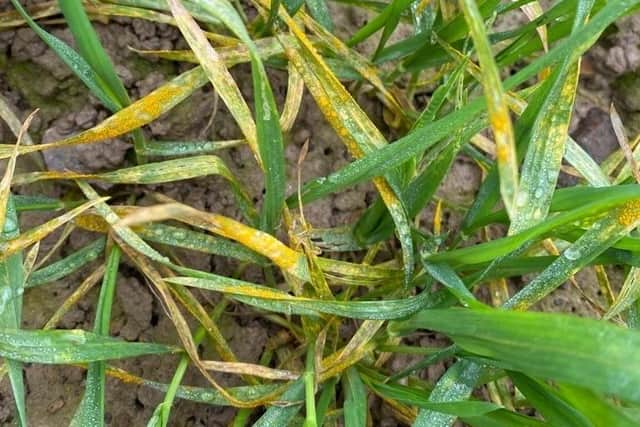

For young plant resistance, varieties are either classified as resistant or susceptible. Currently, RGT Guardsman is the only RL variety resistant to yellow rust at the young plant stage.
Due to the breakdown in varietal resistance last year, the RL 2026/27 yellow rust adult plant disease resistance rating calculations only use data collected in 2025, rather than the standard three-year data set. AHDB also made other changes to provide the most robust ratings.
On 12 March 2026, AHDB published the yellow rust watch list, which provides information on how well varieties aligned with the main RL disease resistance rating at their three (yellow rust) worst-performing sites in 2025.
Paul Gosling, AHDB’s senior crop production systems scientist for the Recommended Lists, said: “Poor performance could be due to uncommon or new rust strains that could spread in later seasons. Some varieties with high levels of resistance (8) in RL 2026/27 rank near the bottom of the 2026 yellow rust watch list and should be monitored more closely. We also released a watch list for brown rust – but this pathogen population was relatively stable last year.
“Rust populations are diverse and the situation can change rapidly. It’s important to check all varieties closely and report unusual disease levels to the UK Cereal Pathogen Virulence Survey (UKCPVS).”