
Good News for the countryside: Thinking about inheritance of every kind
Every fortnight people from a farming background in the Presbyterian Church in Ireland, or who have a heart for the countryside, offer a personal reflection on faith and rural life. They hope that you will be encouraged by it.
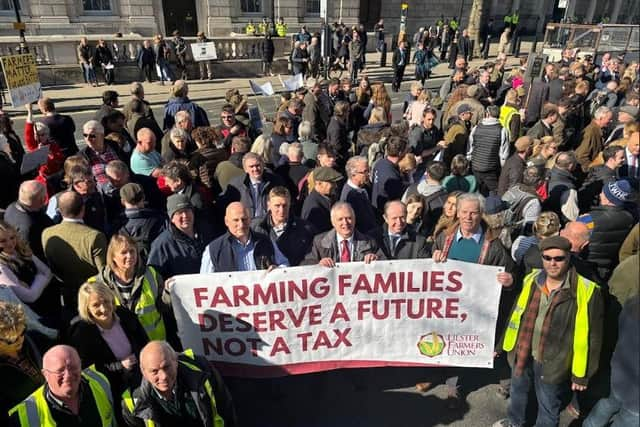
How often do you think about inheritance? For famers, the UK government’s declaration that all farm estates over £1 million would face inheritance tax from April of this year, has probably caused many a huge amount of stress and sleepless nights. Last month, however, the news that this would change to £2.5 million - a potential joint relief of £5 million, was, some might say, a ‘Christmas gift’.
Whilst it is a move in the right direction, many feel it is a threshold needing abolished. Few could, with today’s costs, ever hope to establish a first-generation farm enterprise. For most it is only possible through inheritance, passing on from one generation’s hard work and good financial stewardship, to the next.
In the Bible much is said about inheritance. In the Old Testament, God gave the land of Canaan to His people, and to their children, as an inheritance. With the inheritance of the land came the inheritance of special promises that ran all the way down through thousands of years to the coming of a Messiah, not only for Israel, but a Saviour for the whole word – the Lord Jesus.

The apostle Paul puts what God called him to do like this, “To open their eyes, and to turn them from darkness to light, and from the power of Satan unto God, that they may receive forgiveness of sins, and inheritance among them which are sanctified by faith…” (Acts 26:18). Paul speaks of salvation, the eternal life God gives through grace when a person comes in repentance and faith to God, as an ‘inheritance’.
An inheritance is something that belongs to someone else and is given freely by their intention. It is a gift, in the sense that we cannot earn it, or pay our way into it. So, with Jesus, His gift of salvation is one which we cannot earn, or pay for.
At the same time, it is expected that inheritance happens only upon the death of the original owner. Jesus - truly God in the flesh - had to die, giving up His life on the cross for us, so that we could receive the inheritance of eternal life.
We must come to God empty handed and sorry, fully aware that we have forfeited any rights of inheritance because of our sin. When we do so, that changes our relationship, as we become newly adopted sons and daughters of God and hence, can claim that inheritance from our Father God as truly ours - not because of our good works, but as a gift of His grace.
Inheritance must be claimed and possessed to be truly ours. An inheritor will not (normally) go around every day wondering ‘is this really mine?’ We claim our inheritance and live in the joy of full ownership, believing that it is ours through the written will of the giver. And so with God, as we receive His inheritance as a free gift and take His Word as a trustworthy promise.
Farmers are fully justified to be concerned about what is coming, and want to be sure that all their material inheritance will go in full to those they leave it to. With regards to our own personal spiritual inheritance, has that been fully resolved by repentance, faith, and trust in the God - the One who offers us eternal life in heaven as an inheritance? One day that will be our only inheritance concern.
Ian was brought up on a dairy farm near Limavady. He was a minister in Ballyroney and Drumlee congregations in south Down, and latterly Moneydig Presbyterian in County Londonderry. Due to a serious cancer diagnosis, Ian has had to retire from active ministry and now provides counselling and support to others with cancer.
If you would like to talk to someone about any of the issues raised in this article, please email Rev Kenny Hanna, PCI’s Rural Chaplain at [email protected] or call him on 07938 488 372.