
'Ireland has experienced the hottest summer since records began back in 1900', according to Met Eireann
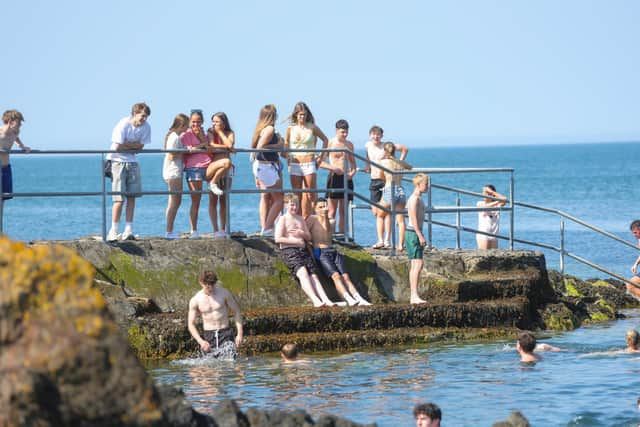
Summer 2026 was the hottest season on record for Ireland, according to provisional figures.
Irish forecaster Met Eireann said, for the second year in a row – Ireland has experienced what was provisionally the hottest summer since records began back in 1900.


It said it had conducted “extensive analysis of provisional data” from weather stations across the country and found the average temperature of 16.28C across the country during the months of June, July and August made it 0.09C warmer than the previous record, only set in 2025 – and 2.03C above the long-term average for 1961-1990.
Six of the 10 hottest summers have occurred since 2001, while provisional gridded rainfall data also shows summer 2026 was drier than average.
Additionally, six of the 10 wettest summers and two of the 10 driest summers have also occurred since 2001.
The weather agency said the summer saw high pressure dominating over most of western Europe with the Jet Stream – a band of high level winds which steers weather systems around the globe – displaced to the north of Ireland through most of the season.
Intense high pressure systems known as “heat domes” extended north over Ireland on several occasions during the summer months, bringing prolonged periods of hot weather.
Ireland’s climate is projected to get warmer, with average temperature increasing across all seasons and on an annual basis, while the number of heatwaves is also projected to increase.
In its annual climate statement, Met Eireann said Ireland’s overall warming continues in line with the global warming trend, with seven of the top 10 warmest years in the country happening since 2005 and last year being the second warmest year on record.
Further warming means the likelihood of extreme weather events has increased.
Climate change poses risks across all sectors of the economy, society, and environment, from energy, transport and communications to water security, public health, food production and supply and ecosystems.
In addition, the country is set to become wetter overall with an increase in average rainfall.
That rainfall will come as part of increased seasonality, meaning wetter winters and drier summers, with more frequent droughts projected for summer and spring months.
The Environmental Protection Agency also said there will be an increased exposure to coastal flooding with a projected rise in sea levels.