
When the wind blows…

I saw something the other day that I have never seen before – even though I have been driving this same route, most Saturdays, for nearly four years.
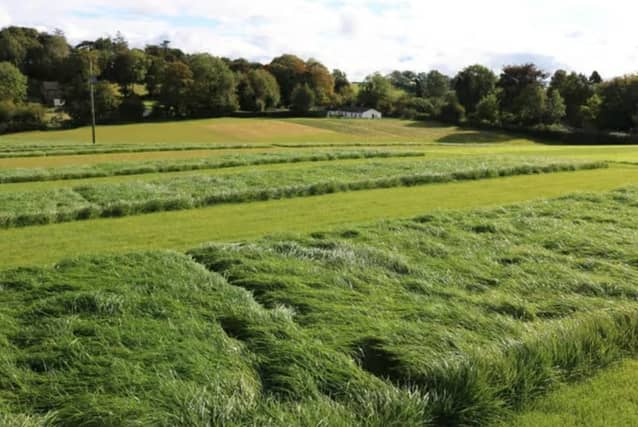
We drove through the curvy rolling landscape over the Holywood Hills, the road dipping and turning as it always does, passed hedged-fields of freshly cut barley, and fields of cattle. A few busy tractors passed us, loaded with black-baled fodder that would keep them fed in the winter months, then a field on the side of a hill that rippled.
“Look at that!” I said to our daughter, as I pointed excitedly beyond the oncoming traffic. It was really a wonderful scene - blowing across the field, the wind bent the grass over gently, only for it to regain its composure to be touched again and again by following gusts. Back and forth, it looked like we had spied an inland sea of lush deep-green waves washing gently over the hillside. It was lovely.
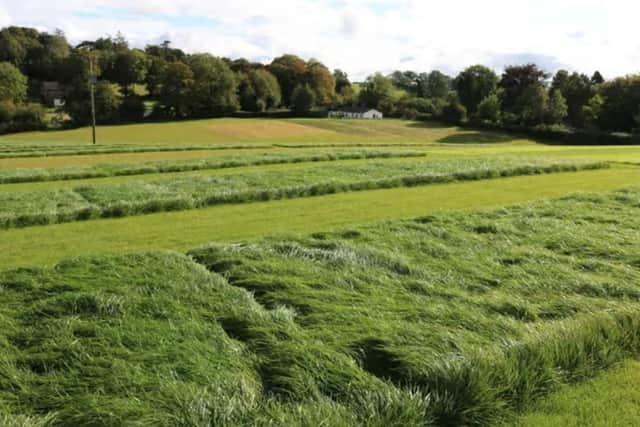
Last month my fellow columnist, David Johnston, reminded us that grass remains our most important forage crop and Northern Ireland, which produces high yields at relatively low cost and gives farmers a unique advantage.
Helping farmers and agri-business across the UK and Ireland, AFBI in Loughgall has developed numerous perennial and hybrid ryegrass for farmers over the years, through its grass breeding programme. Each named after a local town or village, such as ‘Moyola’ (2009) and ‘Banbridge’ (2023), upwards of 20 varieties are on the Recommended Grass and Clover List.
Whatever the type of grass, I know of one farmer who managed a second cut a few weeks ago, and another who managed three cuts this year. It would be impossible, wouldn’t it, to imagine the countryside without grass? At the same time, as a metaphor for life, grass might not be up there with others that describe our earthly experience, be it a ‘rollercoaster’, a ‘marathon’ or a ‘journey’. But the Bible does use it.
Writing about God, in Psalm 103:14-16, David says, “…he [God] knows how we are formed, he remembers that we are dust. The life of mortals is like grass, they flourish like a flower of the field; the wind blows over it and it is gone, and its place remembers it no more…” Quite a salutary realisation that we are all here today and, perhaps, gone tomorrow - and in time, forgotten.
Yet, we don’t have to be, as we were not born to live and then die only to be forgotten. For those who have reached out to Jesus and said sorry for the sin that they are caught in, the sin that separates them from God, they are no longer like grass.
David tells us a few verses before, “For as high as the heavens are above the earth, so great is his love for those who fear him; as far as the east is from the west, so far has he removed our transgressions [sin] from us” (11&12). Such good news. What is more, their names are written in the Lamb’s Book of Life for eternity (Revelation 21:27) and engraved upon the very palms of God’s hands (Isaiah 49:16).
When you take your first cut, or just look at the patchwork of green fields across the countryside, remember that Jesus loves you, and invites you to live with Him forever - for with Him, you are more than grass.
Before coming to live in Belfast nearly 40 years ago, Mark grew up in a village in rural Sussex, coming to Northern Ireland in his late teens. He is a member of Bloomfield Presbyterian Church in east Belfast and the Presbyterian Church in Ireland’s press & media officer. If you would like to talk to someone about any of the issues raised in this article, please email Rev Kenny Hanna, PCI’s Rural Chaplain at [email protected] or call him on 07938 488 372.