
Who are you depending on?
Every fortnight people from a farming background, or who have a heart for the countryside in the Presbyterian Church in Ireland, offer a personal reflection on faith and rural life. They hope that you will be encouraged by it.
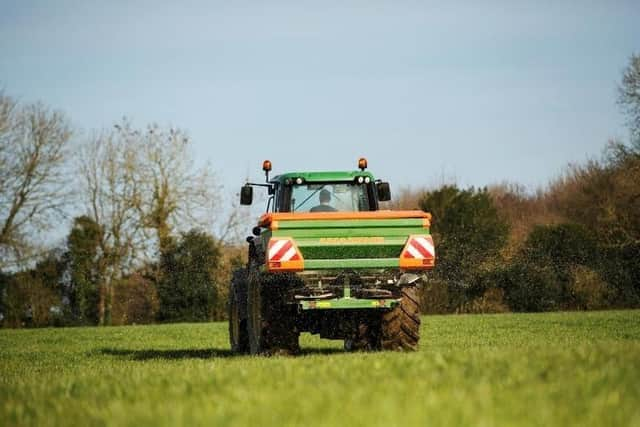
Most of us have lived a lifetime unaware of the Strait of Hormuz on the coast of Iran and ignorant of any significance it held for a field of grass in Northern Ireland. That narrow shipping lane in the Middle East is now famous and has become the centrepiece of a lesson in geography and economics. When political tensions rise in that region, the energy markets shudder, fertiliser prices surge, and suddenly the cost of growing grass here rises. What happens thousands of miles away reaches right into our yards and the farm accounts.
Growing grass reminds us of an uncomfortable truth: we are not in control. We can sow fertiliser, manage paddocks, or adopt five cut silage rotations, but we cannot make the grass grow. Growth itself is a gift. Like faith, the Apostle Paul in the Bible puts it plainly: “I planted the seed, Apollos watered it; but God has been making it grow” (1 Corinthians 3:6). Today in an age of technology and nutritional inputs we must still concede that growth is given by God. Nations can build product supply chains and economies that promise security, yet they can be shaken by conflict and political tension. As James writes, “Now listen, you who say, ‘Today or tomorrow we will go to this or that city, spend a year there, carry on business and make money.’ Why, you do not even know what will happen tomorrow....”( James 4:13-14a).
The Bible also tells us that mankind’s greatest problem is not high input costs or undependable supply chains, it is separation from God because of our sin. The prophet Isaiah writes, “But your iniquities have separated you from your God...” (Isaiah 59:2). But there is good news in John 3:16, which declares, “For God so loved the world that he gave his one and only Son, that whoever believes in him shall not perish but have eternal life.”

Recently, during Easter, we recalled how events that happened at Calvary outside Jerusalem, thousands of miles away from us and nearly 2000 years ago, are personally relevant to our lives now. The answer to our greatest problem is saving faith in Jesus Christ, who rose from the grave victorious over death and sin.
Salvation is not earned by long hours and hard work; neither is it bought with money. The invoice for the cost of our sin has been paid in full by Jesus giving up his sinless life on the cross, meaning that salvation can only be received by faith as a gift from God. Farmers understand the concept of dependence as we rely on rain, on seasons, on unseen processes beneath the soil. In the same way, eternal life depends not on what we can produce, but on what Christ has already done and the unseen processes of the Holy Spirit convicting us of our sin. The same reliable God who sends the rain and causes the grass to grow offers forgiveness, peace, and a hope that reaches beyond commodity markets and mortality.
This spring, fertiliser bags will empty, prices will rise and fall, and global tensions will come and go, but the Word of the Sovereign God remains unchangeable and utterly dependable. Will you trust in Jesus to reconcile you to God, who is in charge of your life, and of all life?
Trevor Boyd is the minister of the congregations of Tobermore and Draperstown in the shadow of the Sperrin Mountains in County Londonderry. Married to Barbara, the father of three is a sheep breeder and previously sold animal health products across Northern Ireland. If you would like to talk to someone about any of the issues raised in this article, please email Rev Kenny Hanna, PCI’s Rural Chaplain at [email protected] or call him on 07938 488 372.