
Cryptosporidiosis vaccine delivers for 450 Cow Dairy Farm in Co. Down
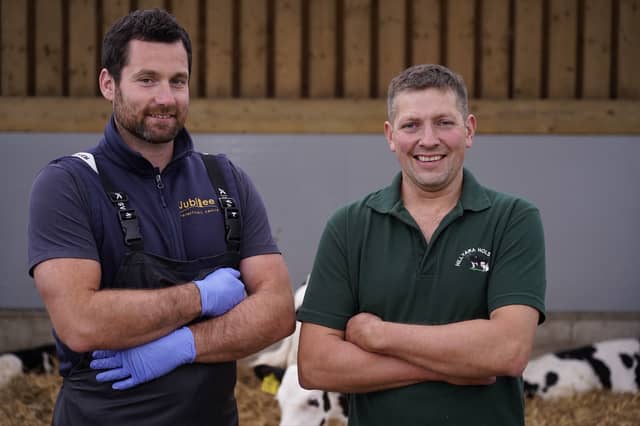

A Cryptosporidiosis vaccine has delivered results for a 450 Cow Dairy Farm in Co. Down
For more than a decade, Co. Down dairy farmer John McCormick has dealt with recurring cases of cryptosporidiosis.
But since introducing Bovilis® Cryptium, he has seen a significant reduction in both the number and severity of scour cases on the farm.
John farms outside Bangor, Co. Down, alongside his wife, Catherine, and his parents, Sam and Patricia. He milks 450 pedigree Holstein Friesian cows on 500 acres, with the herd calving all year round.
Over the years, John has worked hard to keep scour caused by cryptosporidiosis under control through rigorous hygiene practices, including steam-cleaning sheds, early life nutrition including colostrum and transition milk feeding and stringent biosecurity measures on farm. Despite these efforts, he was never able to control cryptosporidiosis on farm. “We decided to introduce Bovilis® Cryptium because we were still having problems with scour. Calves weren’t doing well, getting scour and having to get dripped. It was taking up a lot of time,” said John.
Neil Harbinson, Director and vet at Jubilee Veterinary Centre, who has worked with the McCormicks for the past nine years, recommended that John include Bovilis Cryptium in the farm’s vaccination programme. ‘’Every year at some point, crypto creeps in, and we start to get calves that take sick, scour and eventually require a drip. Calves at that point are also requiring antibiotic treatment to help in their recovery.’’
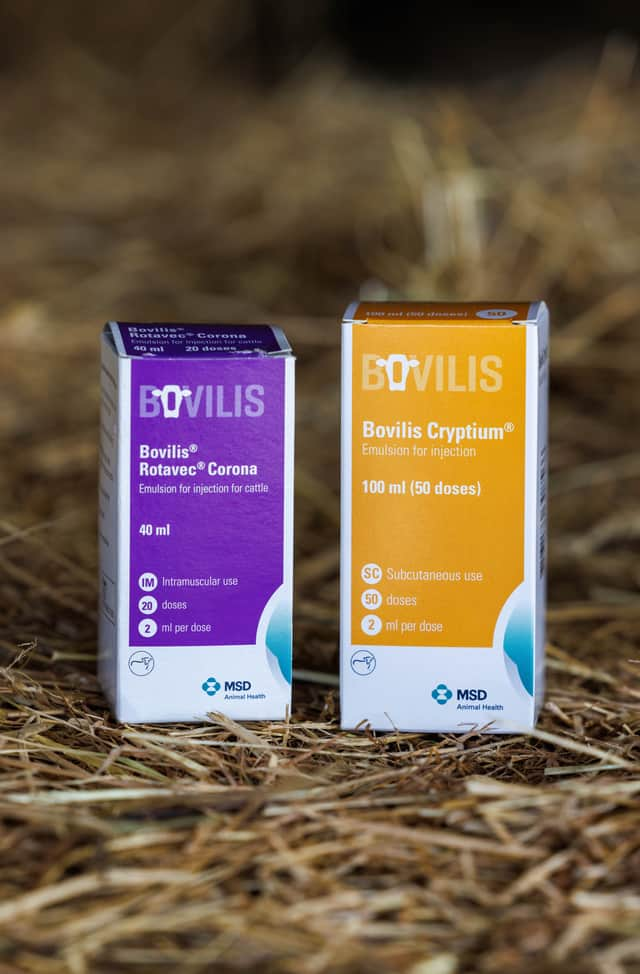
Introducing Bovilis Cryptium
Following Neil’s advice, John added Bovilis Cryptium to the farm’s vaccination programme alongside Bovilis Rotavec Corona, which he has been using for 15 years. Bovilis Cryptium can be administered at the same time as Bovilis Rotavec Corona, given at different injection sites.
Bovilis Cryptium is the first and only vaccine to protect calves against cryptosporidiosis. It works by raising specific antibodies in the cow before calving, which are passed to the calf through colostrum and transition milk when fed for a minimum of five days. The primary course consists of two doses of 2ml, given under the skin, four to five weeks apart. These vaccinations must be completed between 12 and three weeks before calving. After that, a single booster dose is given 12 to three weeks before each subsequent calving.
On the farm, every cow receives both vaccines at dry-off with heifers receiving their two dose primary course in the 12 to three week window prior to calving. Each calf receives four litres of colostrum within the first hour of birth and is moved to an individual pen, remaining there for at least three weeks before moving onto an automatic calf feeder. Calves are fed transition milk for a minimum of two weeks. “We’ve always seen a lot of benefits from keeping calves on transition milk. The longer we can keep them on it, the better. Two to three weeks if possible,” said John.
Results on the farm
The difference since introducing Bovilis Cryptium has been clear
The results we’ve seen are reduced outbreaks of scour, little to no calves having to get dripped, and calves generally doing better and thriving better.
‘’It helps with peace of mind during calving because you’re not worried about getting real bad outbreaks.’’
For Neil, the improvements seen on the farm reflect the goals he had in mind when recommending the vaccine. ‘’The main reasons why I recommended Bovilis Cryptium for this farm were to improve calf health, reduce antibiotic usage, and reduce labour,’’ he said.
For John, the improvements are particularly important for his breeding programme, with heifers targeted to calve at 23 to 24 months. “I’d recommend Bovilis® Cryptium to other farmers. You can’t really afford setbacks with calves if you’re aiming to have heifers calving at 23 to 24 months. For me, products that work are worth it,” concluded John.

Alise Callaghan, Ruminant Veterinary Area Manager, MSD Animal Health, commented: “To achieve the best results, a whole-herd vaccination policy should be implemented alongside good colostrum management, hygiene, nutrition and calf husbandry. Protection of calves depends on adequate ingestion of colostrum and transition milk from vaccinated cows and heifers. Calves should be fed colostrum and transition milk from vaccinated cows and heifers for at least the first five days of life. Speak to your veterinary practitioner about the most appropriate vaccination programme for your farm.”